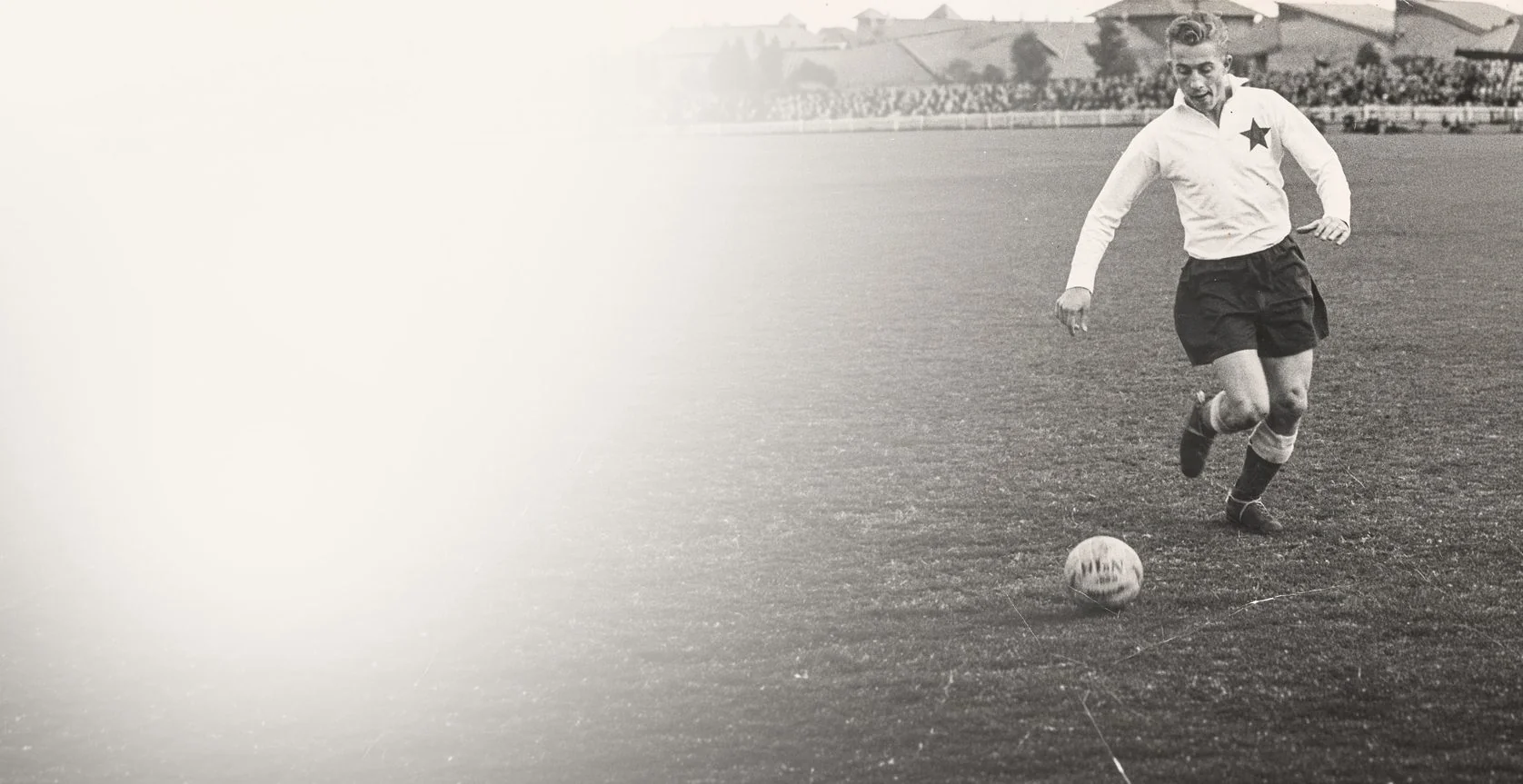
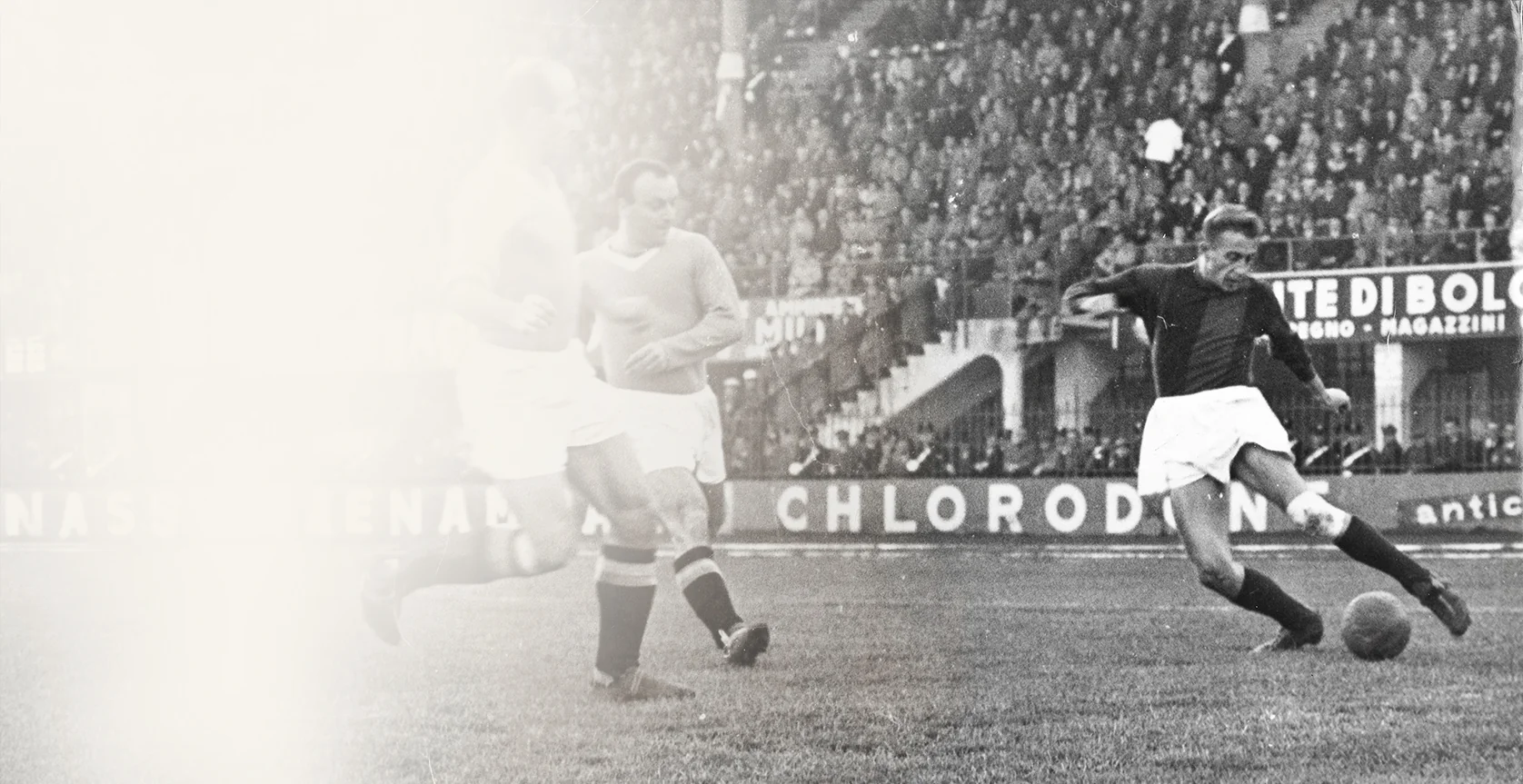
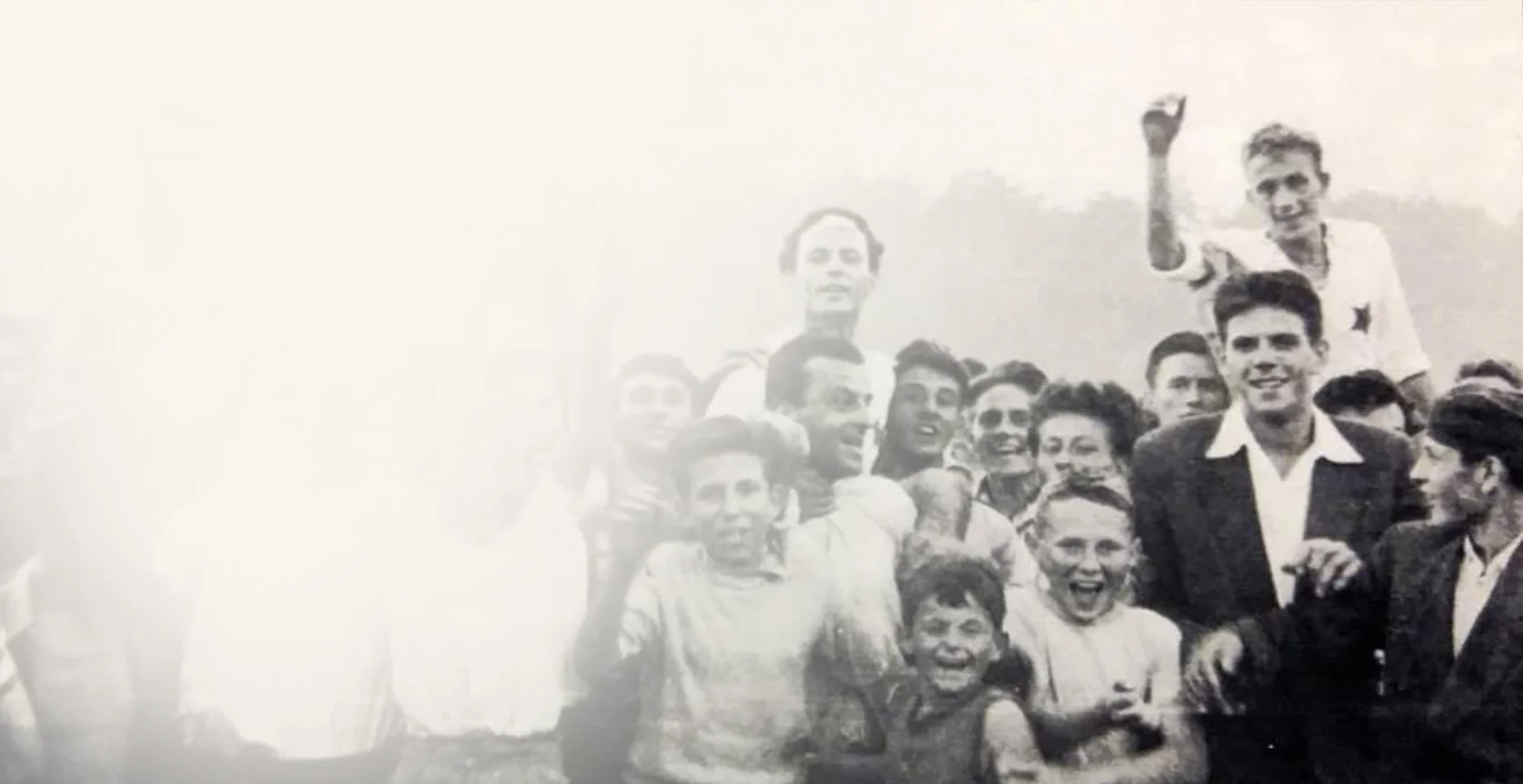
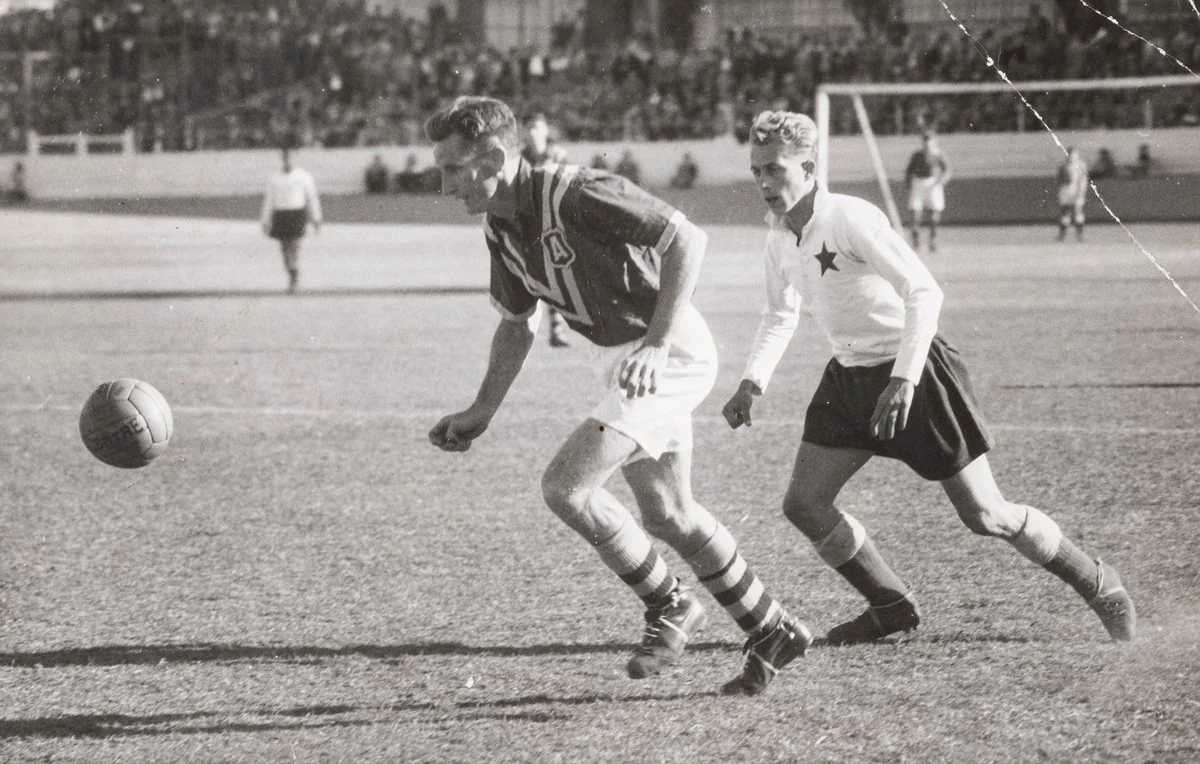
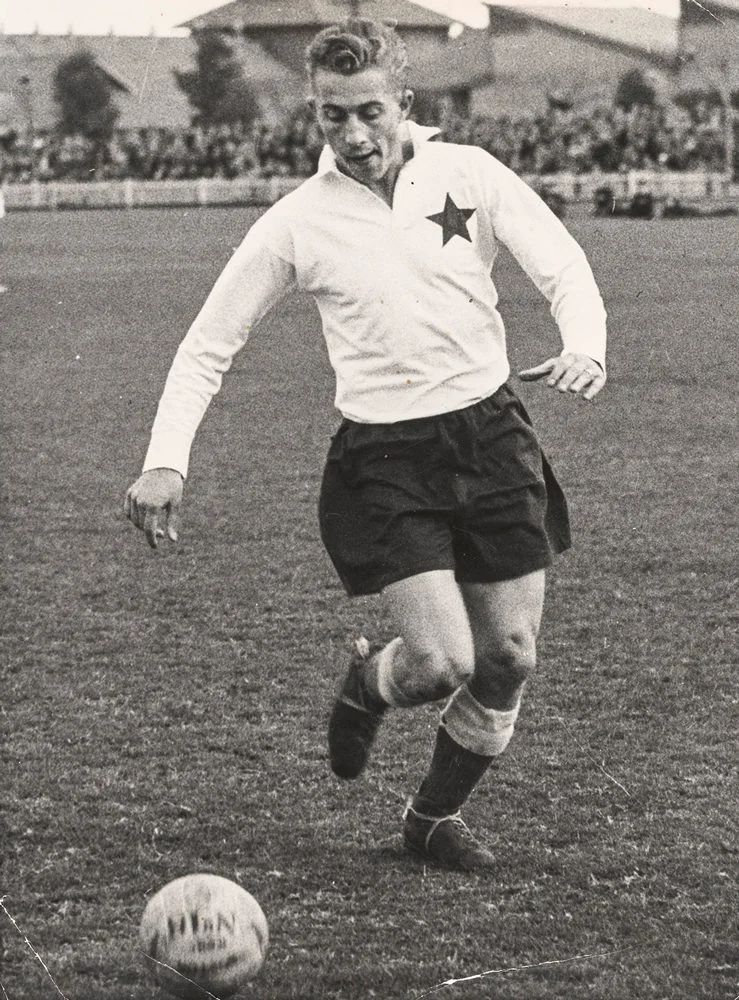
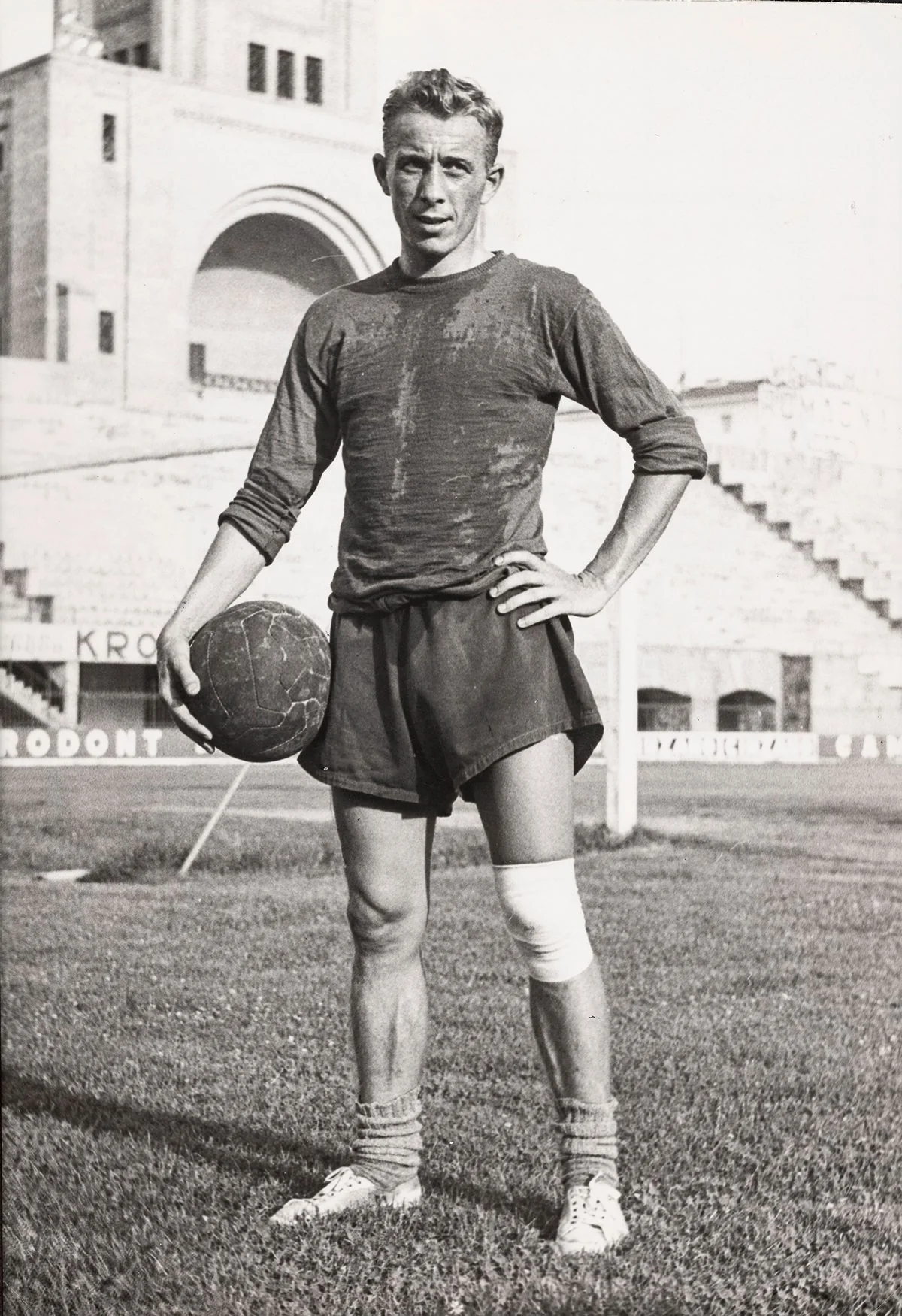
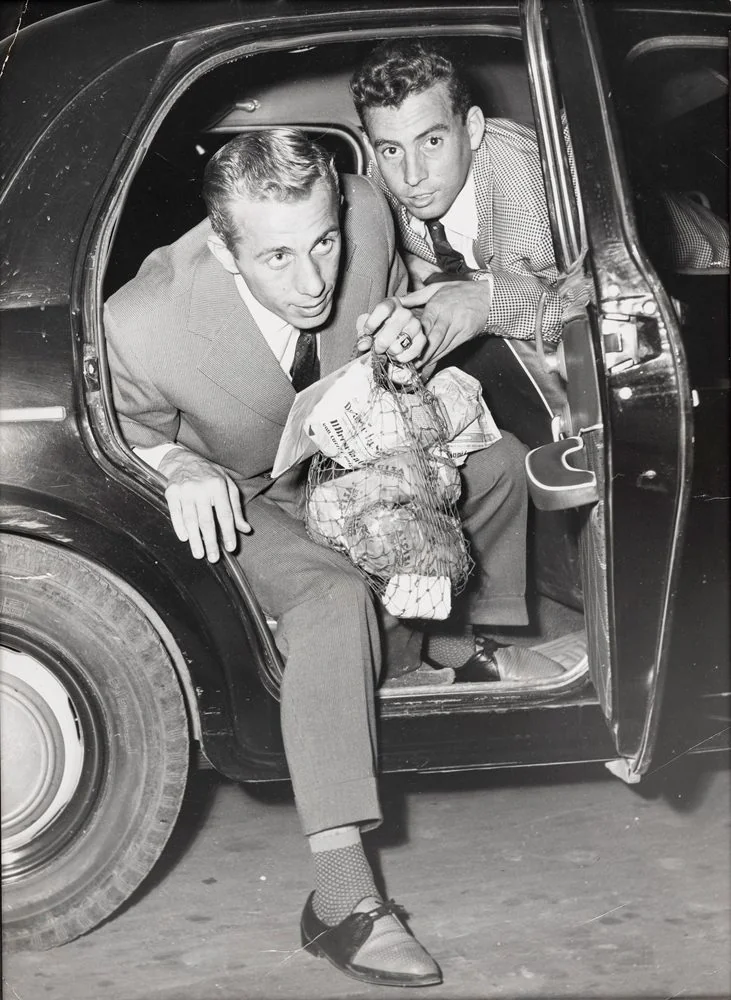
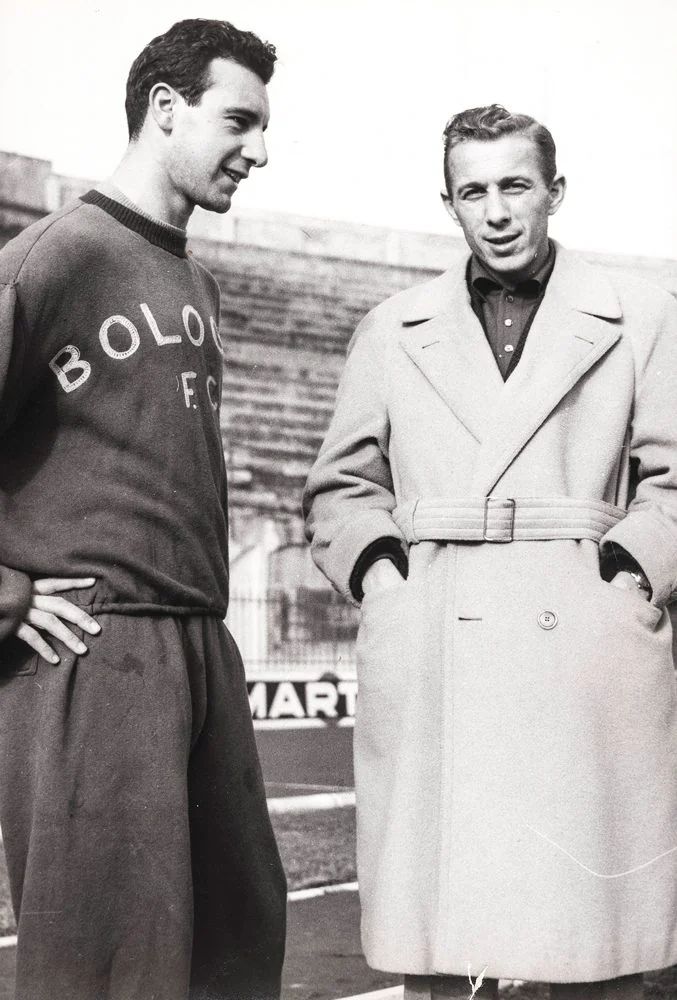
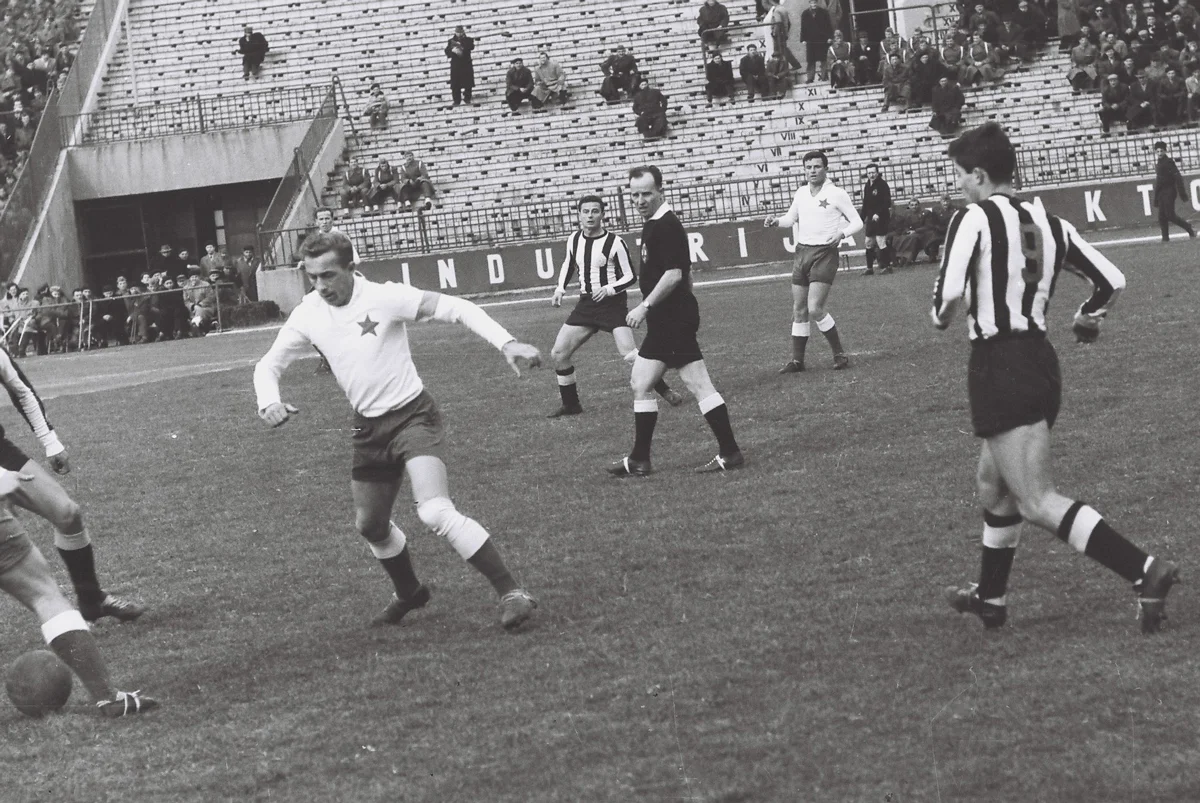
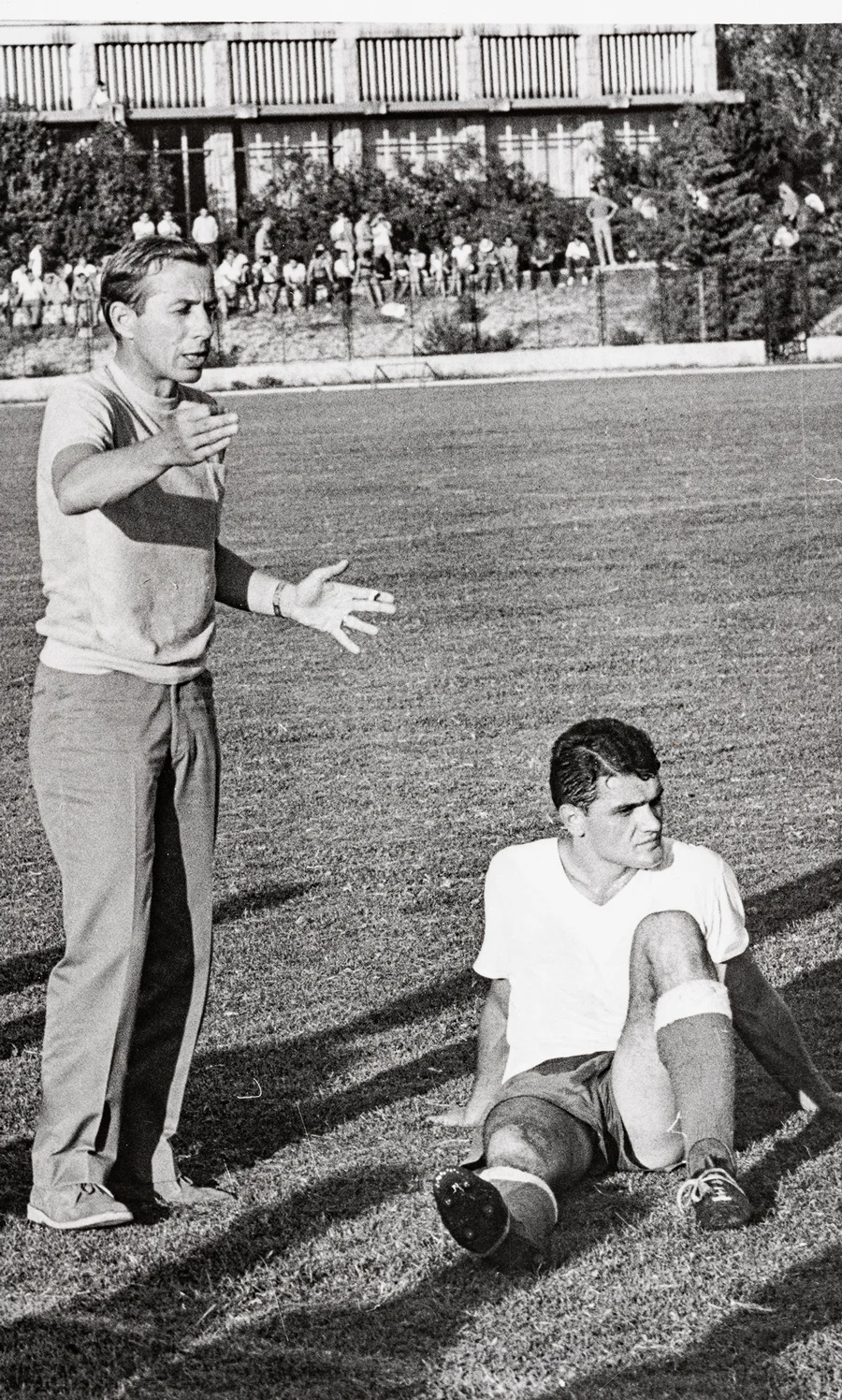
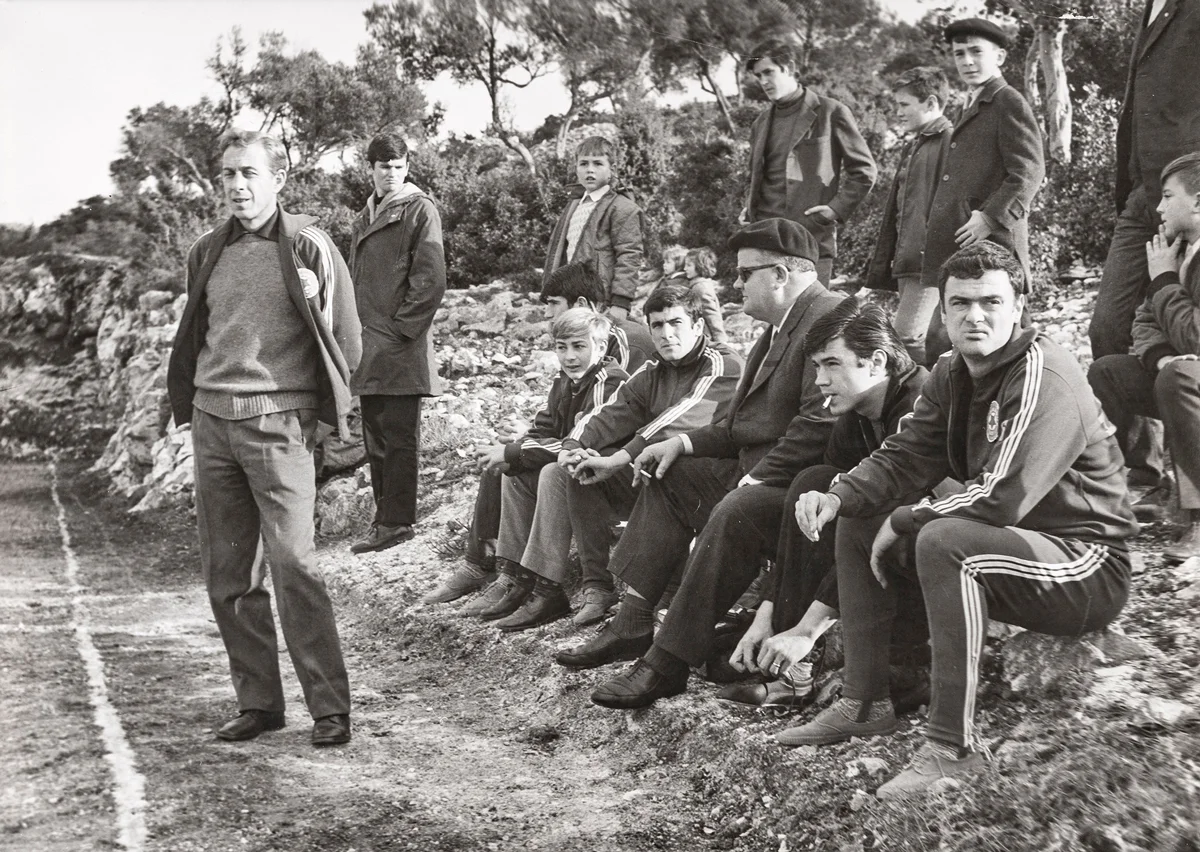
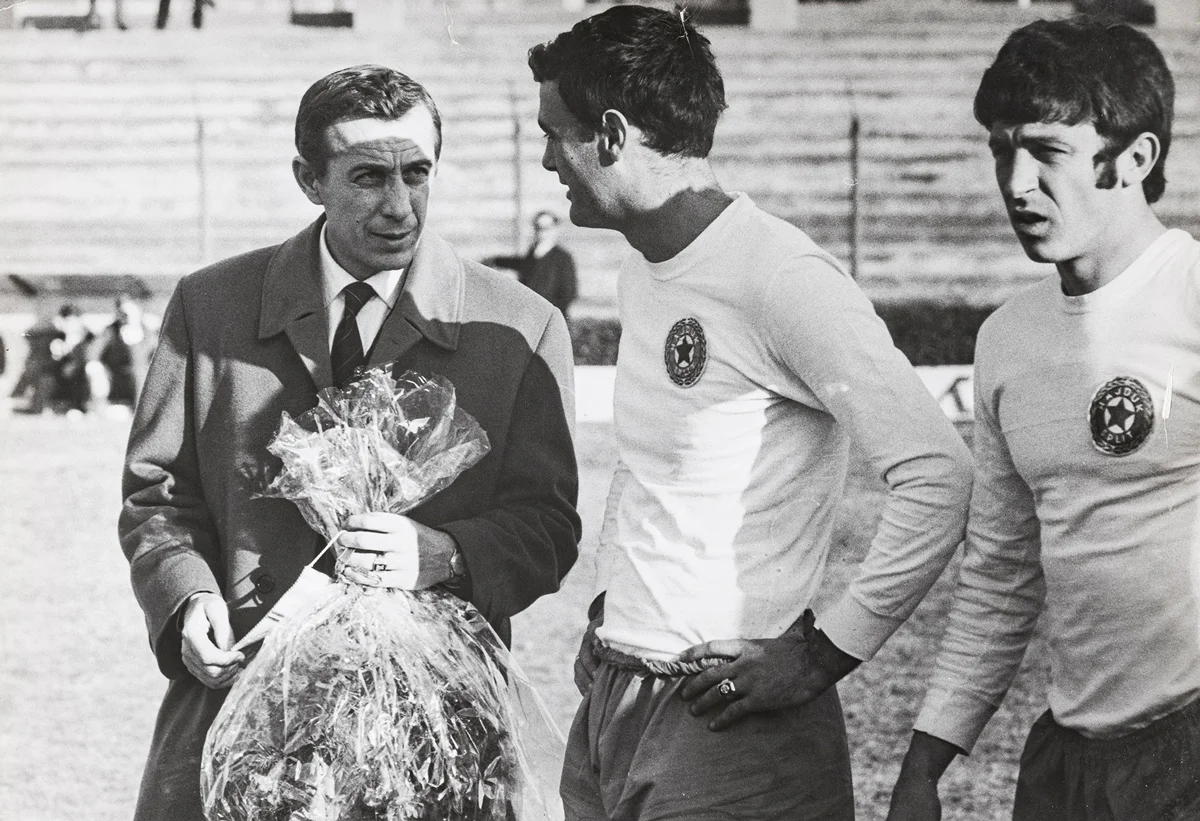
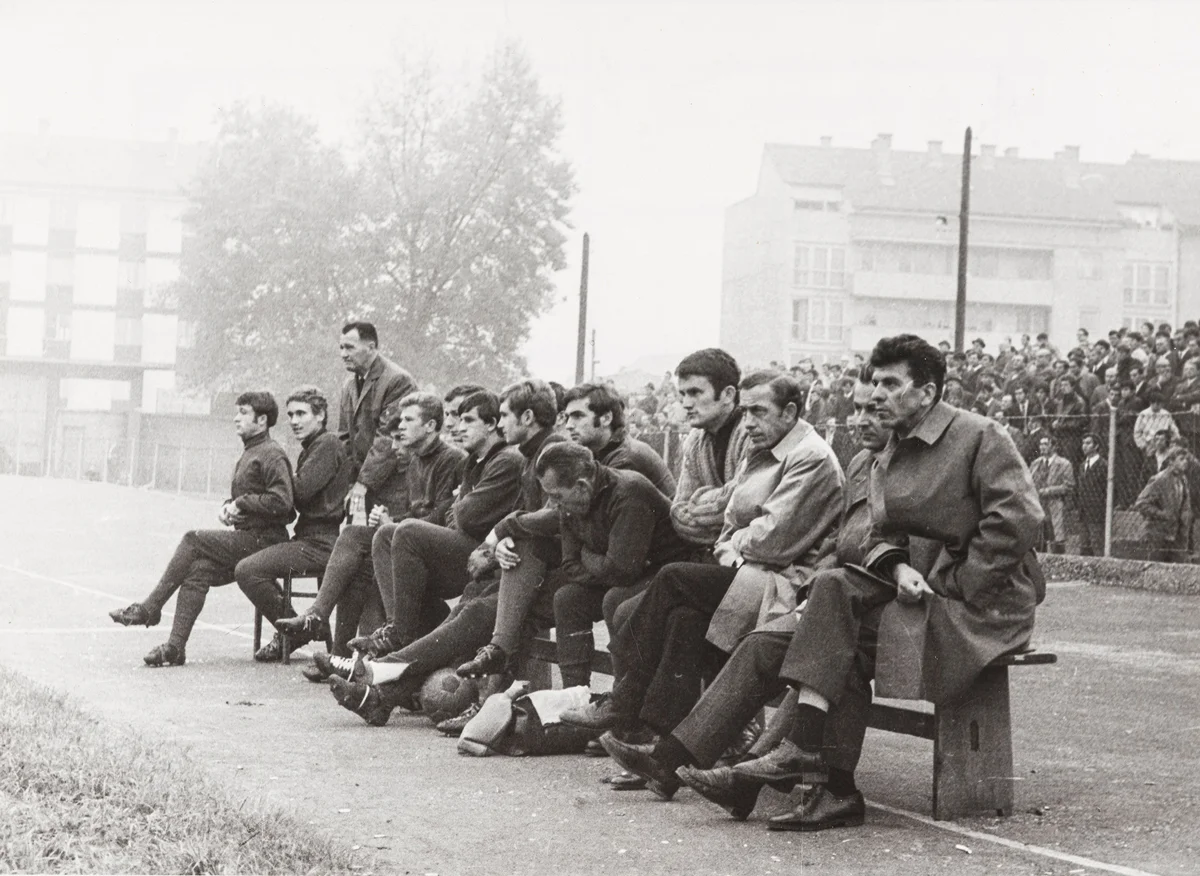
Portret Bernarda "Bajde" Vukasa

1927 - 1983

Bernard
Vukas

From Zagreb to Split and back by Vukasa Bajde

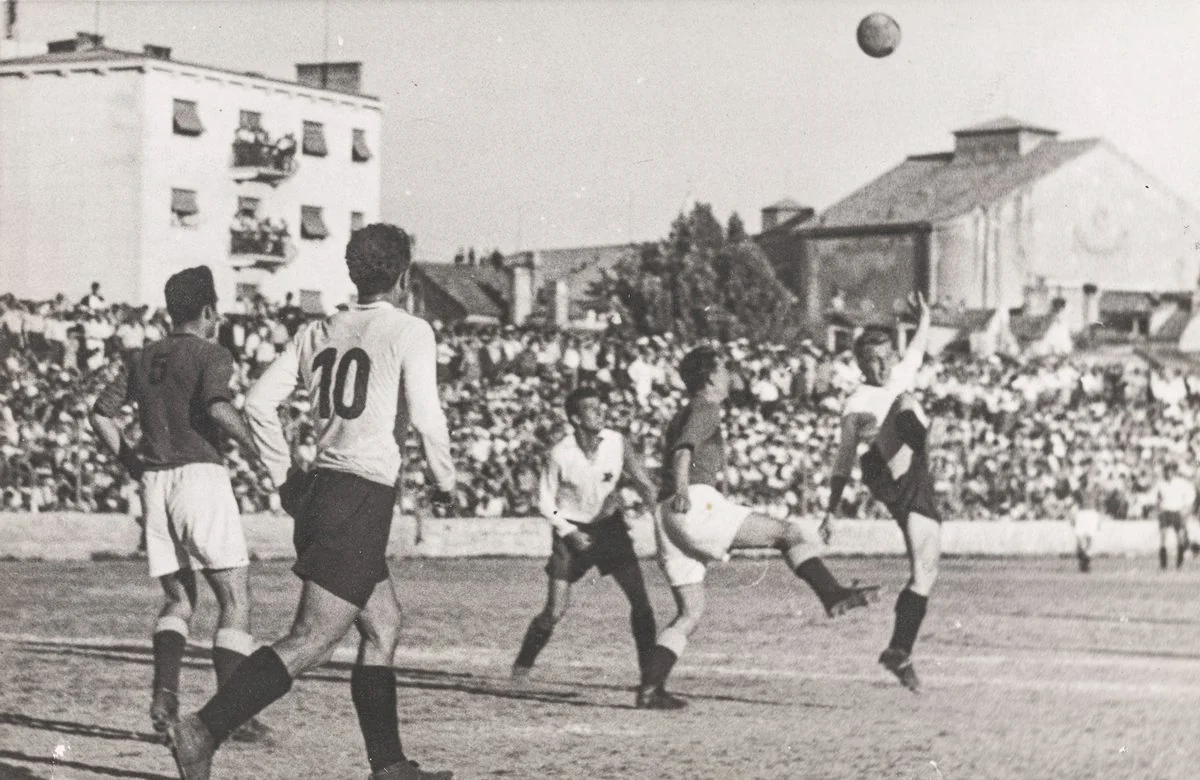
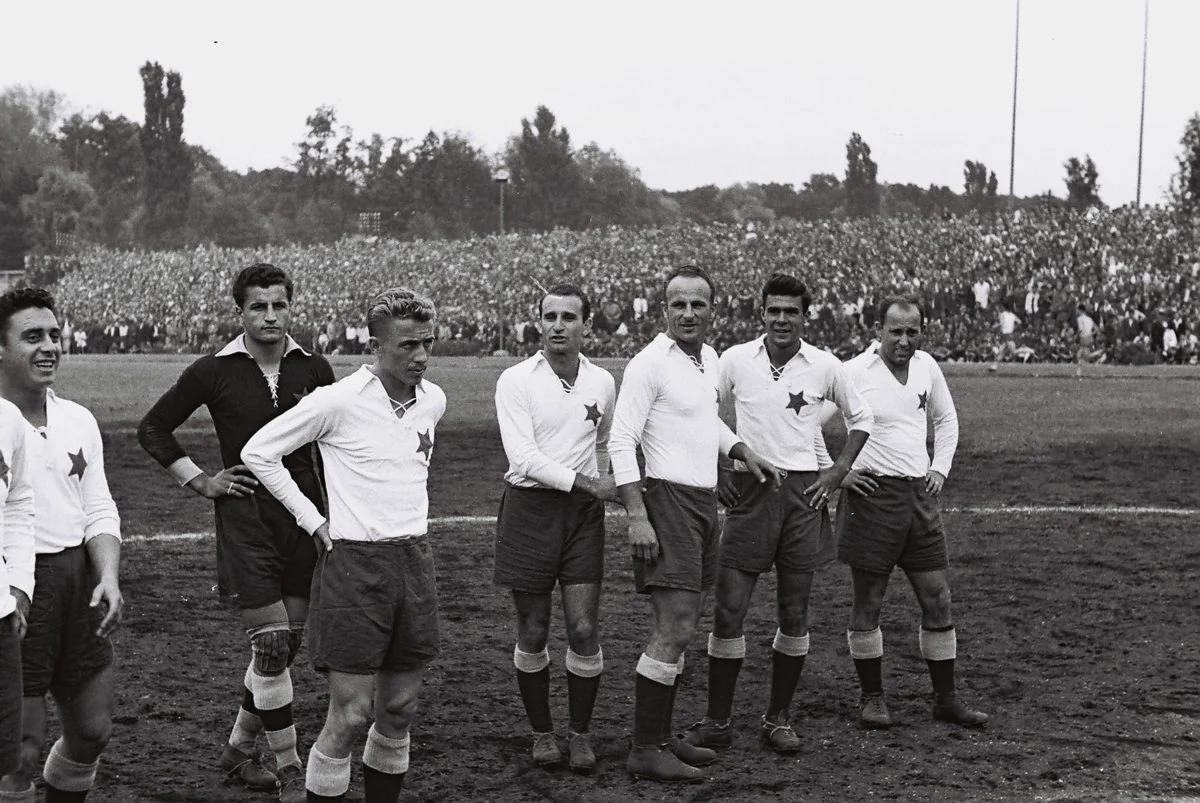
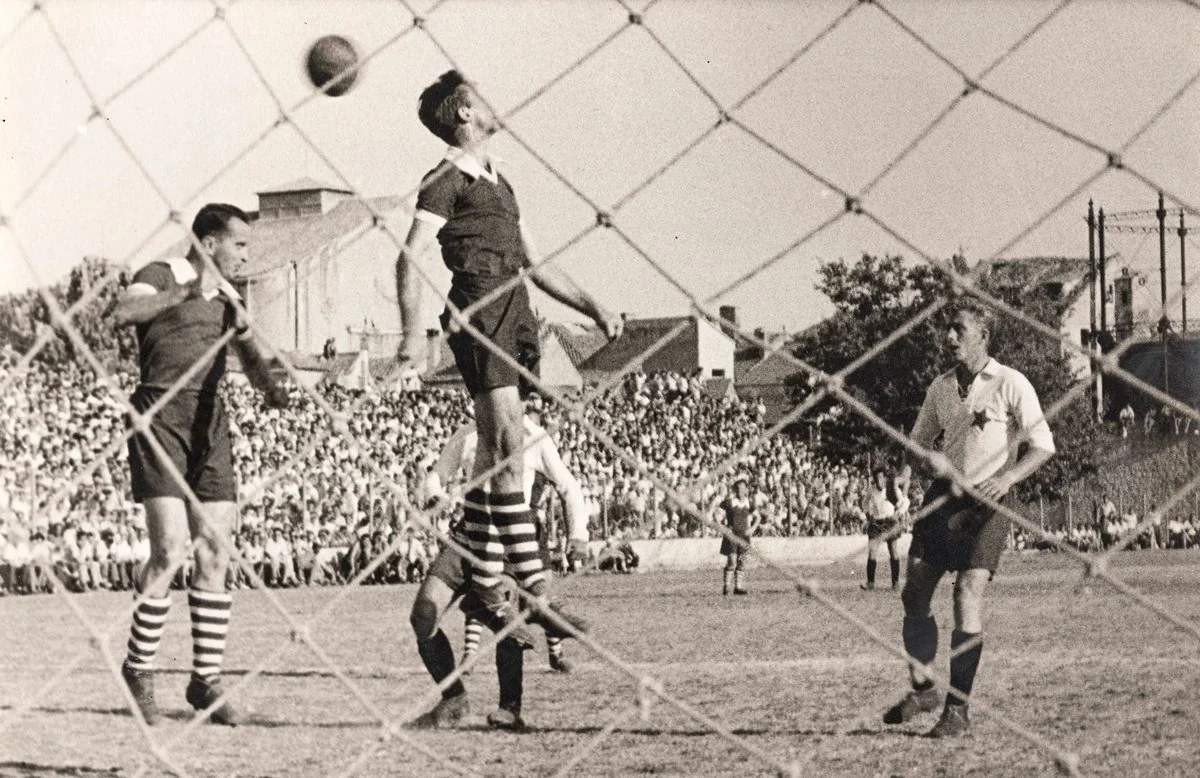
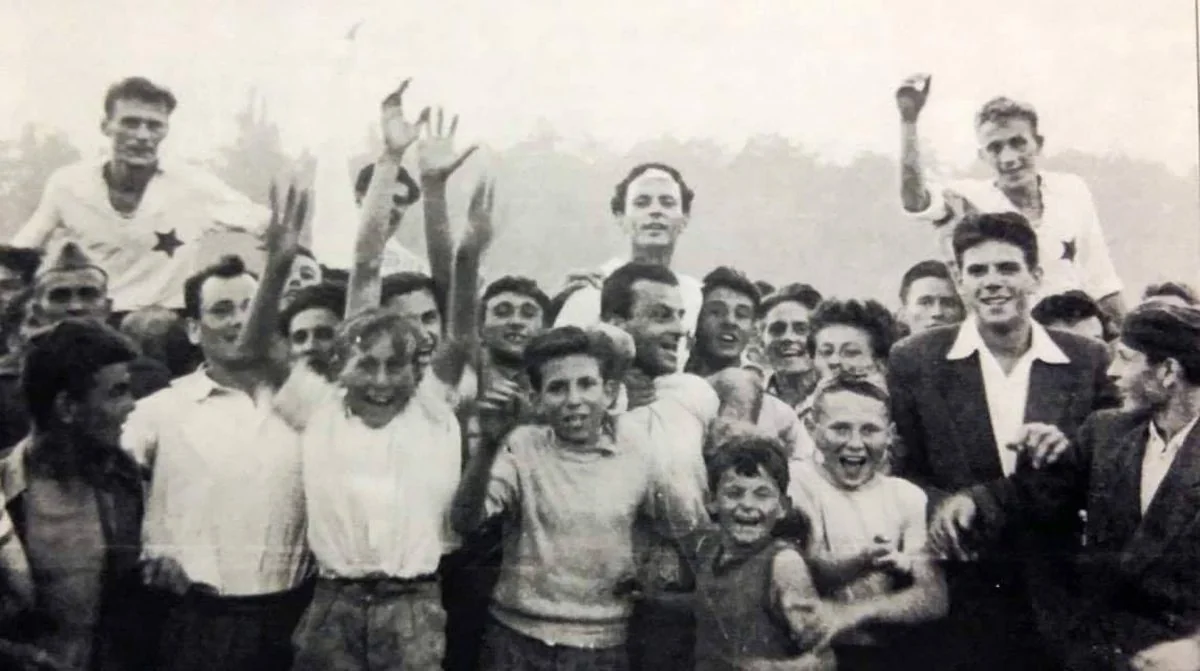
This is, in a way, the yearbook, the annals, the chronicle (1927–1983) of Bernard Bajda Vukas. It is a chronology of the years of the Lord in which he filled the pages of his life diary with brilliant football.

It all begins in the garden at 24 Drenovačka, continues on the Split riva, on the square by the gasworks, in Bologna, in so many world arenas, with small steps in Austria, and ends with an ill-fated, premature farewell in his native Zagreb. There are records of Zvonimir Magdić in the book 'This is How Bernard Vukas Lived and Played', there is much in the video 'A Century of Croatian Football', and now, this is the visual monograph of the greatest Croatian footballer.

1927.

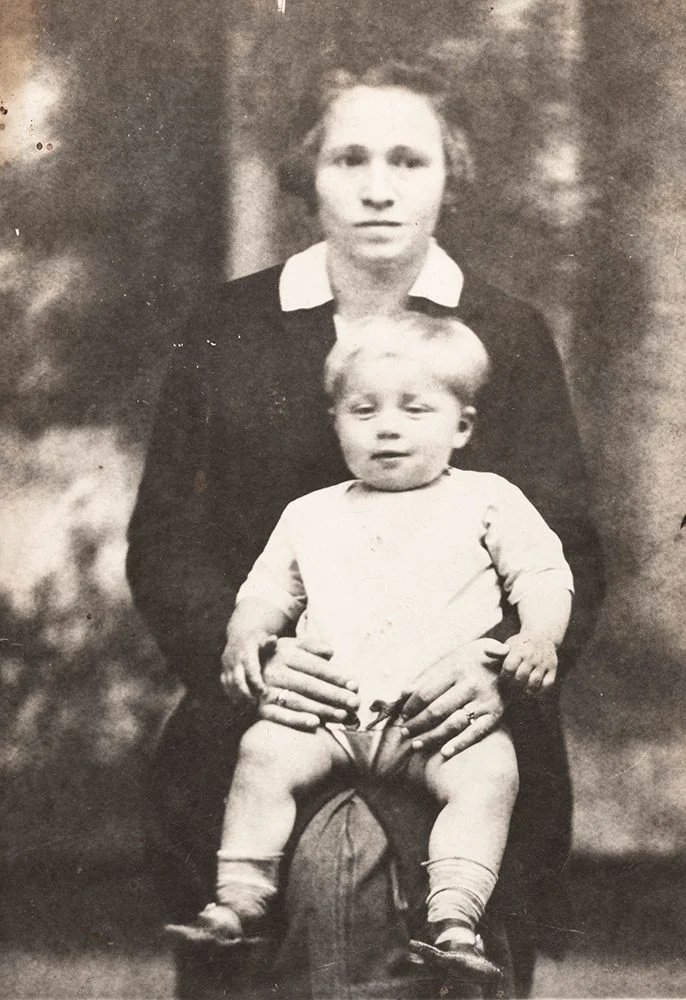
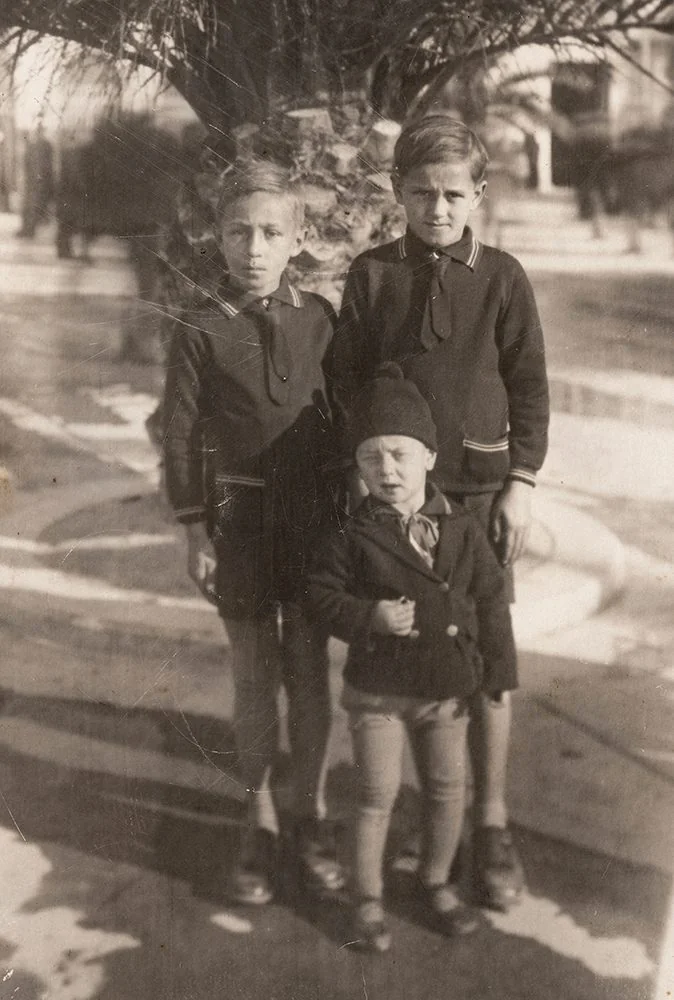
Father Vinko and mother Anica had a son. Their only one, until then. Their only child, from then on. It was Sunday, the first of May. The sun had only just begun its course, and the little boy Bernardo, whom his mum would call Bajdek, and after that the whole world Bajdo, opened his blue eyes at five o'clock and ten minutes. He was – there.

The garden at 24 Drenovačka Street in Zagreb was already full of flowers. But there wasn't a single blue one, like the firstborn's hair. As a boy, he was 'Yellow'. To his close friends – for life.

Mama Anica, née Šeremet, in Lobor, holds her only son, Bajda, in her arms.
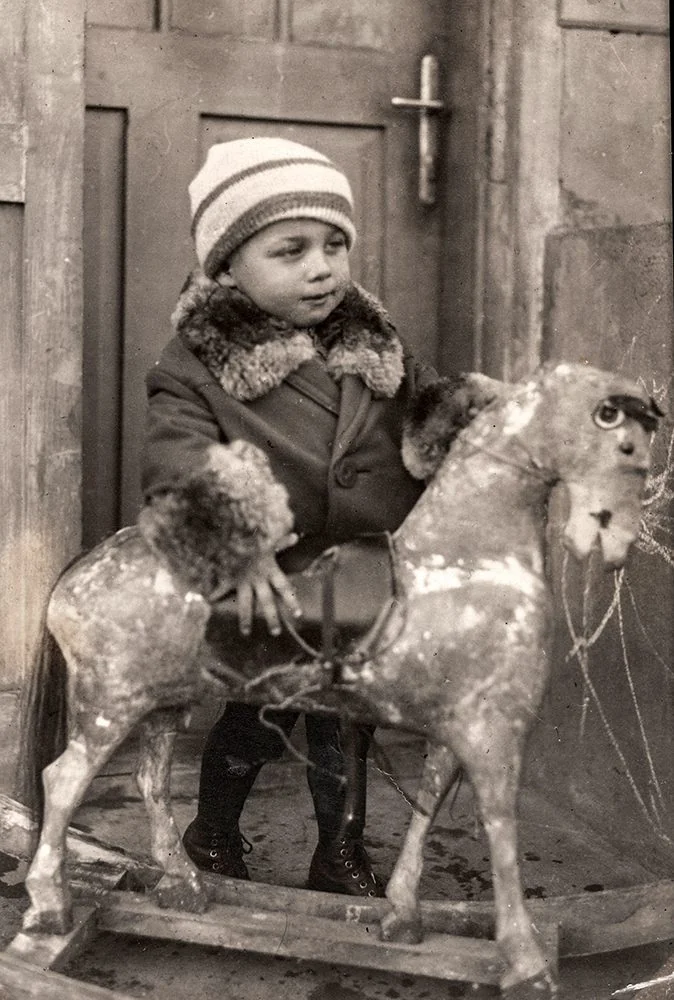
For the loveliness and kindness of Bajdek – a wooden horse, the dream of so many Čerešvack boys.
2

1938.

Drenovačka was for Bajda and the gang, whose singing would later, during Hajduk's victories, become a balm to his ear, full of a sense of hearing, wide and too wide for football between the garden gates on one side and the other of the street. Bajdo soon left his wooden horse and 'sat' on the ball, from dawn till dusk. First with ragged footballs and trainers with which he was a juggler, and then with a proper 'Balk', which his dad bought just for him when no one could match him any more.

Bajdo's little 'Concordians', when they thrashed the little 'Purgerasians', were often treated to kremšnita. And opposite, where the lads feasted on melšpajz, there was a little house with a balcony. And little Hohnjecova, Lili. Bajdi's secret crush as he transitioned from shorts to long trousers, when the lights in the magical cinemas would be gently dimmed, their screens shrouded by a heavy curtain, and the hands would sing, along with Kiki, their song...

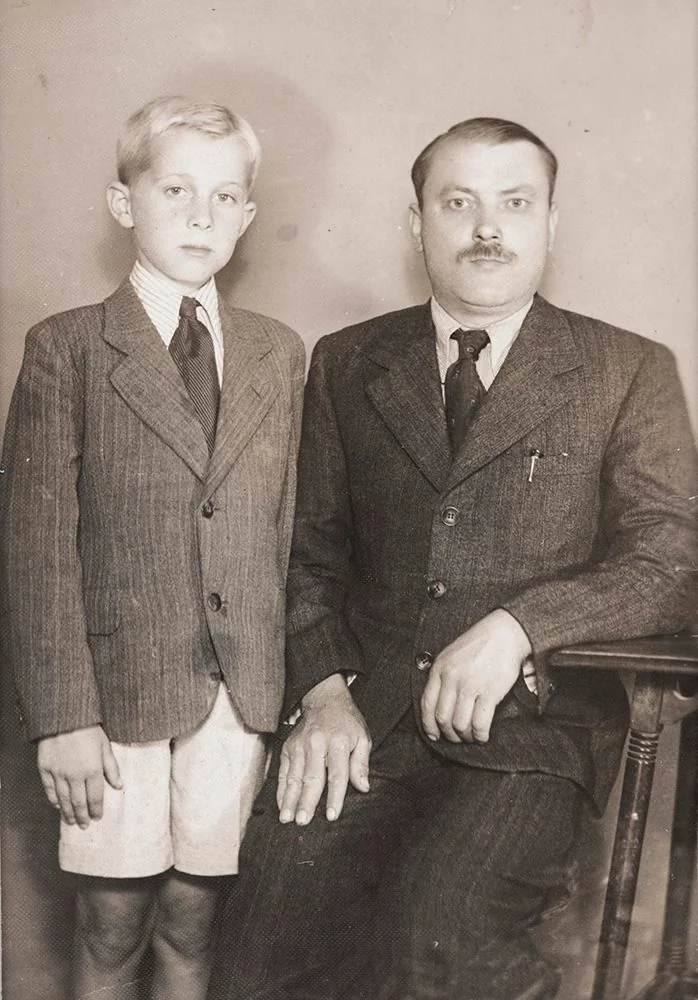
Bajdo and his father Vinko
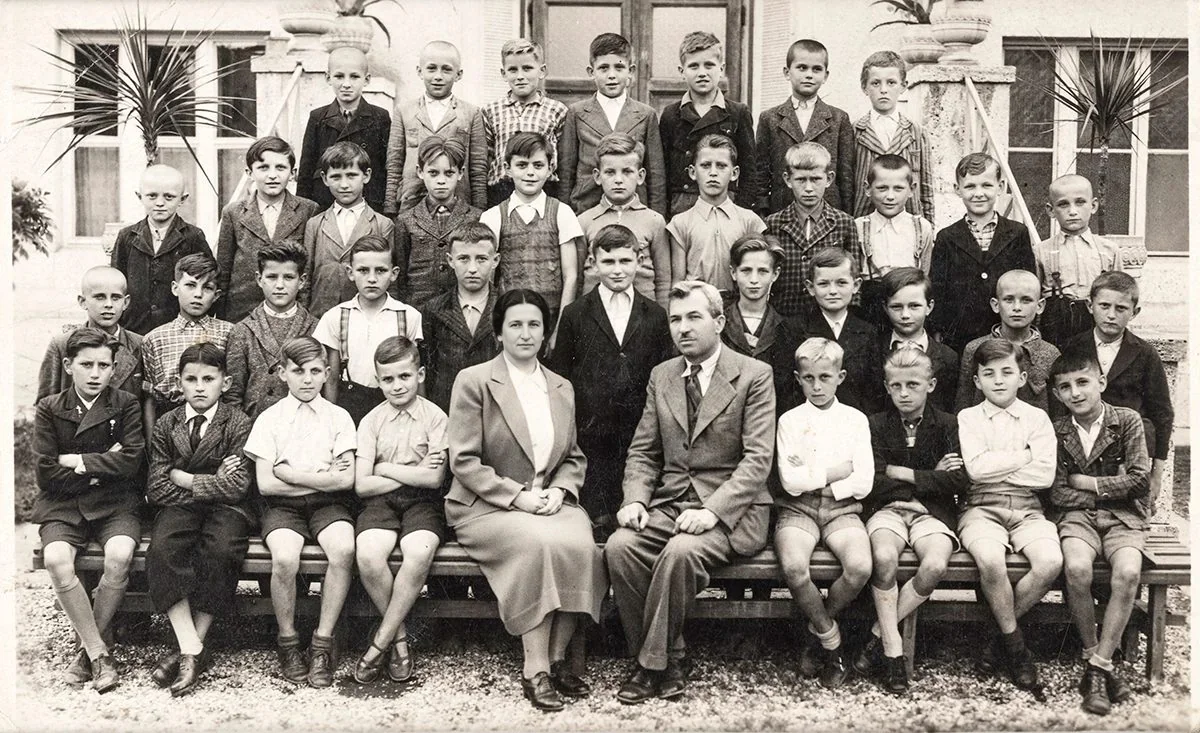
The New Road and King Tomislav's Public School. At the far end of so many heads, they are safe, by surname, to the righ…
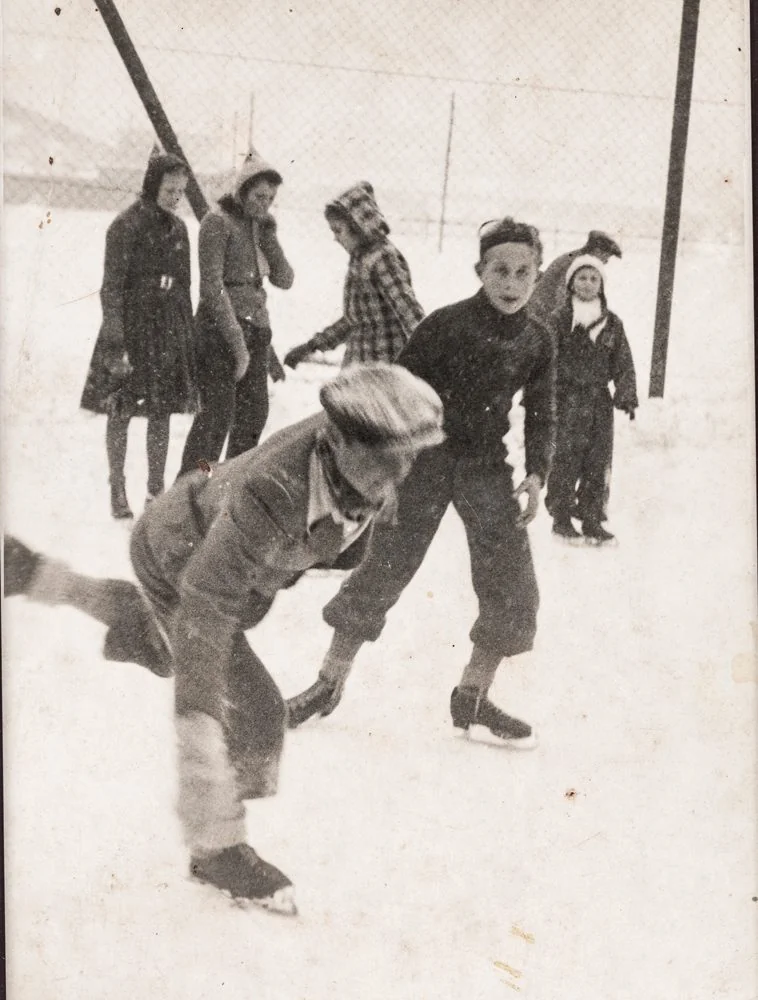
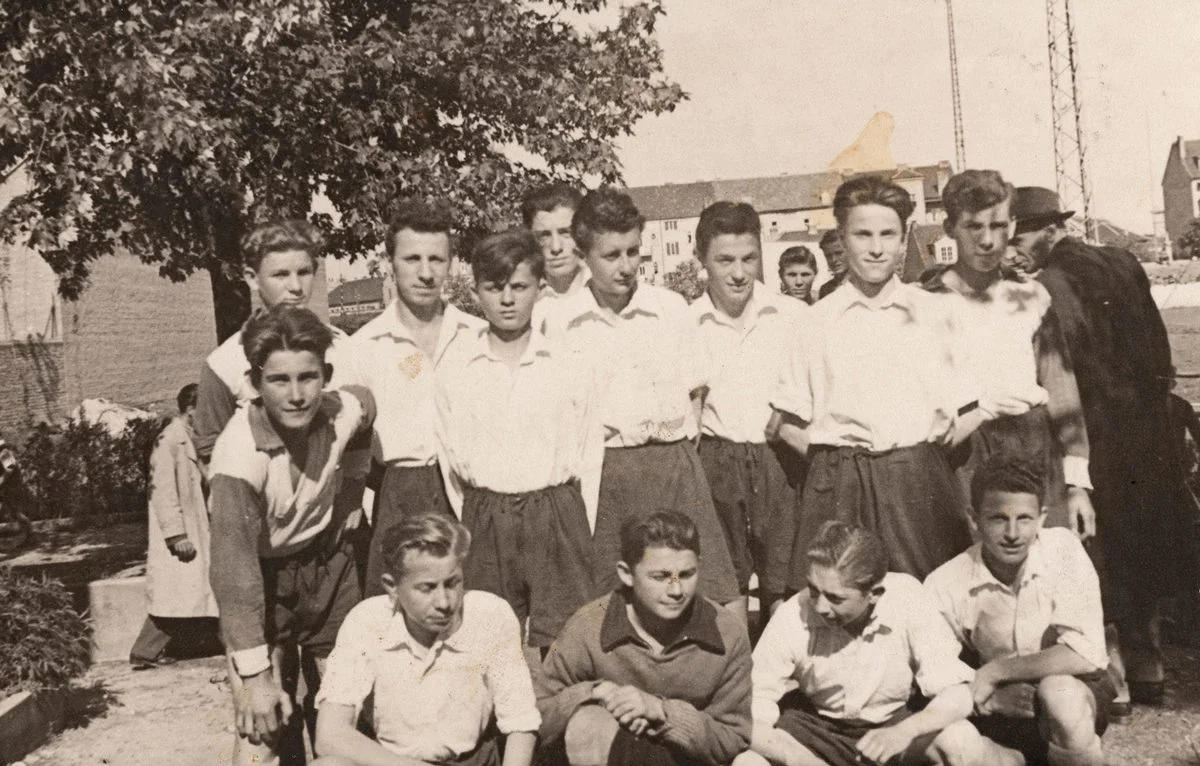
Bajdo with the gang at one of the Čerešvacka ice rinks.
3

1938. – 1940.

Near Drenovačka is Tratinska, and on Tratinska, now Kranjčevićeva, is Concordia's ground. In no time, Bajdo moved to Concordia's, and in no time at all, he found himself among the 'supići'. To the lads below the juniors. And a 'shock'. His football teacher wasn't a man but a woman, a 'hazenašica', née Radović, married to Kunšteka who had a carpet shop in the 'Balkan Passage'. And a clever girl. She spoke several languages and knew her football.

"Come on, Bajdo, come on!"

She was full of tricks, like Maca Matuzić is today, so she herself encouraged Bajdo's trick football: 'Come on, Bajdo, come on!'. Because of his fragility and young age, she was particularly careful with Vukas. She would enable her second husband, Toni Pogačnik, a player for Concordia and, some time later, coach of the Greens' juniors, to quickly learn the trade of a football coach. And not just a 'trainer', Zdenka Kunštek was also an excellent sports journalist; witty and well-read.

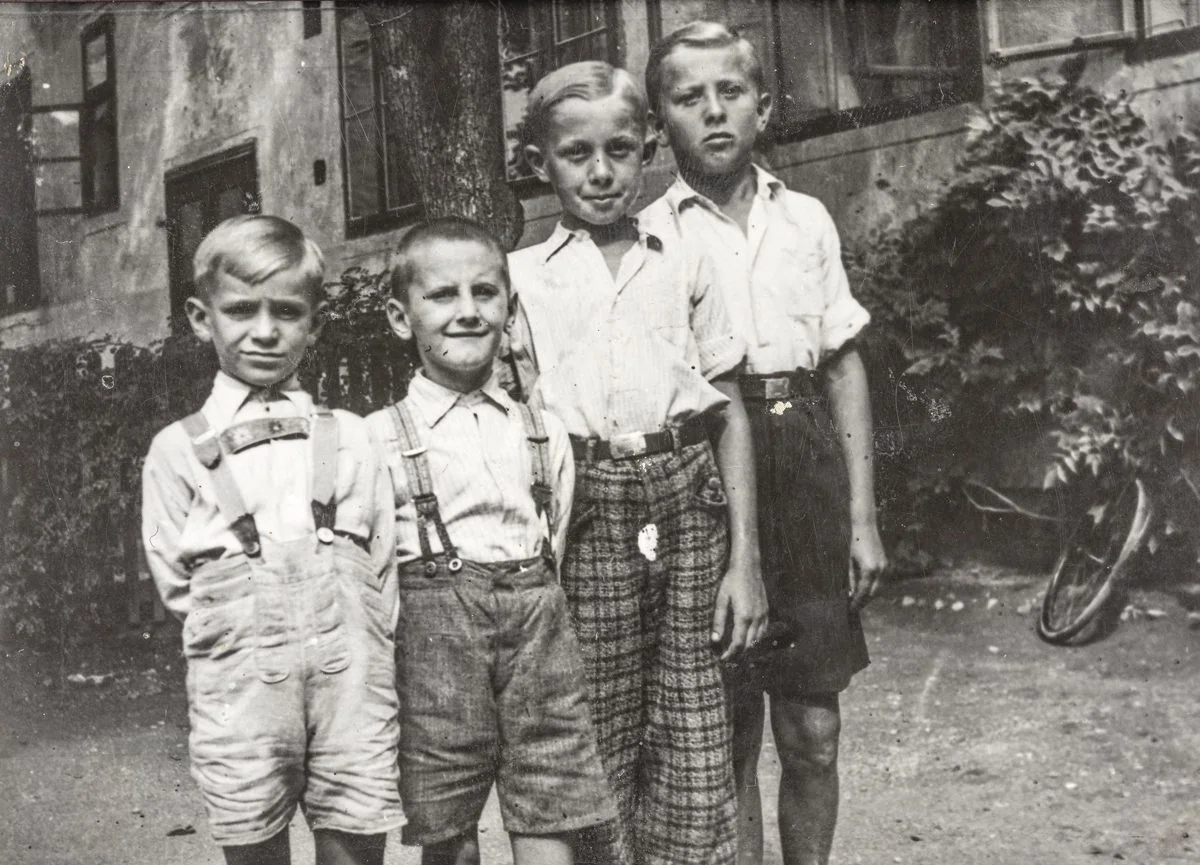
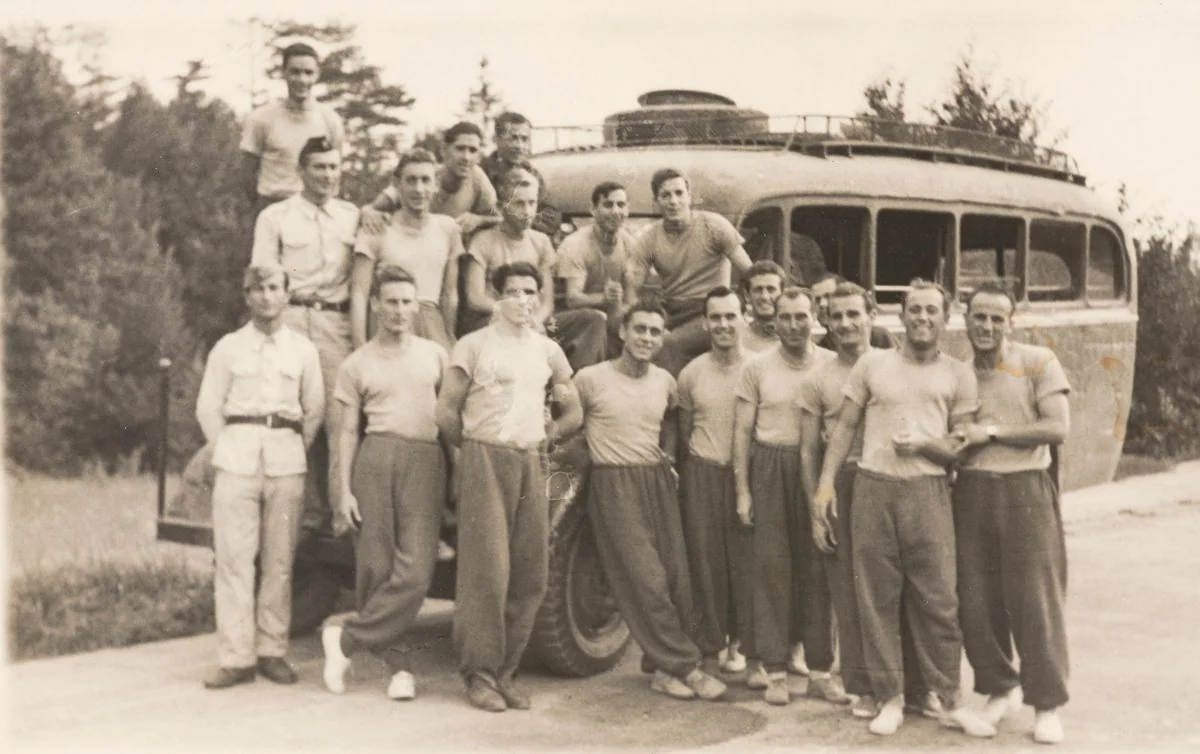
The crew from Deželićeva 11, in the yard where Bajdo's father Vinko is employed in Mr Hruby's disinfection and deratisa…
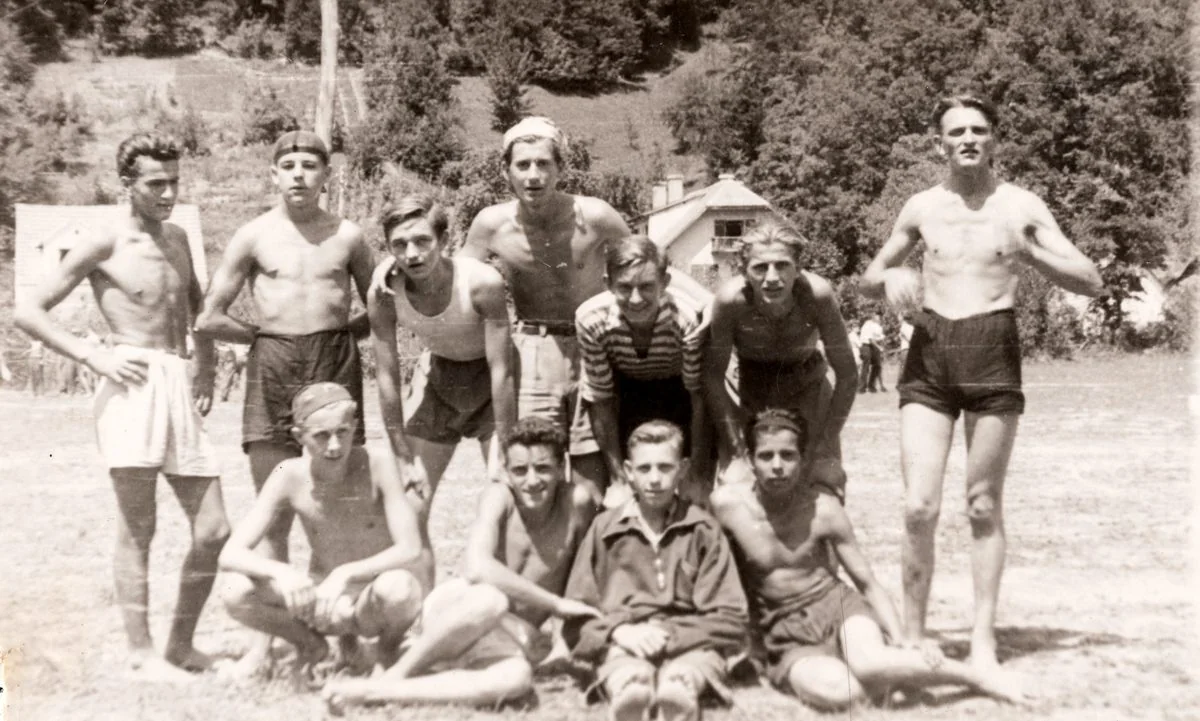
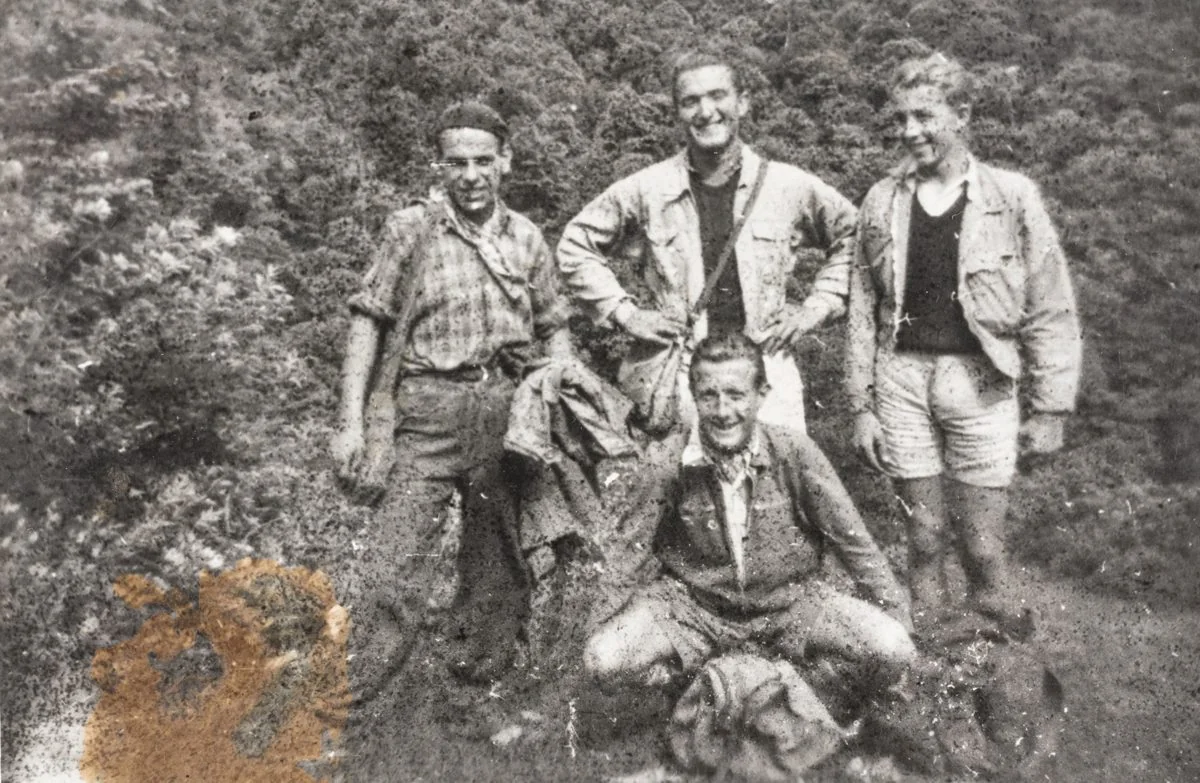
Bajdo with the gang on a trip to Crikvenica.
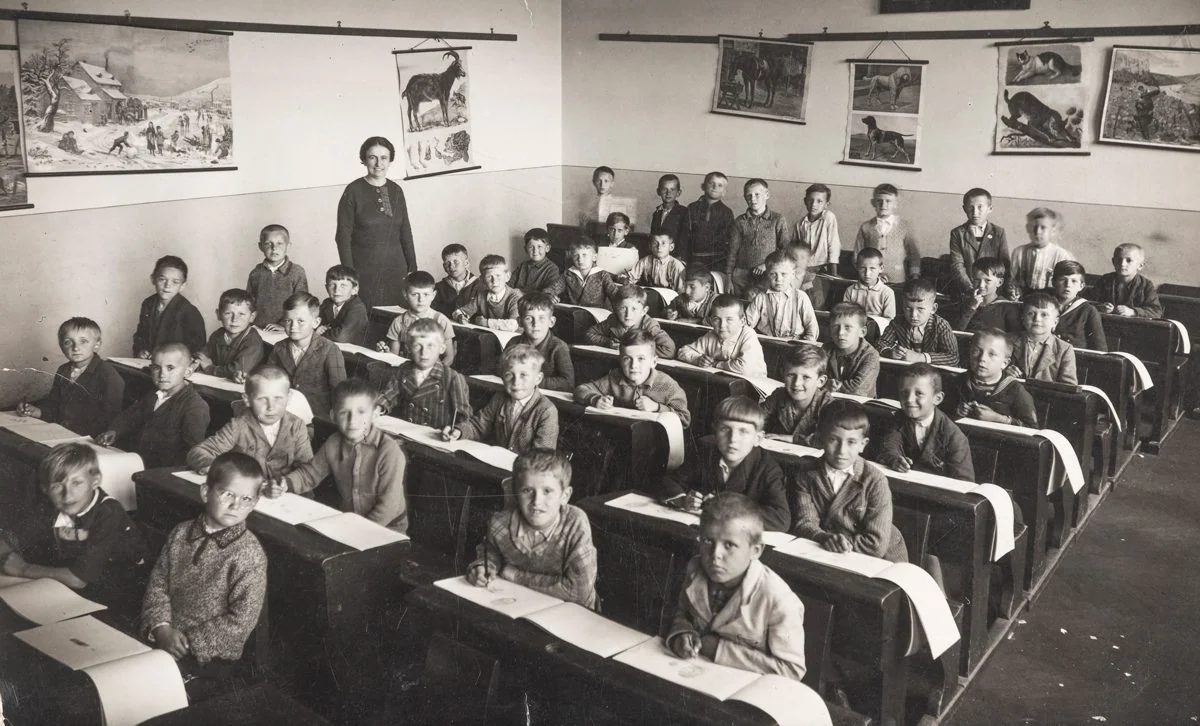
Bajdo's class with the teacher at the King Tomislav Public School. Bajdo is in the third row, fifth from the left.
3

1943.

And Bajdo had a clear run of it. Agile, quick with the dribble, equally valuable on both ends of the court. He broke into the first junior team in no time. The lads are taller and stronger, but Bajdo is the better player. Čop, two Dolićs, Petanjek, two Konići, Klepić, Mihovilić, Kavran, Dornik and Čop, along with Bajdo, were Concordians.

Bajdo was already courting Lili, Bajdo was already playing billiards, Bajdo was already playing cards for high stakes, and not infrequently played football 'with the big boys'. By mid-1943, Bajdo had broken through from all those juniors.

He also played for Concordia's reserve team in the onslaught of the excellent Kapetanović, Kosmat, Senčar and Arnold, and in the autumn, in a match against Ličanin, 3-3, he plays for 'Korisnica', after the Croatian State Assembly's proclamation on the annexation of all Croatian lands to the motherland, in favour of Hajduk for his only 45 minutes, at least as recorded by the press, for the first team when he replaced Frančičević in the second half. In the final match for the Croatian juniors, on 5 May 1945, five days after his eighteenth birthday, Vukas scored the winning goal for Zelene 1906 against the excellent Uskok, in what today would be described as a Maradona-style move, dribbling past half of the opposing team!

The Association of Young Trešnjevčani on an outing in Samobor
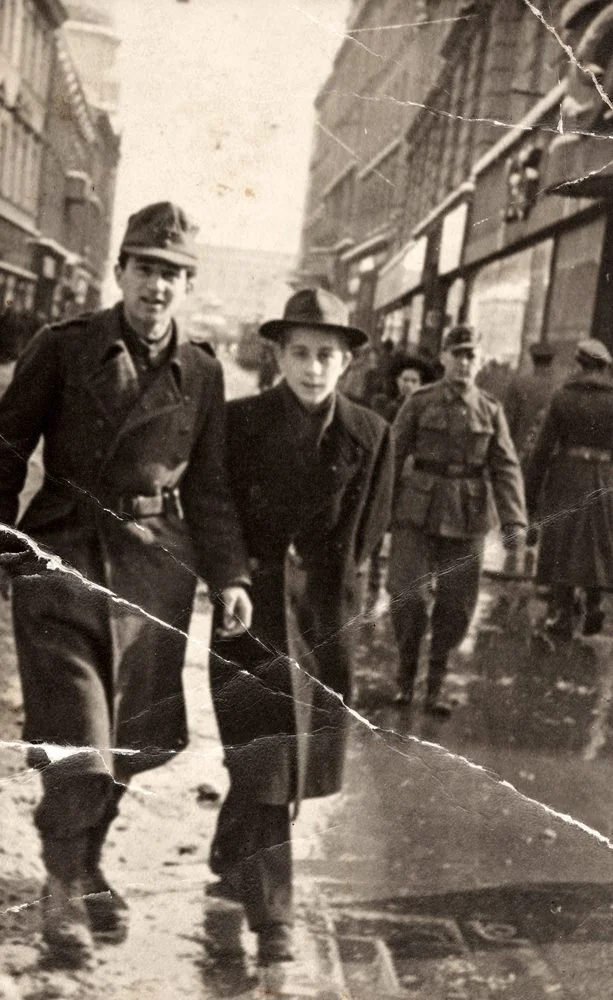
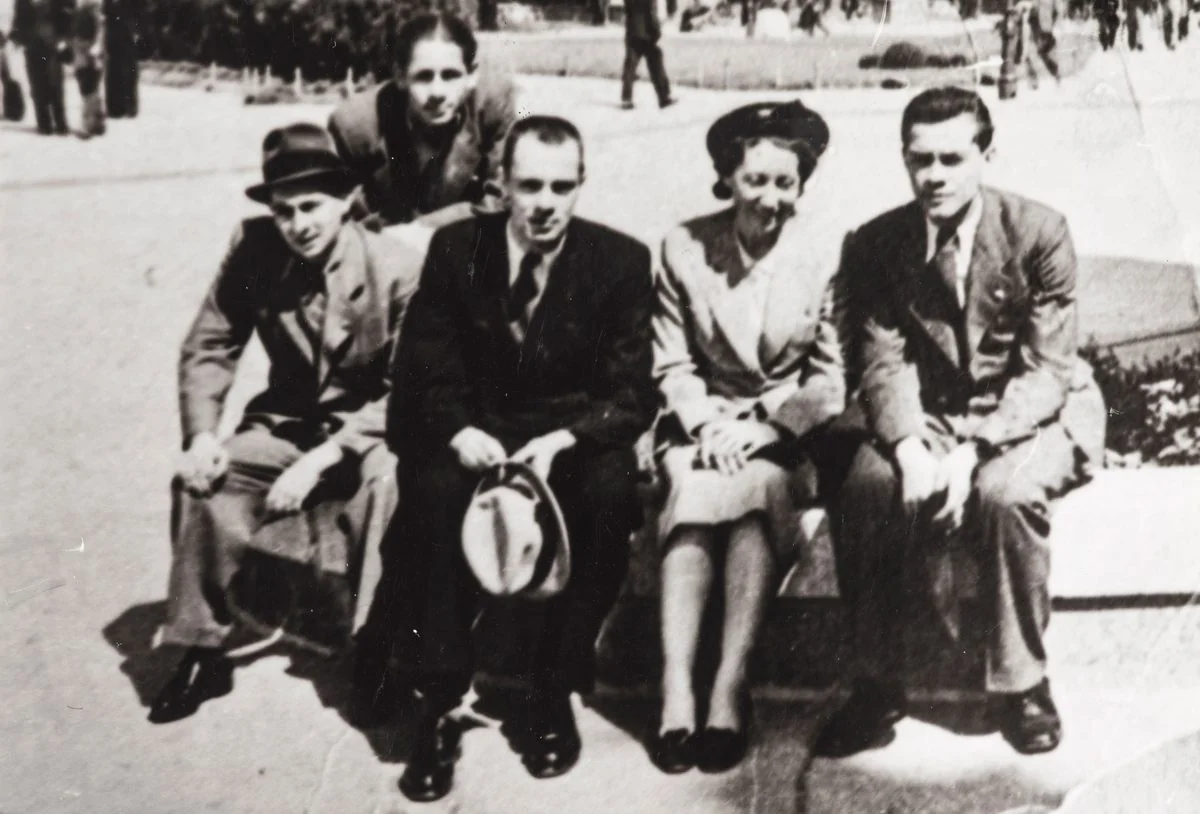
Young Bajdo in Ilica with the illegal immigrant in a Home Guard uniform, Luka Šarić.
The photograph is from Krešo Pukšec's album, which is leaning between Mr Ločko and Miljenko Ralić. Beside him are Zdenk…
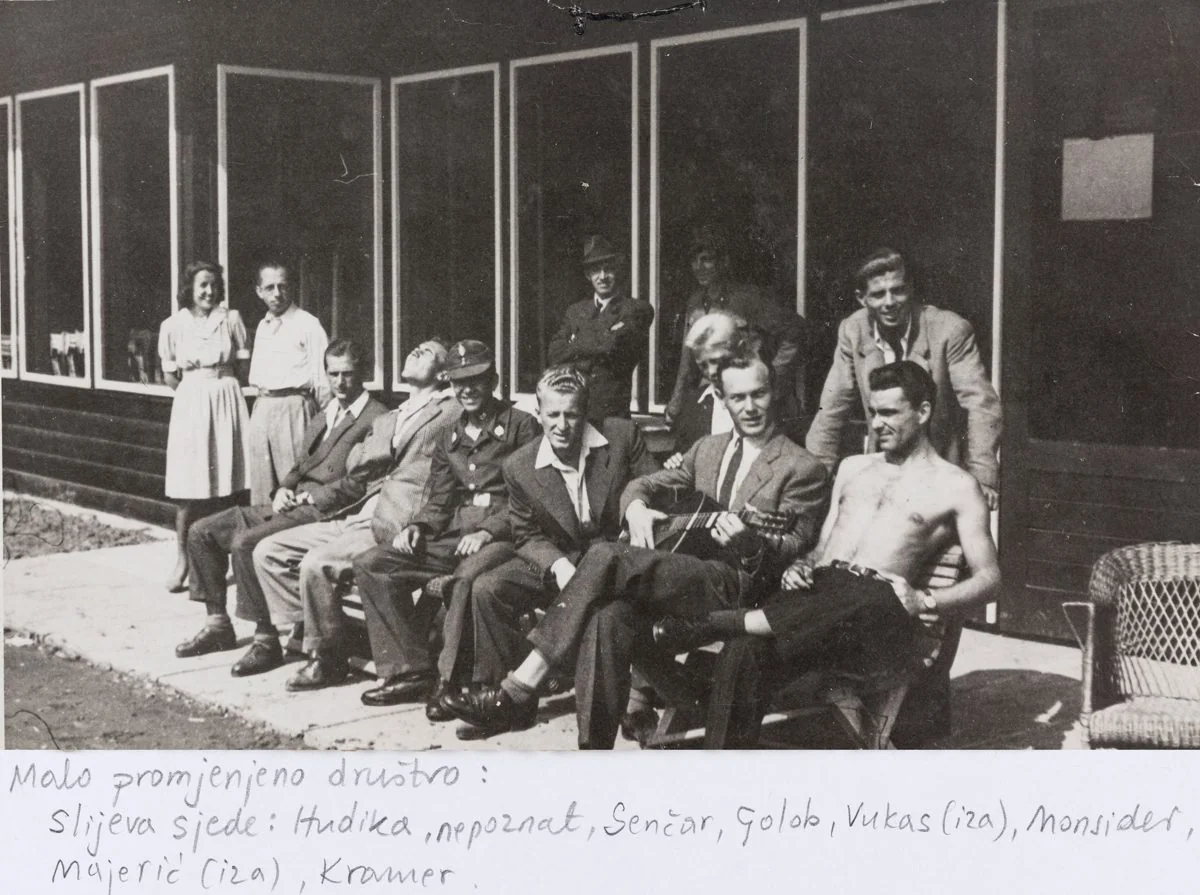
On the playing field at Concordia. From the left, seated: Hudika, NN, Senčar, Golob, Bajdo (behind), Monsider, Majerić …
Concordia Juniors, 1941/1942. Standing from left: Čop, Dolić, I. Mihovilić, Dolić II, Petanjek, Konić I, Kavran and Dor…
5

1945.

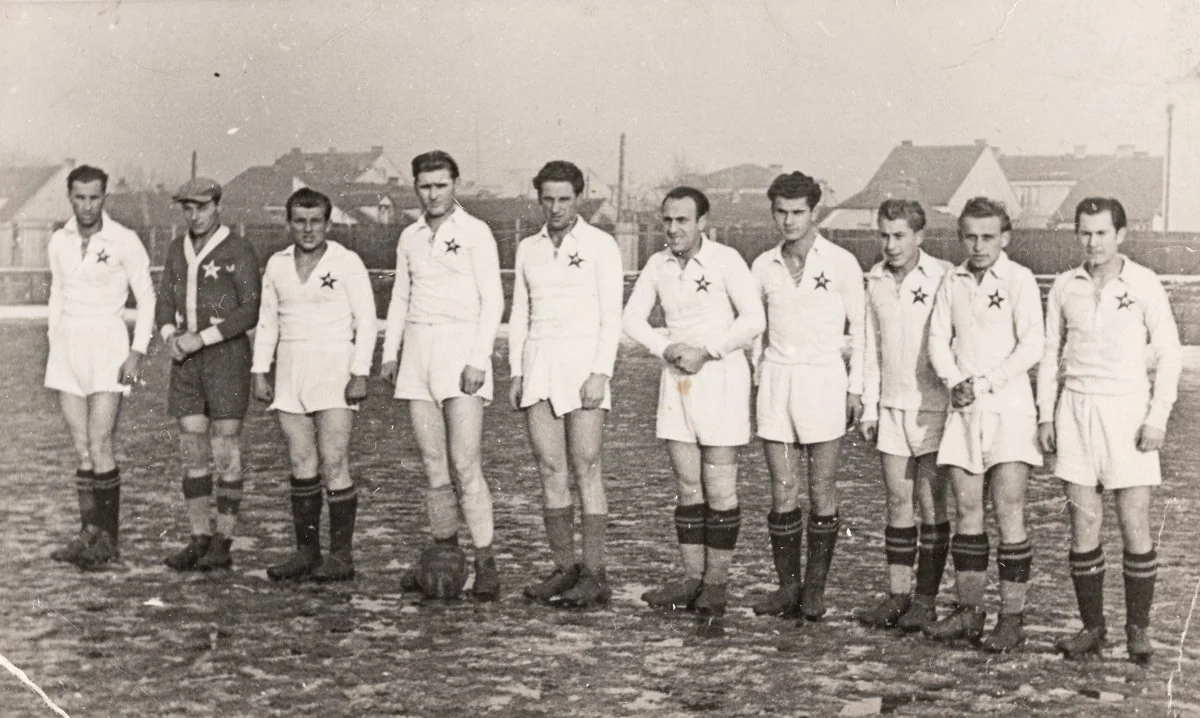
Not a word is said about a small club called Amater, for which Bajdo Vukas played immediately after the 1945 war. It has not been recorded anywhere what kind of club it was, who it belonged to, or who the 'bosses' were. It was a participant in the Zagreb League. And that's all. The coach is also unknown, but the line-ups for Amater's city league matches have been recorded. One of them was as follows: Kralj, Brenčun, Jurišić, Platužić, Šimunović, Osrečki, Kostanarović, Kapetanović, Kleščić, Hudika and Vukas.

Judging by the surnames, Amater was a good team. Bajdo would joke: "The fact that a Continental player came from Amater is a testament to what a team it was" (clearly, Vukas, ed.). Against the already strong Dinamo, they lost 5-1 and 6-1, and Vukas received glowing reviews. "This young man will certainly develop into a player of first-class ability." He carried his talent with him; he was a natural. His wit and technique were not hampered by his fragility or slight build. And why didn't he play for Dinamo? Without going into detail, it was down to Dinamo's business dealings, although, to be fair, there were some attempts, but to no avail.

"If you do that to me, I'll rise from the dead, just so long as I'm not next to you..."

His friends later used to tease Bajda: 'Shall we bury you next to the Dinamo stadium?' And he'd reply: 'If you do that to me, I'll rise from the dead, just so long as I'm not next to you...'.

Bajdo on a trip to Sljeme.

Bajdo on a trip to Sljeme.

1946.

The match is between Amater and Sloboda. It's a points game. Sloboda are coached by Toni Pogačnik. And the defence is marshalled by the lanky Bolfek, for whom breaking a leg is just a 'good morning'. In that very match, Bolfek broke Juršić's leg. Amater continue with ten men. Once again, Bolfek lifts his boot on that handsome Šimunović they call Cigan. Srećko avoided that challenge to the eternal fields, grabbed hold of Bolfek with his arms, and the referee sends him off. Where's the referee? Amater are down to nine men! In the end, it's 2-1 to Sloboda.
"I want that little yellow one at Hajduk. Straight away!"

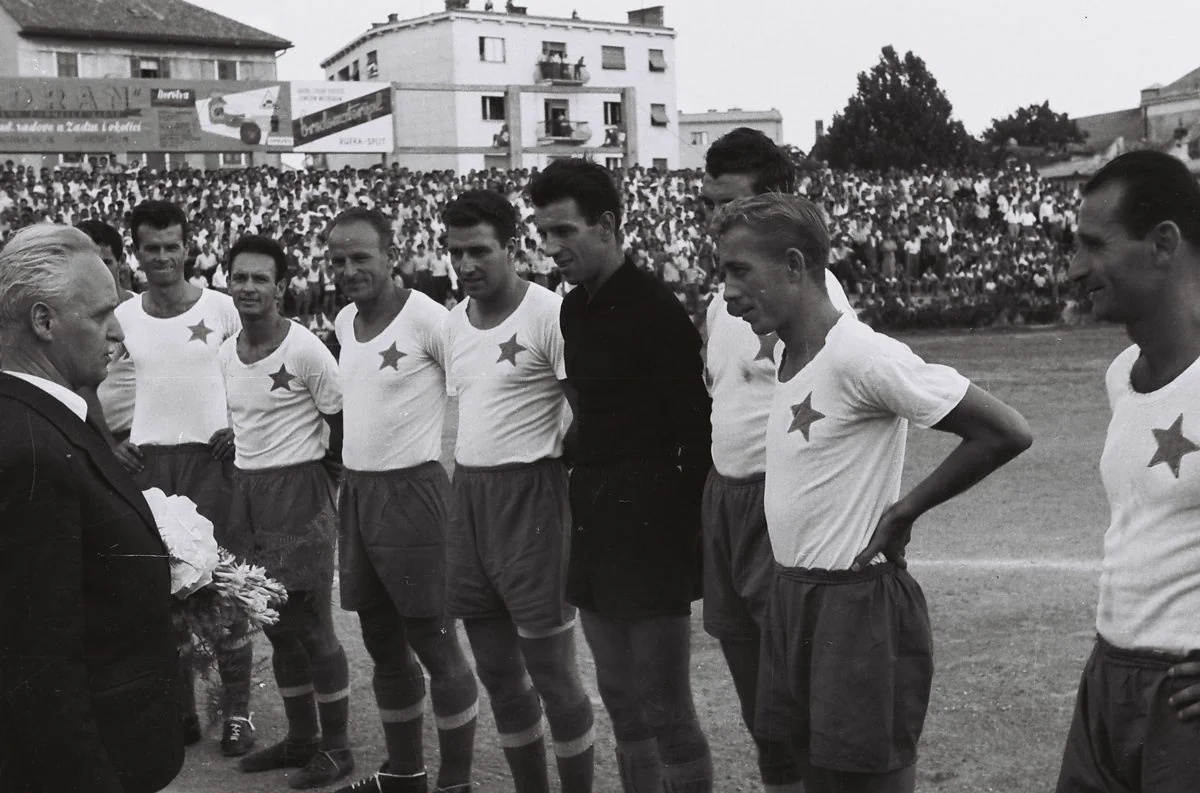
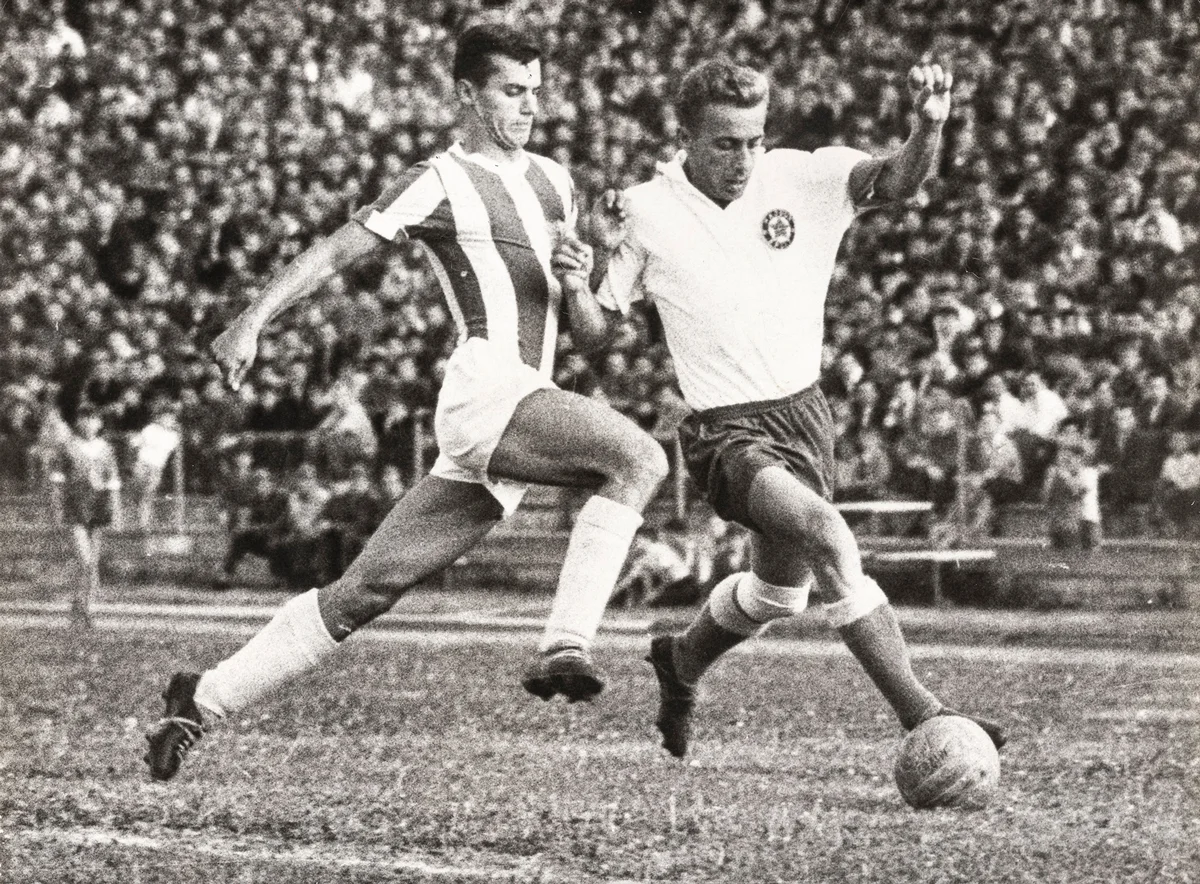
But after this match, there's no more Amater or Sloboda. Tekstilac and Grafičar join the merger, and so the city of Zagreb gets - NK Zagreb. Vukas plays in Zagreb, too. And he's not alone; he has his 'spaner': Marold, Klaić, Pogačnik, Kapetanović, Kleščić, Platušić, Drvodelić, Jurišić, Muradori, Pećnik. After the match between NK Zagreb and Split in Split, Vukas was so brilliant that Frane Matošić, watching the game, ordered: 'I want that little yellow one at Hajduk. Now!'

Bajdo also wanted to join Hajduk, but his father Vinko refused or made conditions. And he got guarantees: schooling and Australia. And, when Bajdo finally went down there, he sent him five hundred dollars a month for living expenses! He played his first match for Bile in Mostar. In the Split side's victory, he scored two of the eight goals. The journalists were given instructions: don't write. And they didn't. Or they wrote in code: 'The left wing stood out'. He wasn't in the line-ups. Or, if he was, it was as Juričenko! That was the policy... Hats off to Fran! The Hajduk fans immediately realised they had a golden goose on their hands. The Blaus didn't.
Bernard – the later 'pro' number one among the Zagreb amateurs of the 'Amater' club, on the pitch of the former Građans…

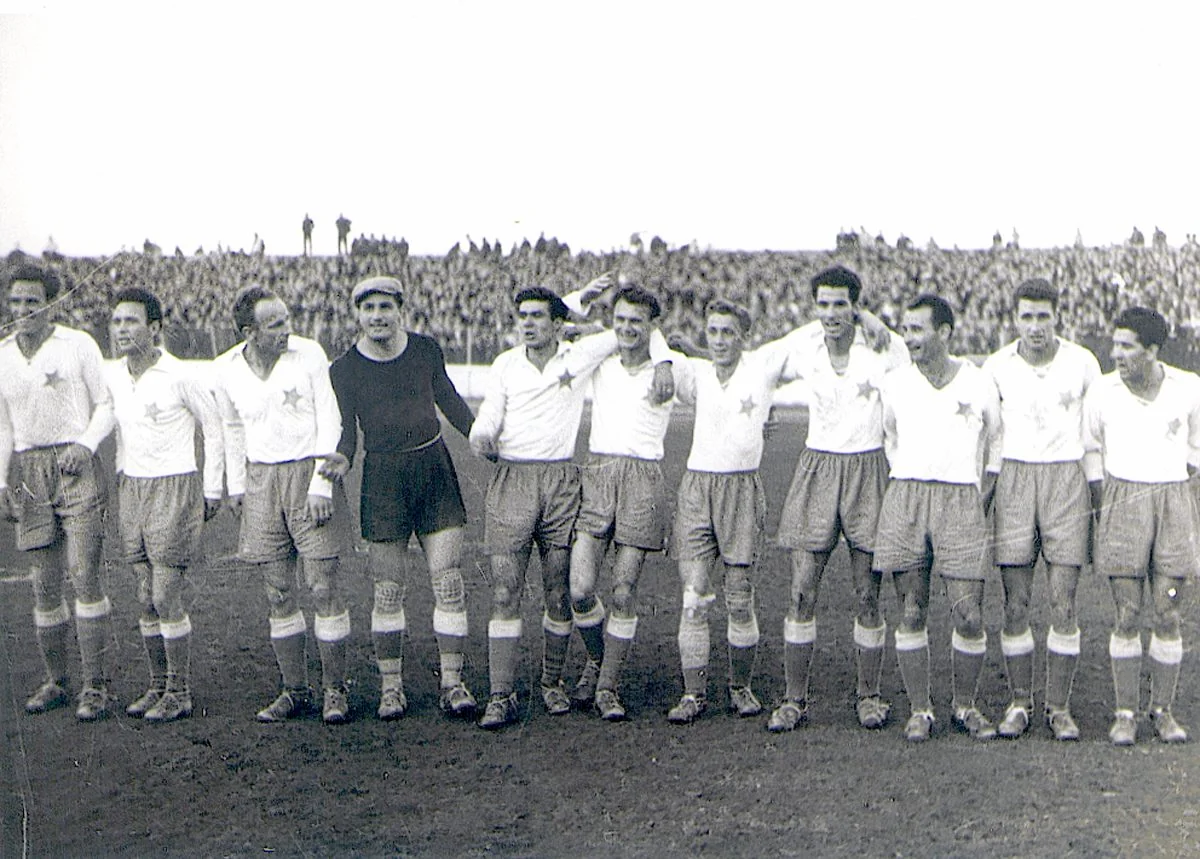
Bernard – the later 'pro' number one among the Zagreb amateurs of the 'Amater' club, on the pitch of the former Građanski at Koturaška. From left: Pilko, Rupec, Mulej, Kleščić, Arapović, NN, Brenčun, NN, Vukas, Platužić.

1947.

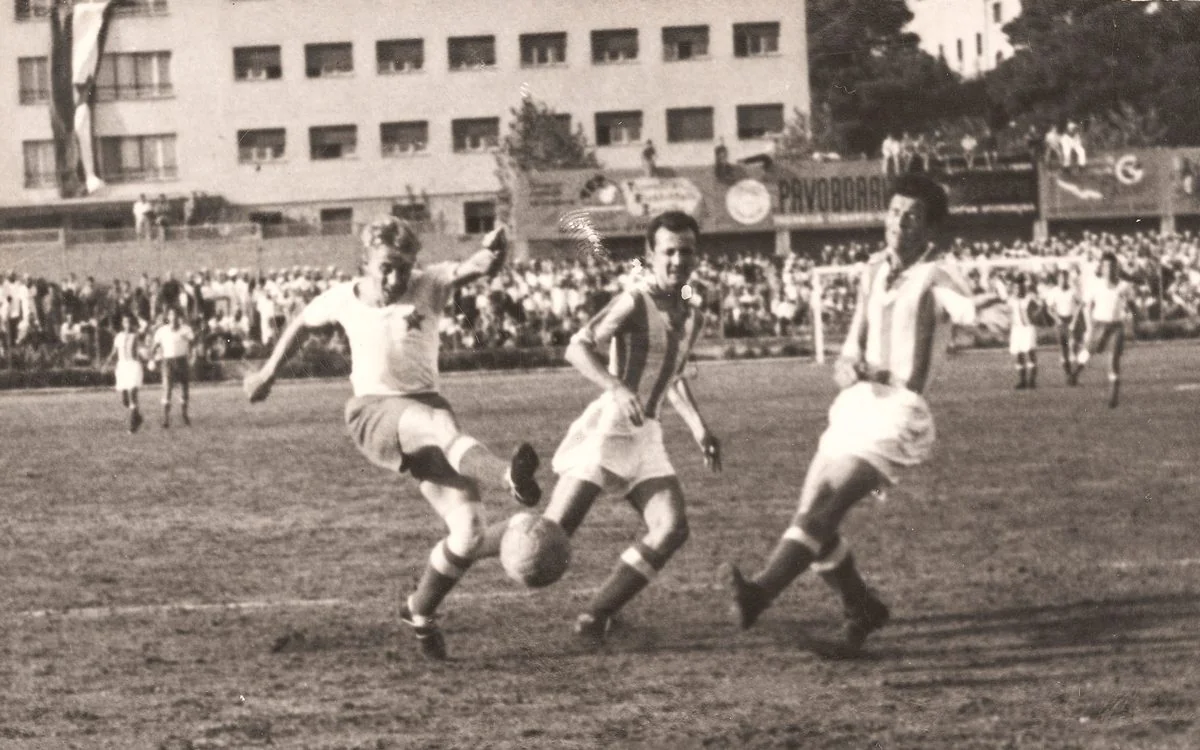
Hajduk are in Slovenia for their pre-season preparations. They play as many as five matches, but in four of them Vukas is still listed as the 'left winger'. And it reads: 'the best was the left winger'. But in the final match against Kranj, for the first time it reads… Matošić, Vukas! From that day, a Hajduk star was born.

Announcement: Great joy to you all, we have Bernard. Overnight, Bajdo becomes the very definition of a baller in Split. People flock to see Vukas. He dribbles, makes runs, assists, and scores. Even the old fox, Frane Matošić, is in the shade. At Dinamo, they're gnawing their nails, tearing their hair out—it's all too late. And Bajdo gets more and more 'fetivi' by the day. A master of cards, he had a briscola in his little finger; a fine voice, he sang in the choruses; he even married a local girl, Stjepanka Boban. He came alive, the ringing of St. Duje got under his skin. He loved prawns, lobster, mussels cooked in wine, and the sea, the blue sea.

Hajduk are in pre-season training in Slovenia from 2 to 8 August, under the leadership of Mile Ivančić, a member of the…
4
Bernard Vukas, 1948.
1948.

First Olympic medal

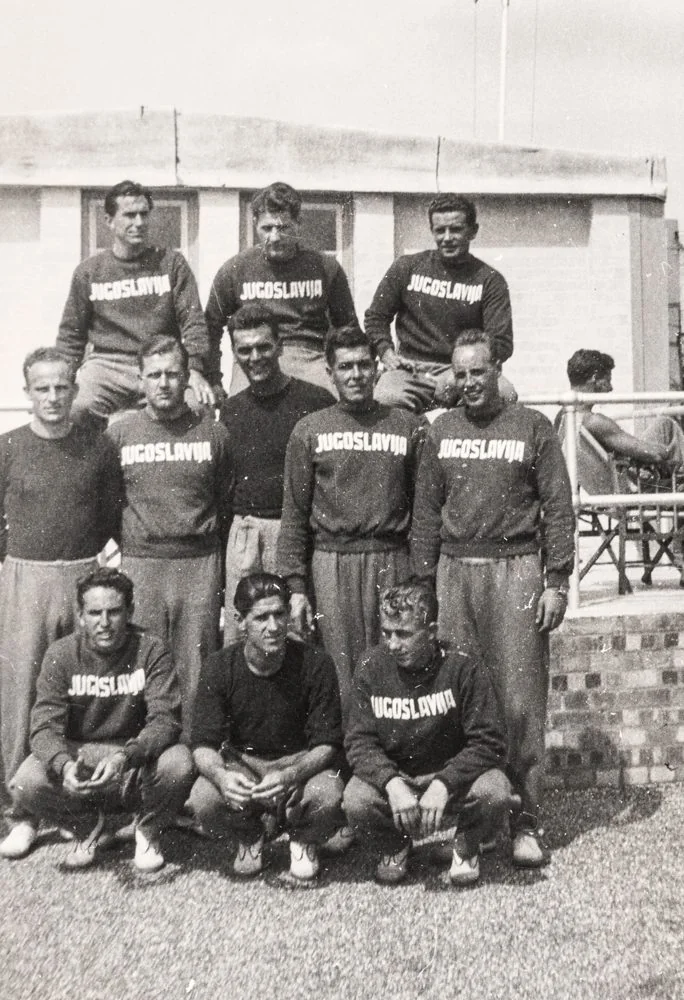
He has made it into the elite circle. Against Albania, a 0-0 draw, he plays his first match for the national team. London is just around the corner. The Olympics. Will Bajdo make it? He will. The Olympic team is strong, full of experienced players, even from Građanski: Jazbinšek, Cimermančić, Bobek, Wolfl, Brozović, Šoštarić, and they went on to win a silver medal.

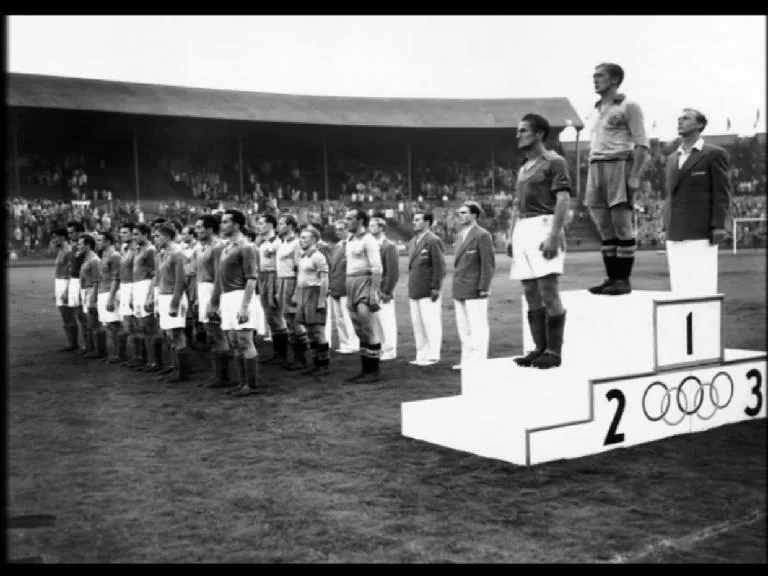
On the winners' podium, Brozović received the silver medal for Yugoslavia. Bajdo is third from the right.
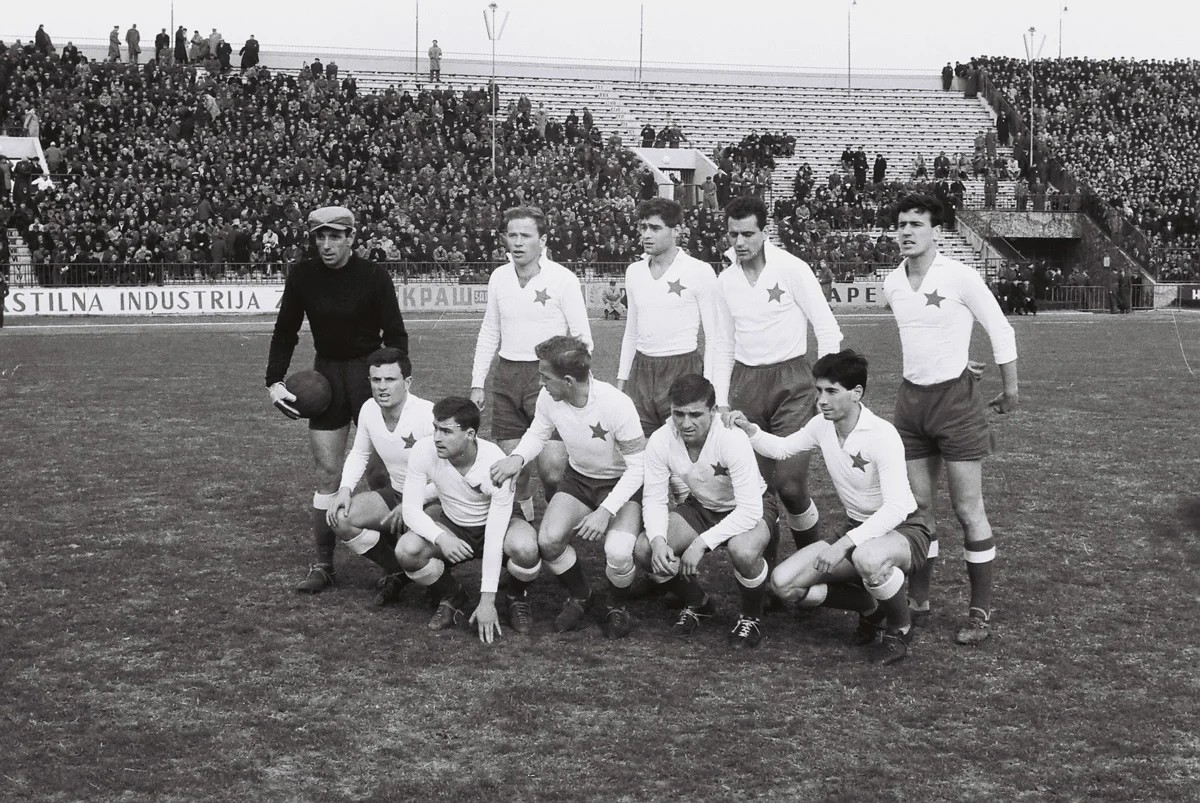
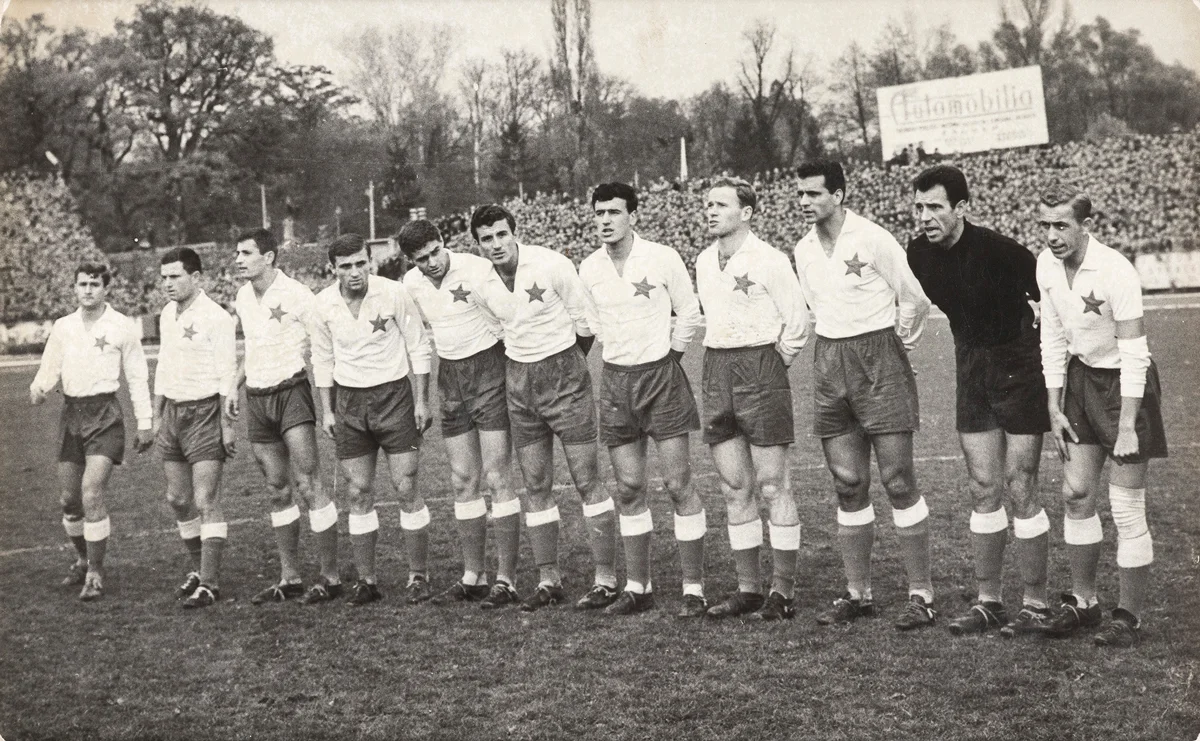
Part of the Yugoslav national team at the London Olympic Games. Of the Hajduk players, standing in the middle row from the left is Frane Matošić. Crouching in the centre is Božo Broketa, with Bernard Vukas beside him.
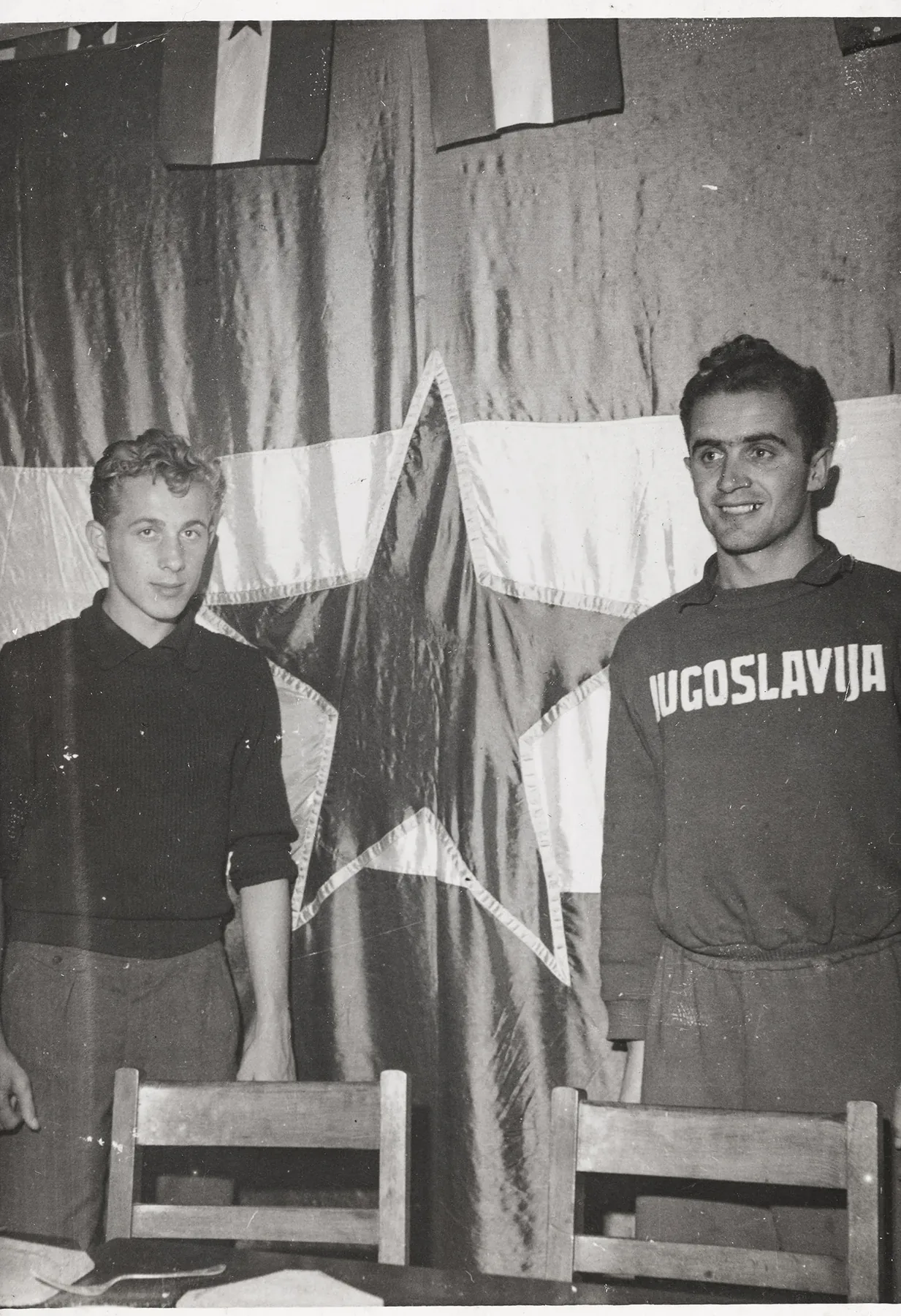
Vukas and Boba Mihajlović at the 1948 London Olympics.
A young Bajdo in the white shirt of the Hajduk team on the Starý Plac.

Vukas only played in the final match, against a Swedish team that featured Gren, Nordahl and Liedholm. Bajdo always complained that, had it not been for the Serbian blunders, Jazbinšek, whom Vukas greatly admired—and for whom he himself had almost moved to Metalac—would have played against the formidable Nordahl. He was the sort of man who would surely have stopped that giant, a proper fireman. As it was, Nordahl simply overpowered the robust Jovanović with his physicality. And - 1-3. It was Bajda's first Olympic medal, in London in 1948.

1949.

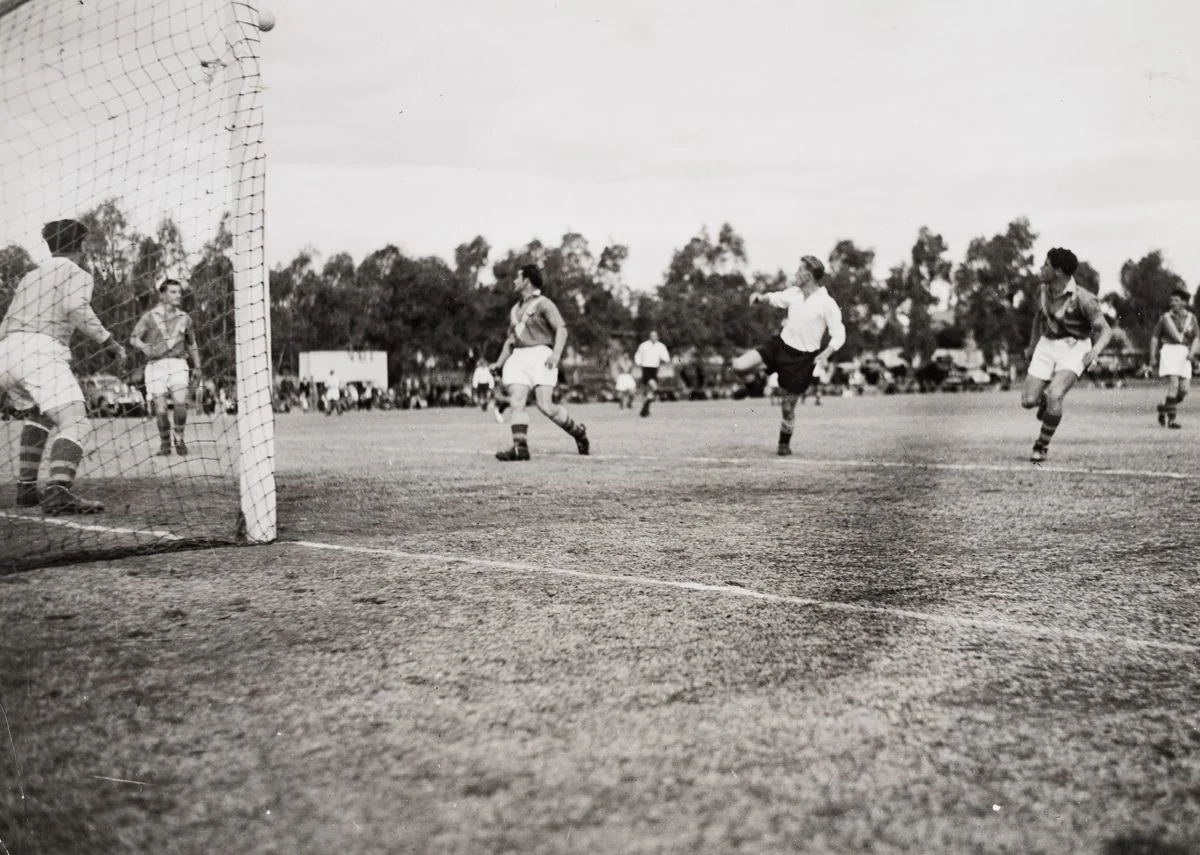
This is the year that means fulfilling my father's demands. Vukas is going on tour with Hajduk to Australia. For two months. There wasn't a pitch Vukas hadn't left his mark on. They were unforgettable days. We trained like mad. Everyone knew that a World Cup was waiting for them in the fifties.

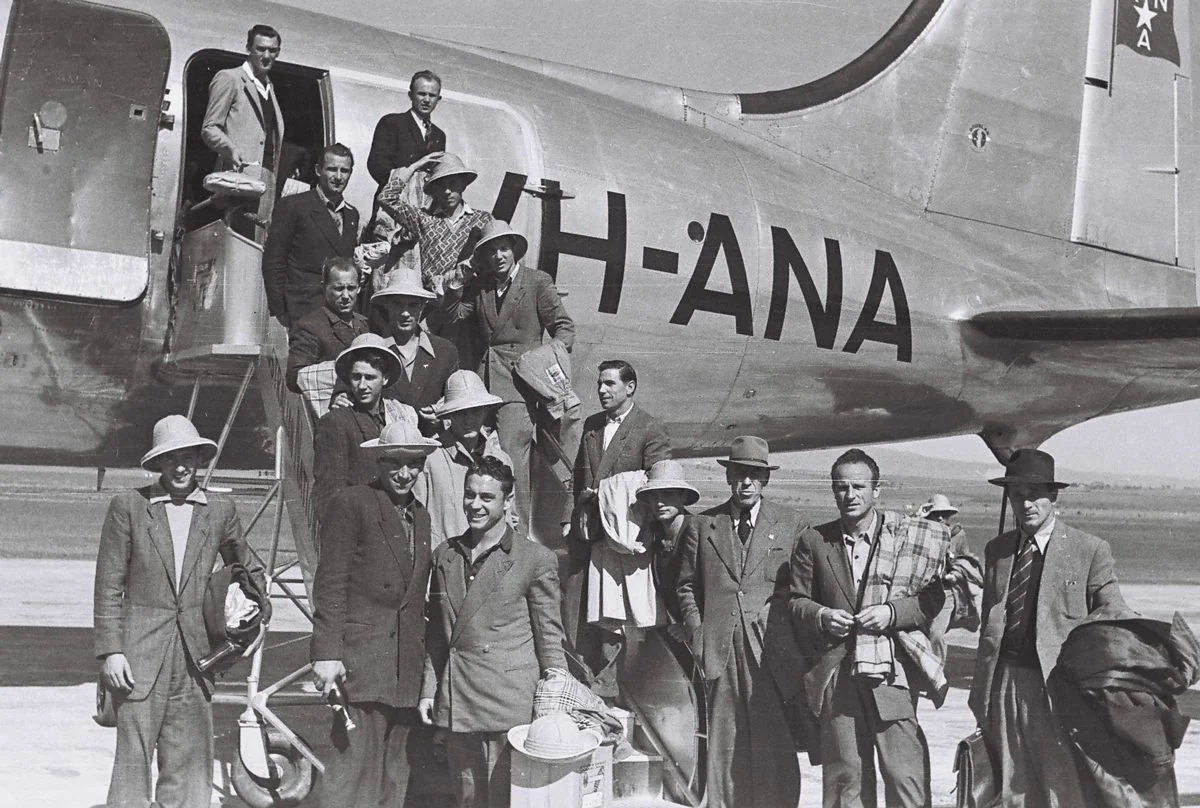
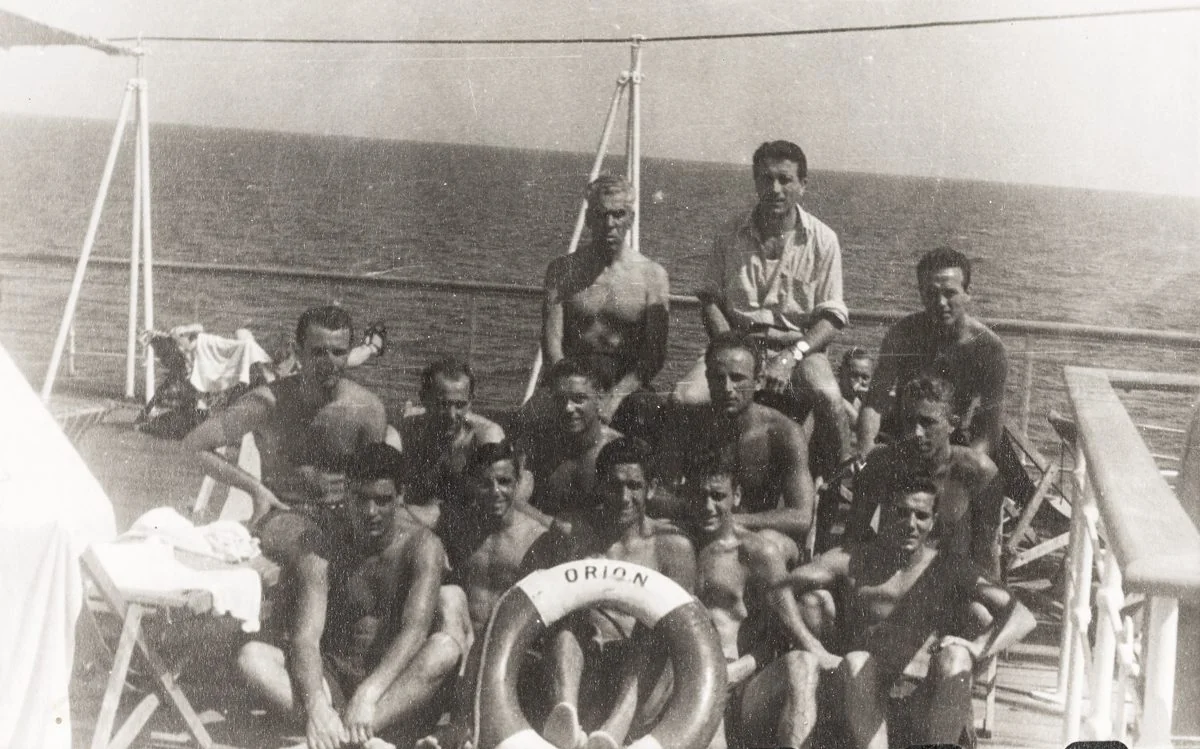
With their tour of Australia, Hajduk had visited all five continents. People had already forgotten Vukas's look by the time he arrived in Split: a cockade, tight, Scottish-style trousers, patent leather shoes, immediately in the company of poker players, and if necessary, they would even go to the islands. There was a lot of noise and shouting. But time has since calmed both Bajda and Hajduk. Adelaide, Sydney, Perth and Melbourne were the successful postcards from Australian Hajduk supporters on the club's longest post-war tour.

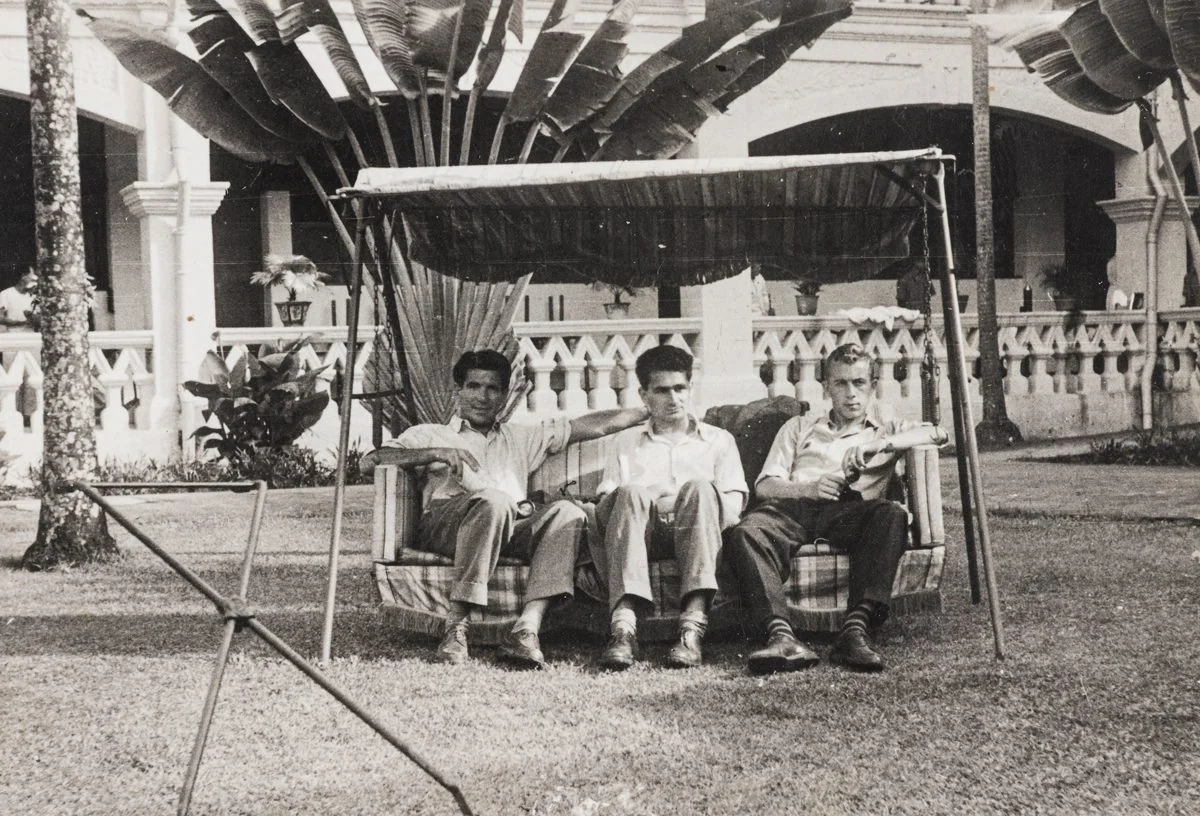
In front of the Raffles Hotel in Singapore, on the journey to Australia, on 24 October, seated from left: Viđak, Božida…
24 August 1949, Brisbane: Australia national team – Hajduk 3–6
Bernard Vukas
Bernard Vukas at one of the matches against the Australian national team.
Hajduk's players with the technical staff at the Broken Hill airfield.
Hajduk's players and coach Kaliterna on the steamship Orion, which departed from Fremantle on 28 September on its way h…
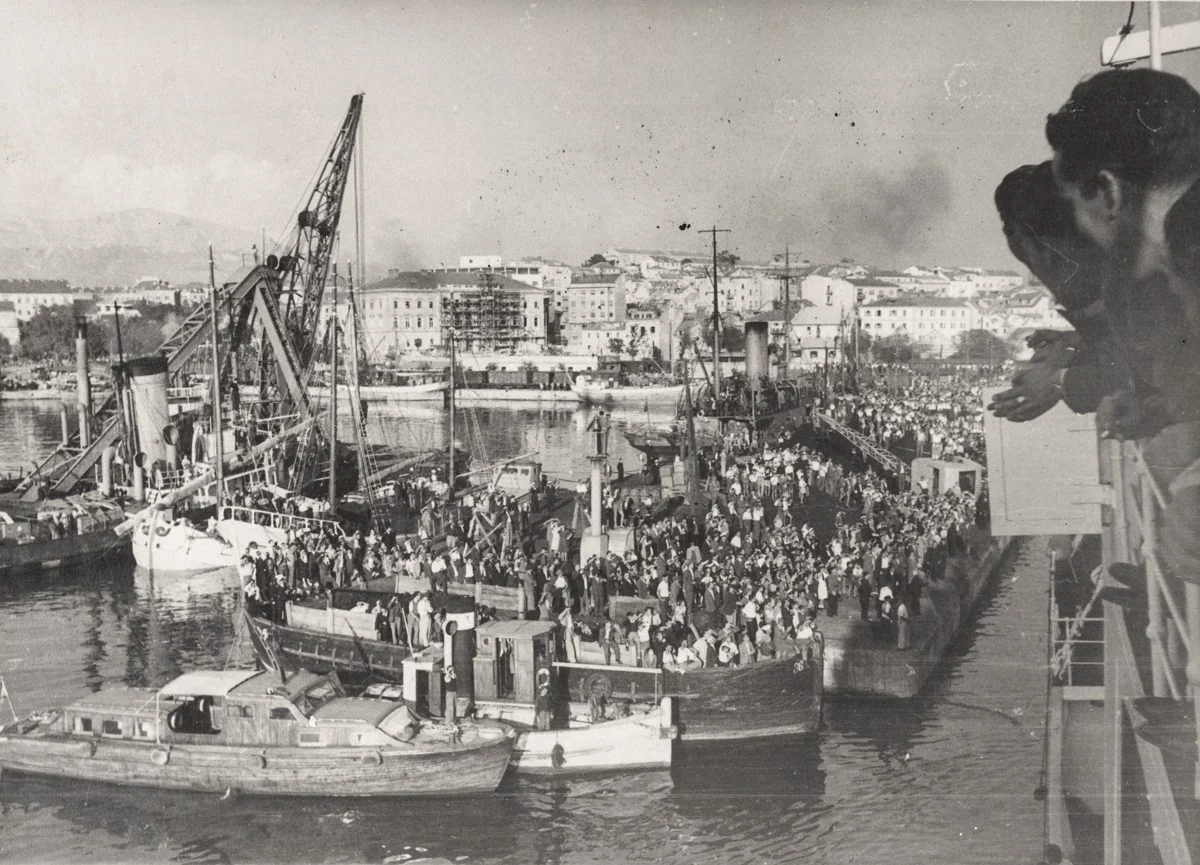
Return to Split on 25 October aboard the Topusko, with a magnificent welcome at the port of Split.
7
Bernard Vukas, 1950.
1950.

Yugoslav champion

A great year. The World Cup in Brazil and Bajda's match at the famous, newly-opened Maracanã, a 200,000-seater stadium, against Brazil. It wasn't to be. The roar was eerie, a rumble from the very depths of hell, no one could hear a thing. Vukas is on the right wing! But out there in white are some jugglers, Brazilians who literally eat the ball. Leo Lemešić, the Split referee, is the arbiter of justice, but mostly a spectator. He too claimed that that Brazil of the fifties was the best of all Brazilian sides.

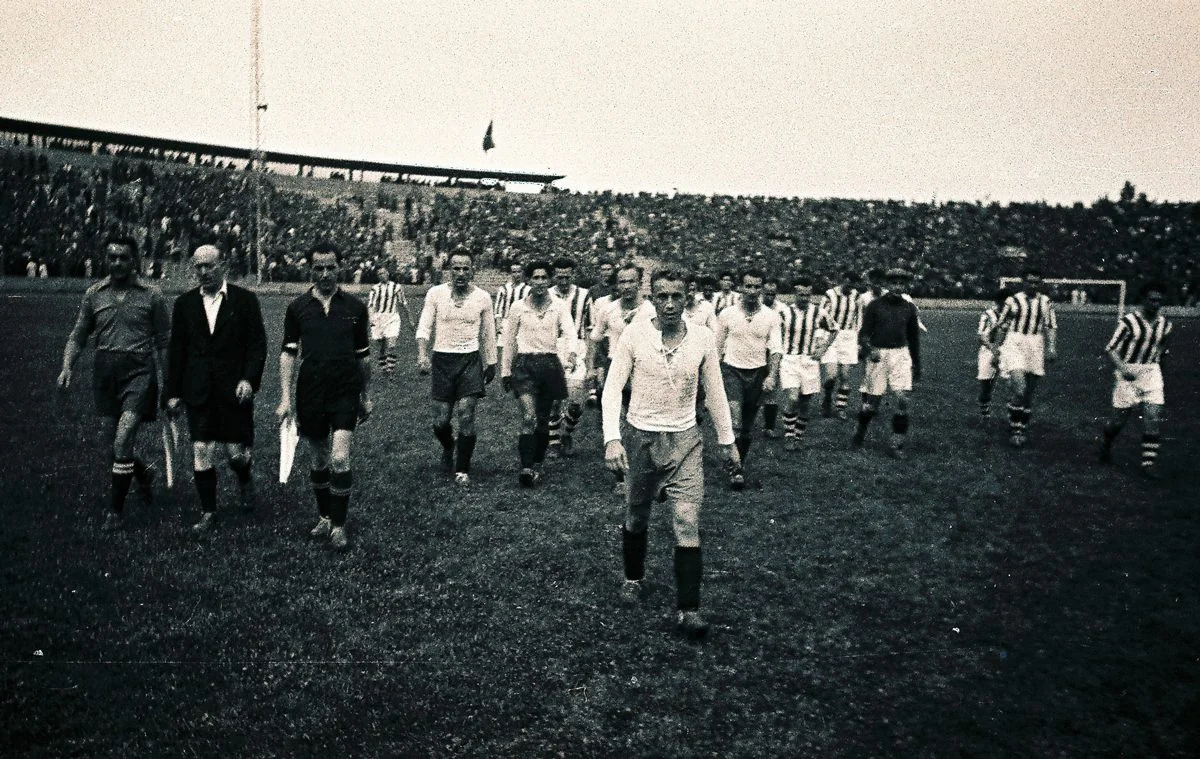
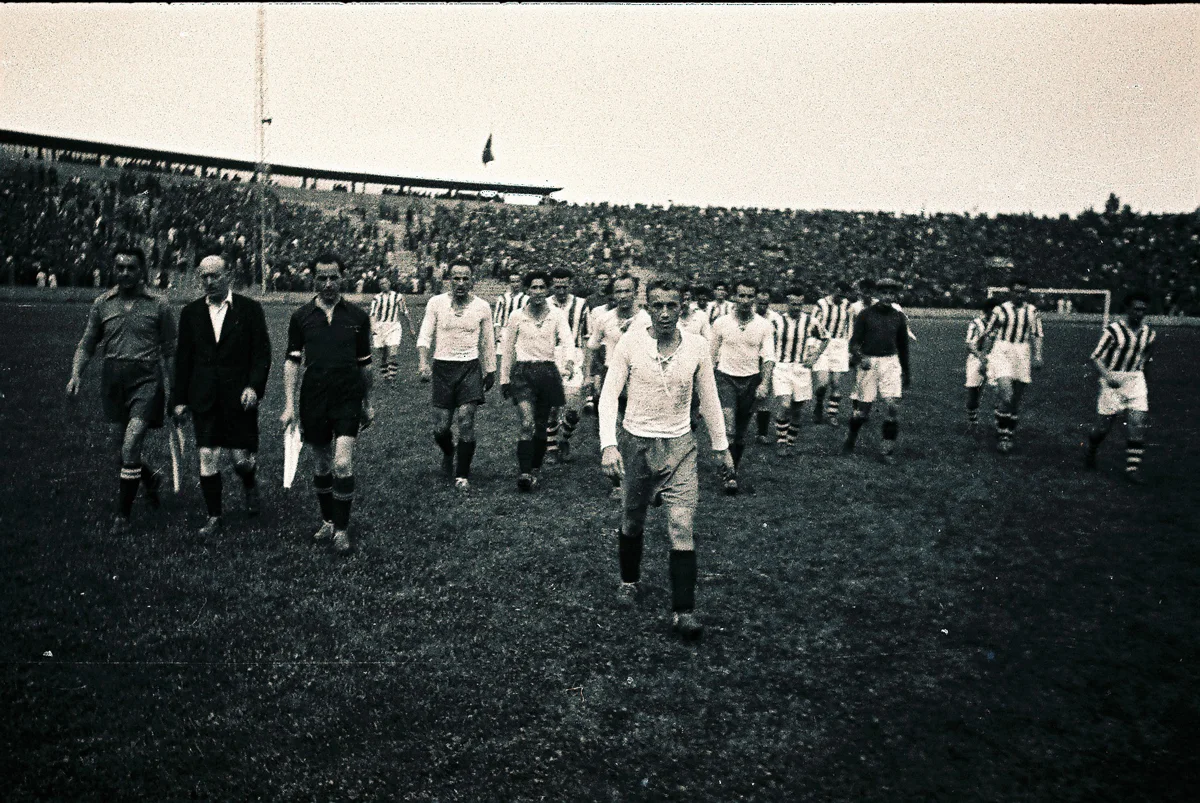
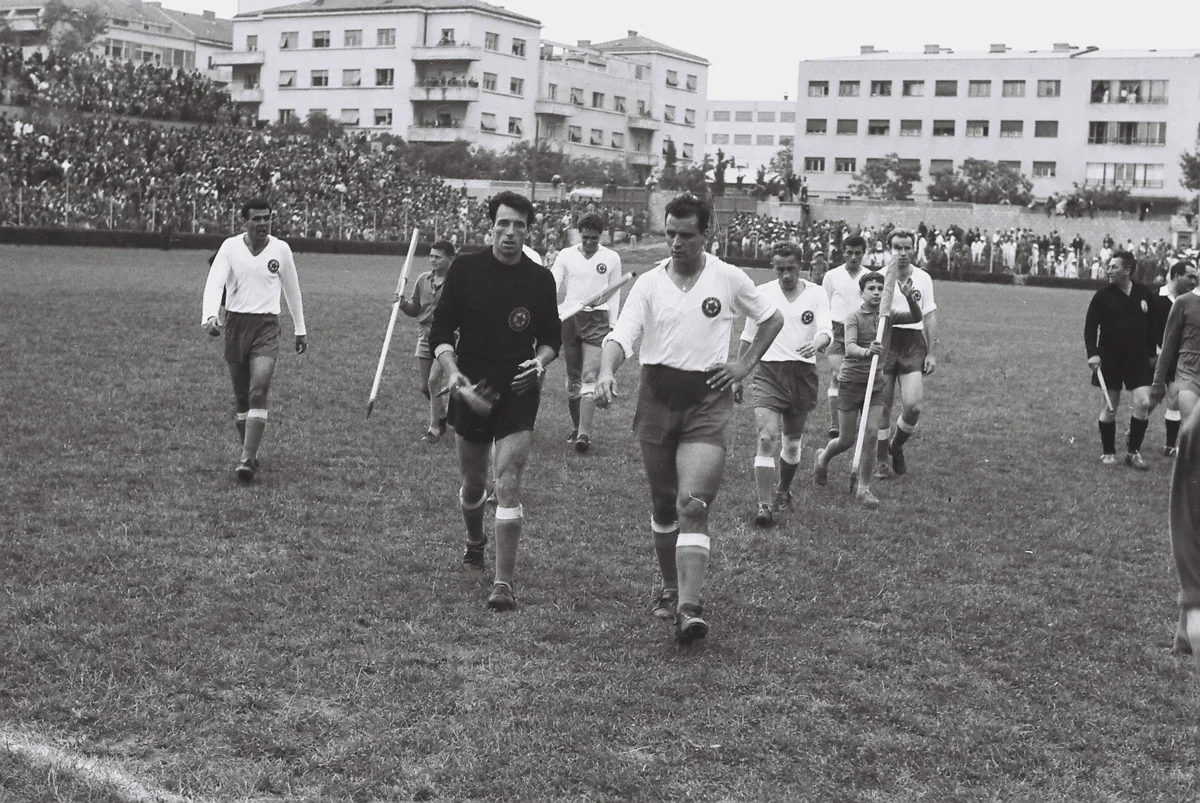
The players come out after the first half; Bajdo is in the centre, behind him Frane Matošić, Broketa, Drvodelić and Luštica, and to the left of the players is referee Mlinarić from Zagreb.
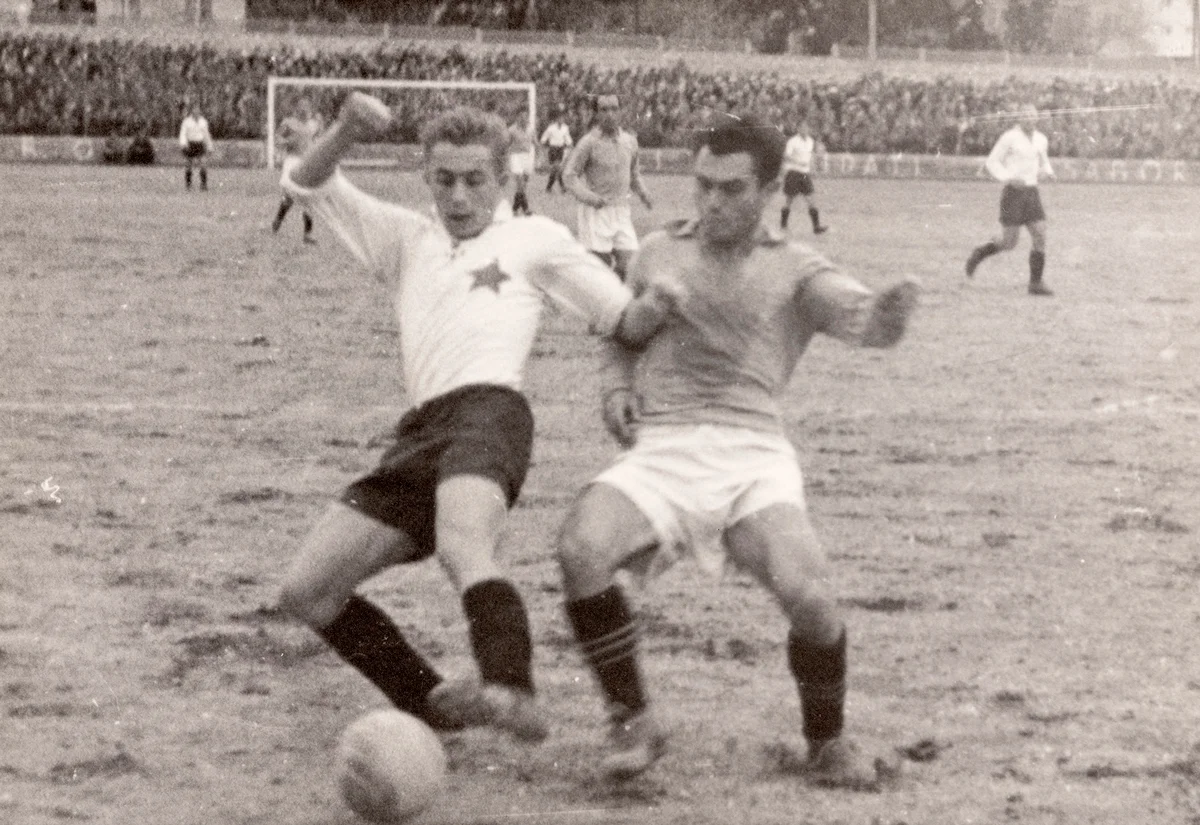
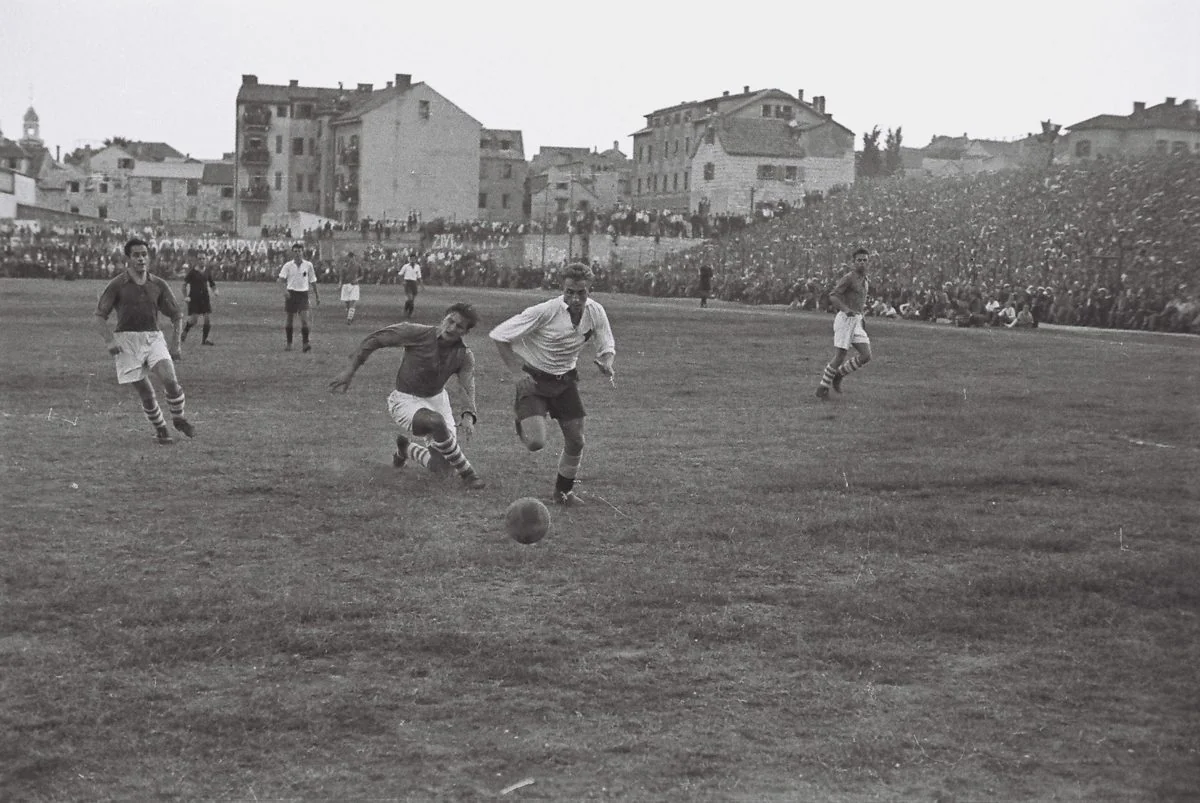
12.11 Split Hajduk-Budućnost 2-0. Bajdo in a battle with Budućnost's right-back.
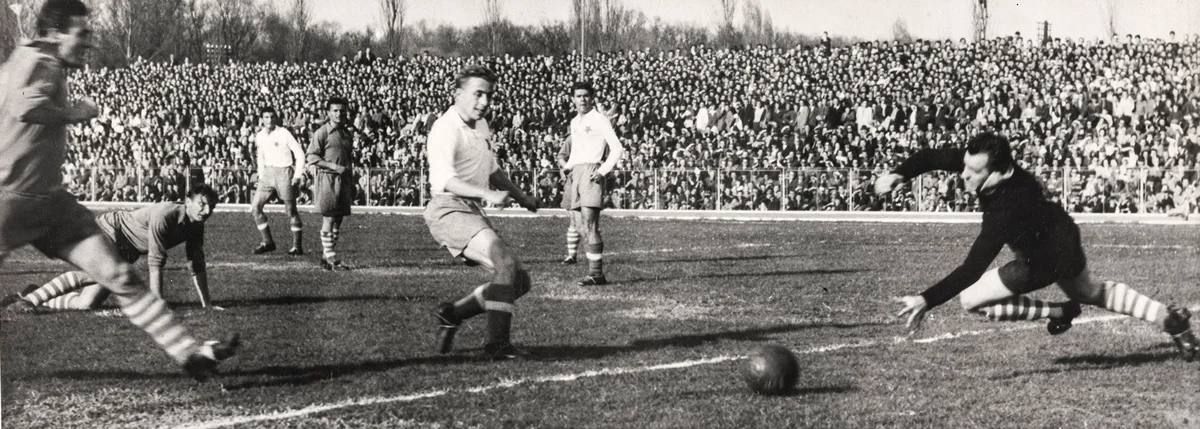
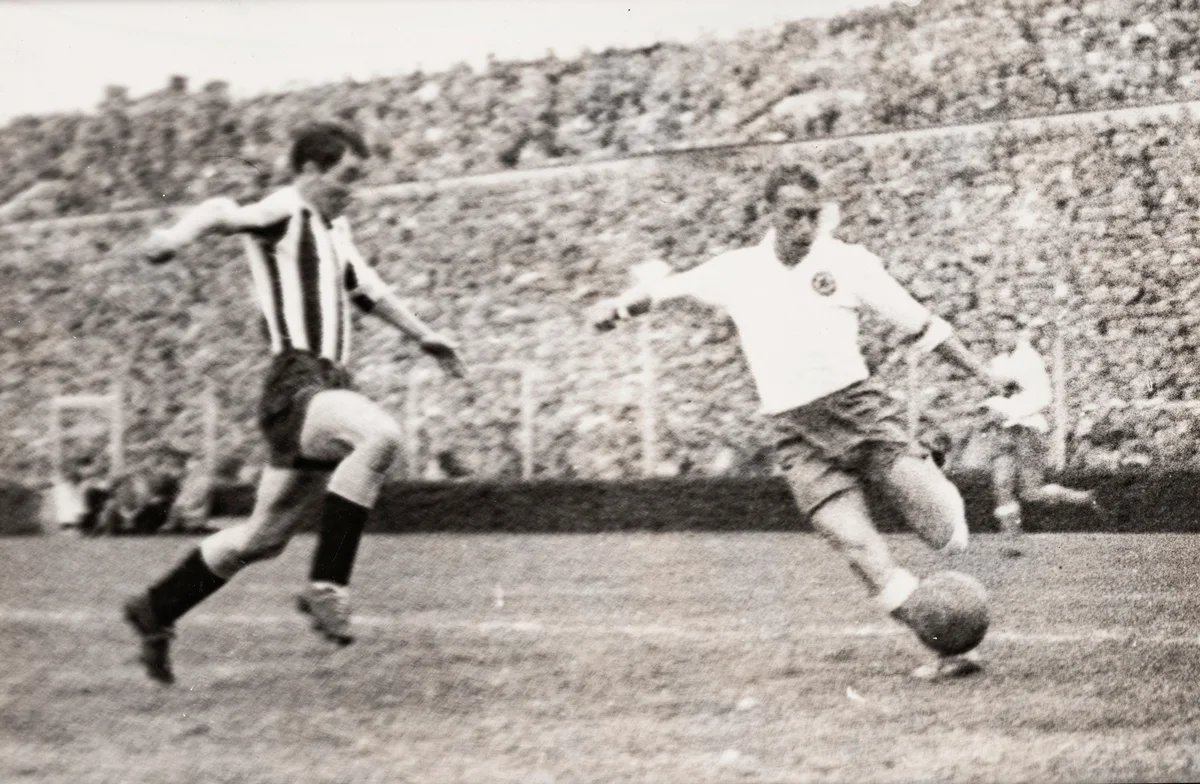
15 October, Split. Hajduk – Dinamo. 1–0. Bajdo dribbles past Horvat.
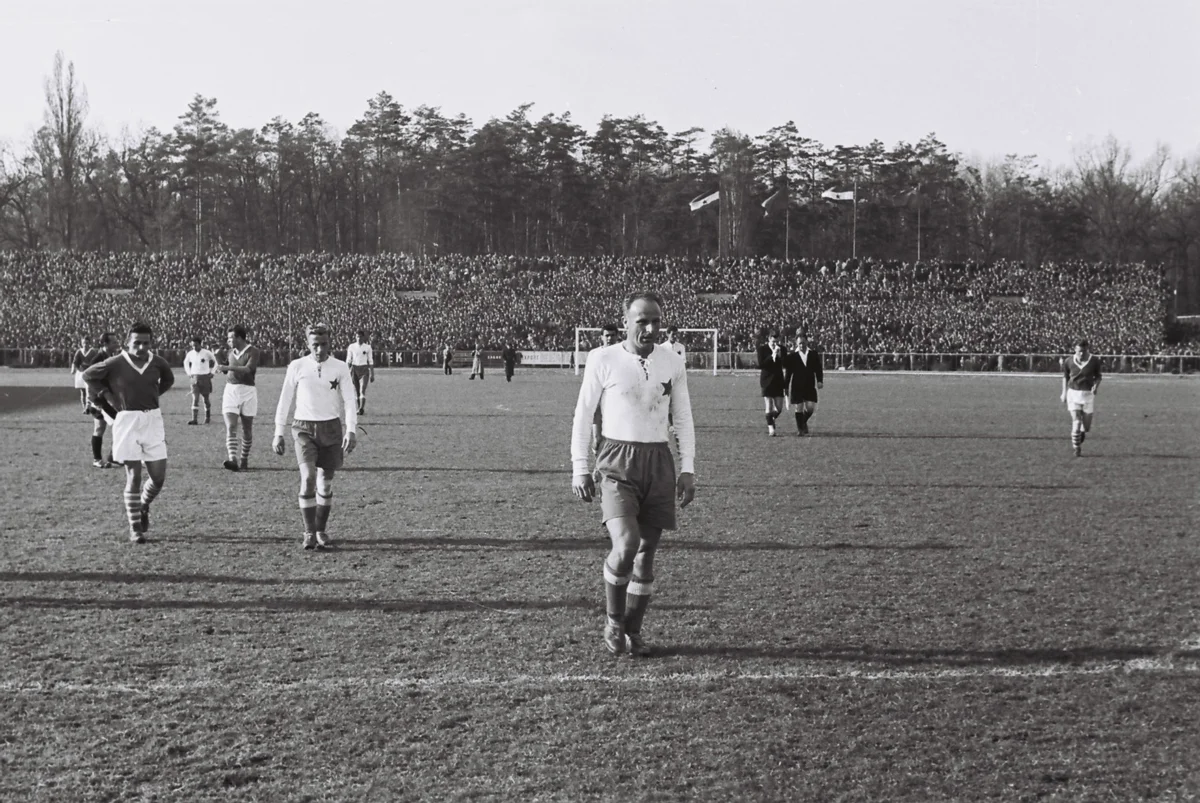
23 April, Belgrade. Red Star – Hajduk 2–2. The players emerge after the first half: Bajdo in the centre, behind him Frane Matošić, Broketa, Drvodelić and Luštica; in the middle is the referee Mlinarić from Zagreb.
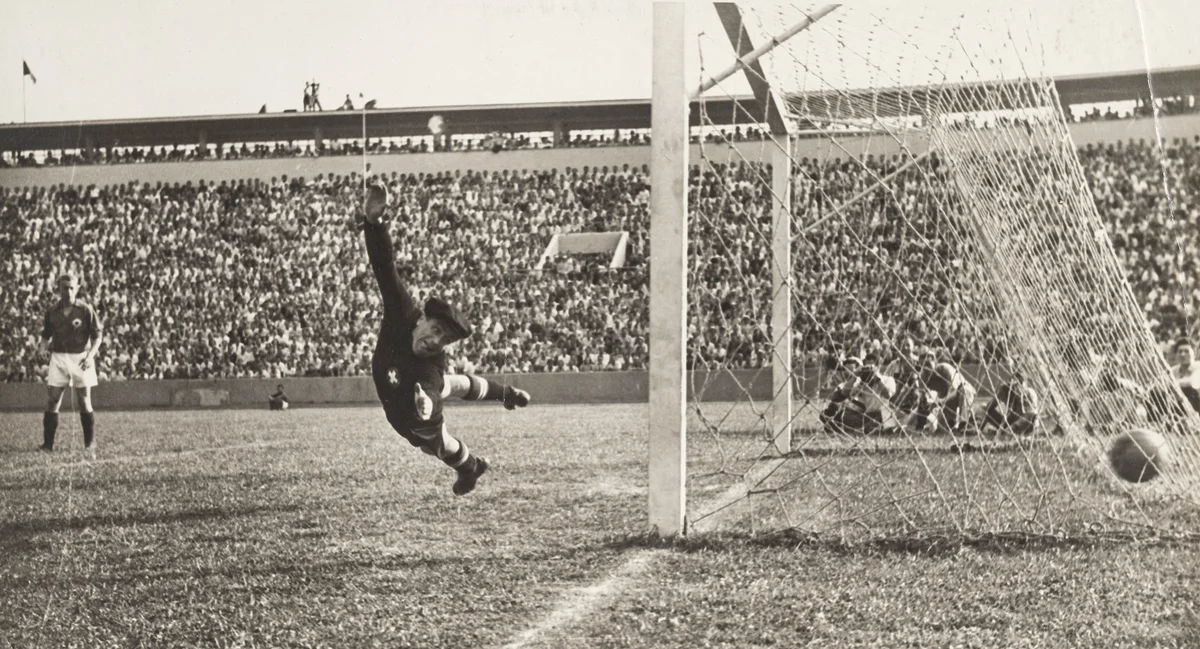
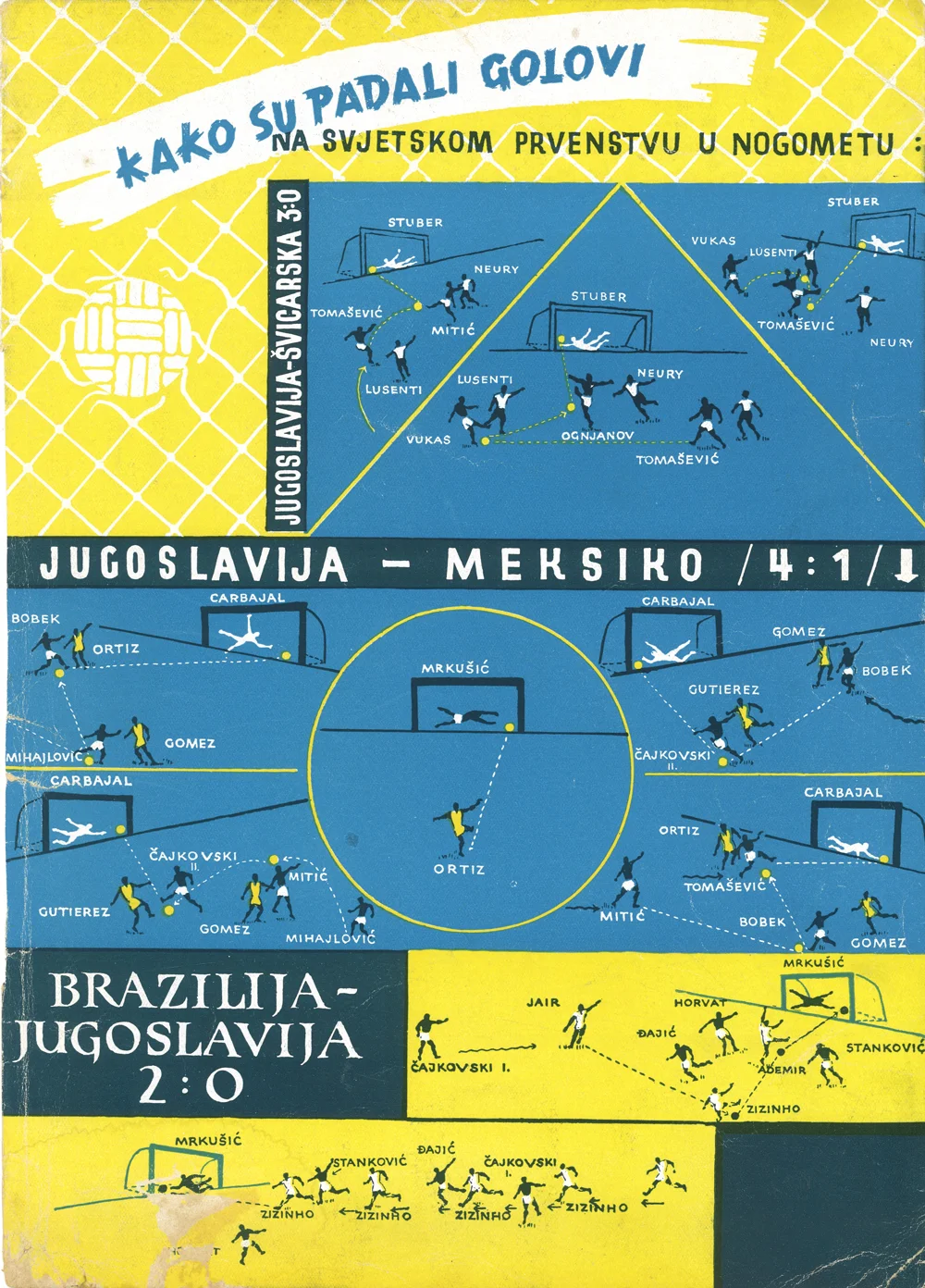
On 25 June 1950, the match between Yugoslavia and Switzerland in Belo Horizonte ended 3–0.
Colour sketches of all of Yugoslavia's goals in 3 matches at the 1950 Football World Cup.
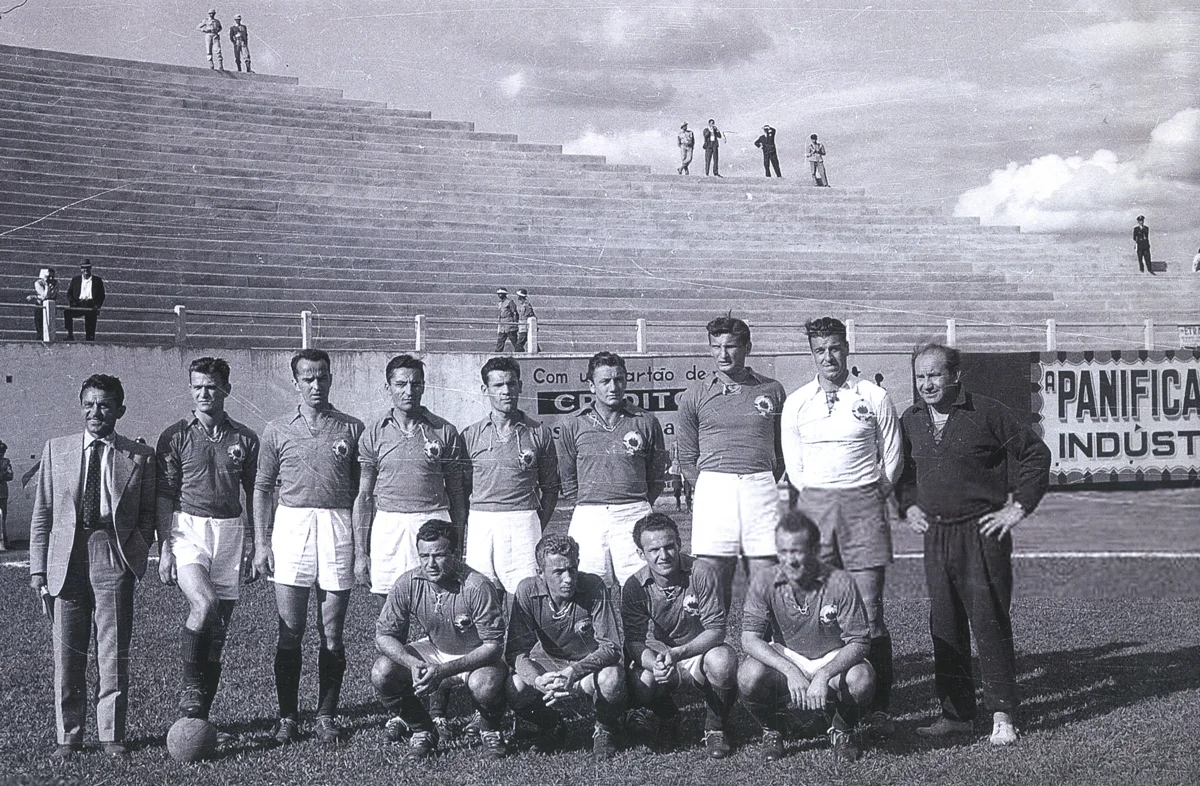
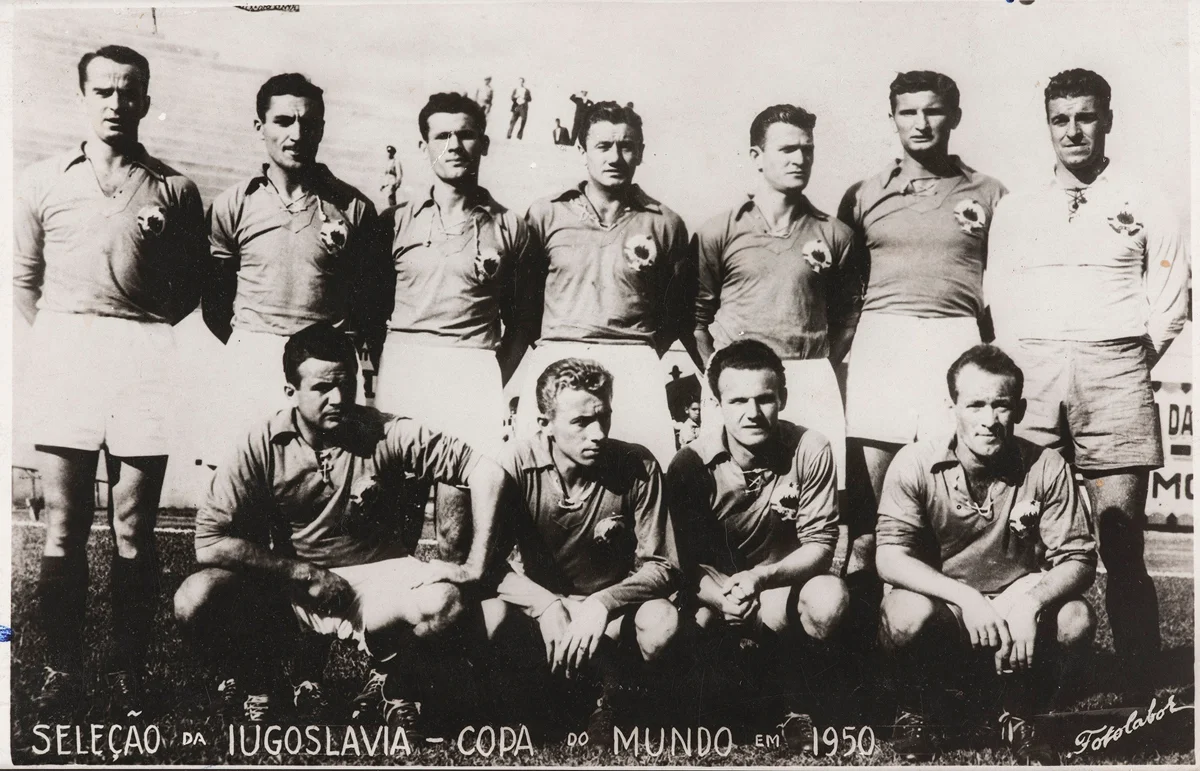
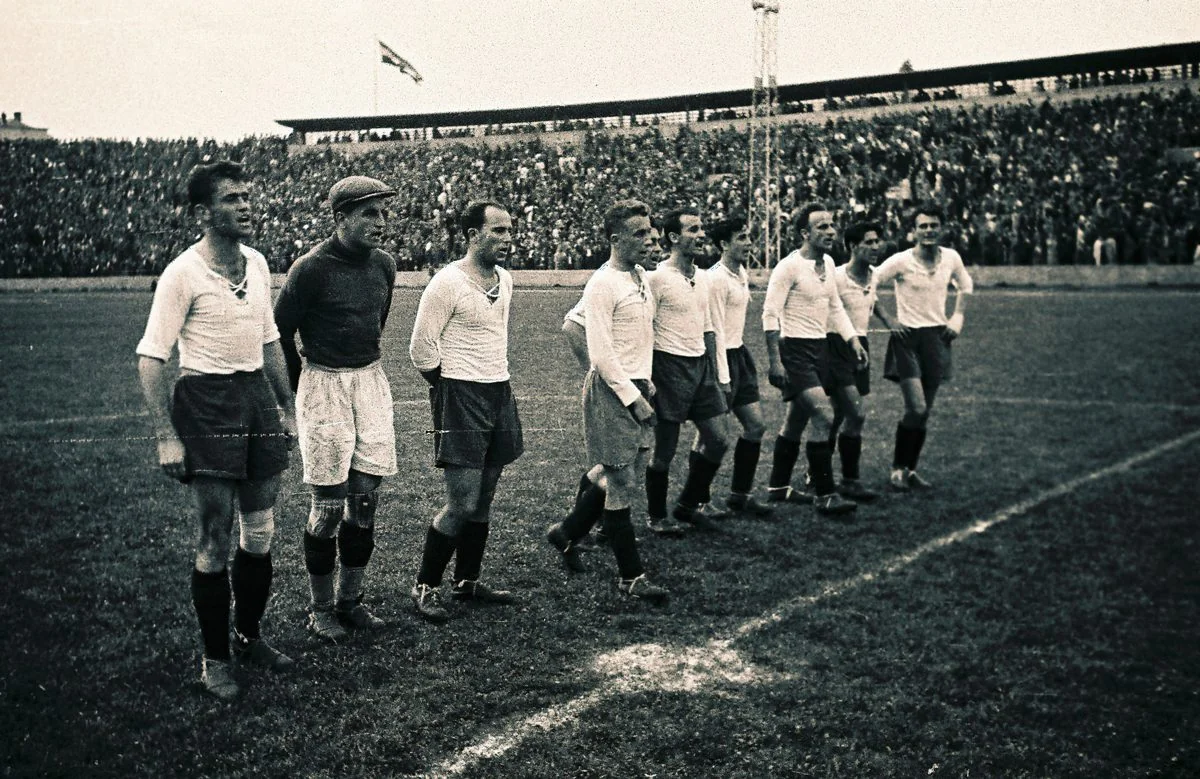
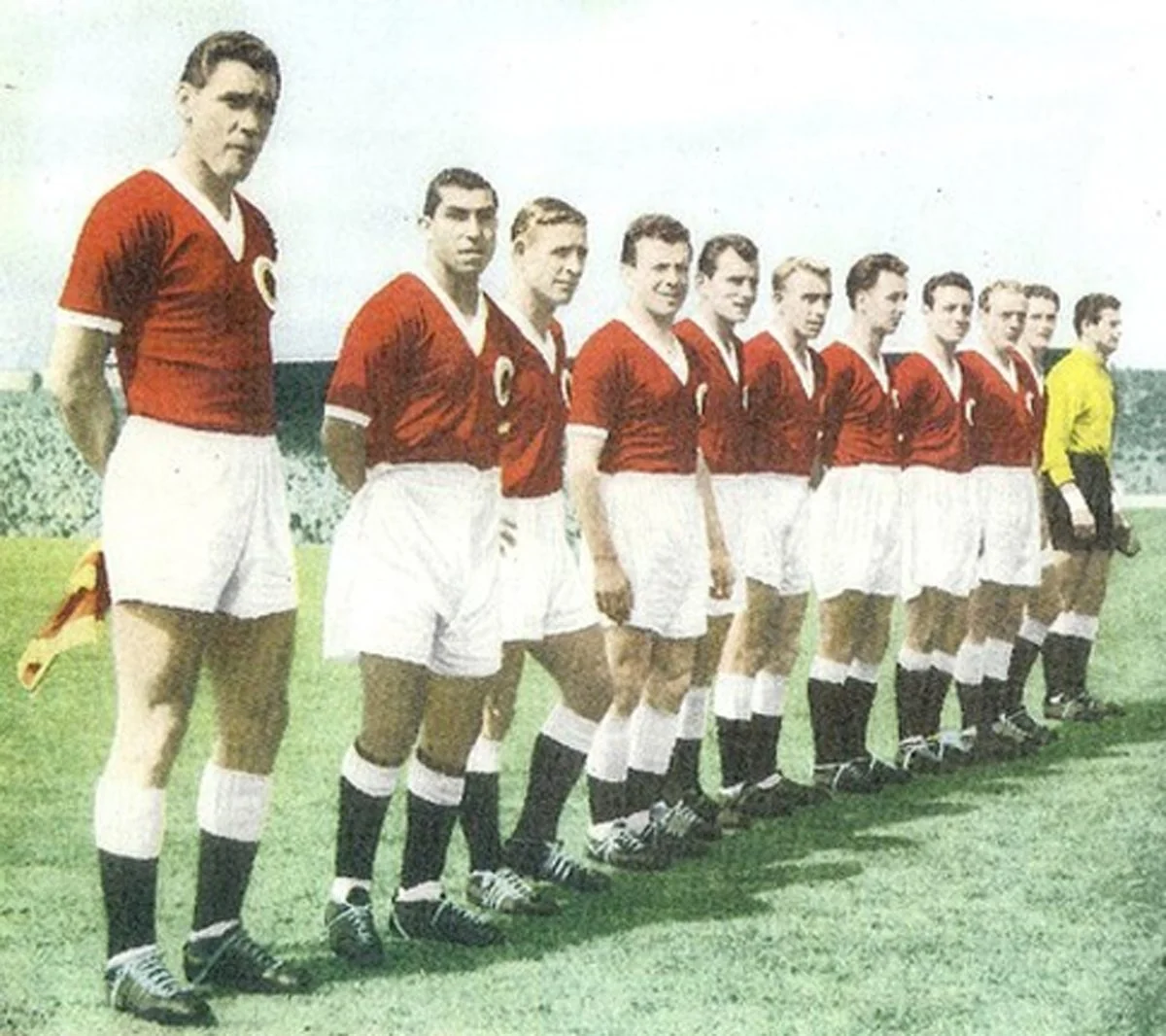
The Yugoslavia national team before the match against Switzerland in Belo Horizonte on 25 June, which ended 3–0. From the left: coach Arsenijević, Bobek, Stanković, Mitić, Ognjanov, Jovanović, Horvat, Mrkušić and Dr Aca Obradović. In the lower row: Tomašević, Vukas, Đajić and Zlatko Čajkovski.
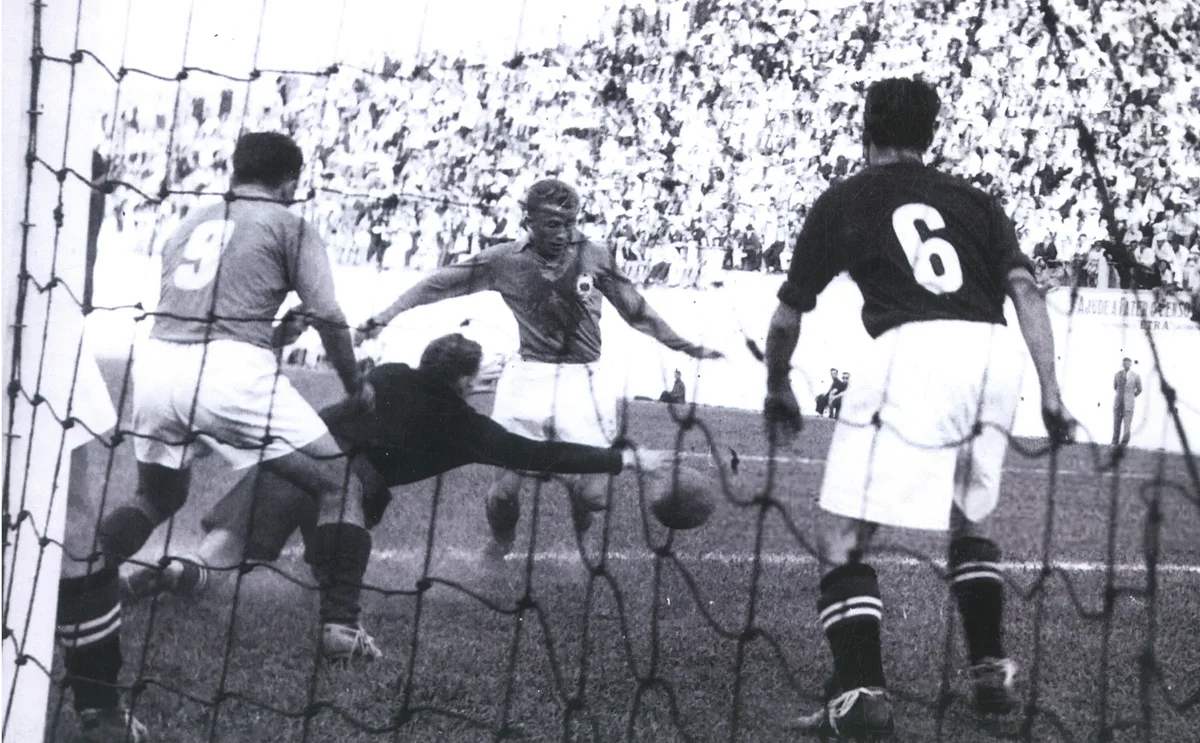
Bernard Vukas attacks in front of the Swiss goal ahead of goalkeeper Stuber. On the left is Tomašević 9 and on the right is left half-back Quinche 6.
15 October, Split. Hajduk – Dinamo. 1–0. Bajdo dribbles past Horvat.
End of the 1950 championship: Hajduk – Red Star 2–1. Hajduk win the Yugoslav championship title.

It had barely started and it was already 1-0 with an Ademi goal. Then Zizinho went past everyone and it became 2-0. Still, Bajdo was happy: "I played at the Maracanã."

And at home, in the league, Hajduk had already smashed through the spring without a single defeat. A hot autumn was beginning. And then came the match, that famous one by Bajdo, when he beat all the Zvezda players and scored the 1-1 goal, and shortly after, a 25-metre strike from Boža Broketa for a historic 2-1, seven minutes from time, which beat the Sinjanin Mrkšić. And one more thing, that autumn the Torcida was born. Hajduk are champions: Beara, Kokeza, Broketa, Katnić, Luštica, Radovniković, Viđak, Arapović, F. Matošić, Vukas and Krstulović.

1952.

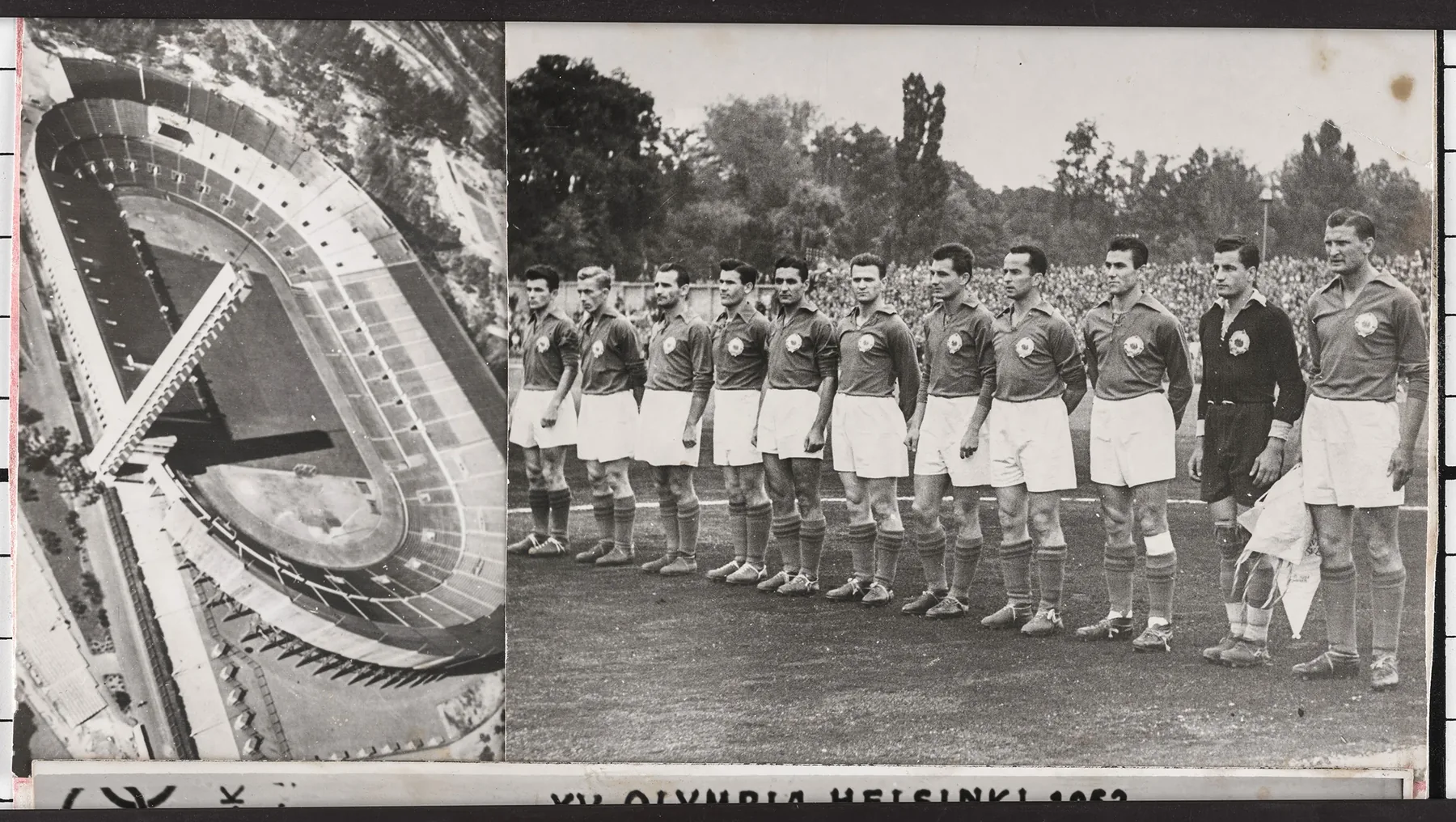
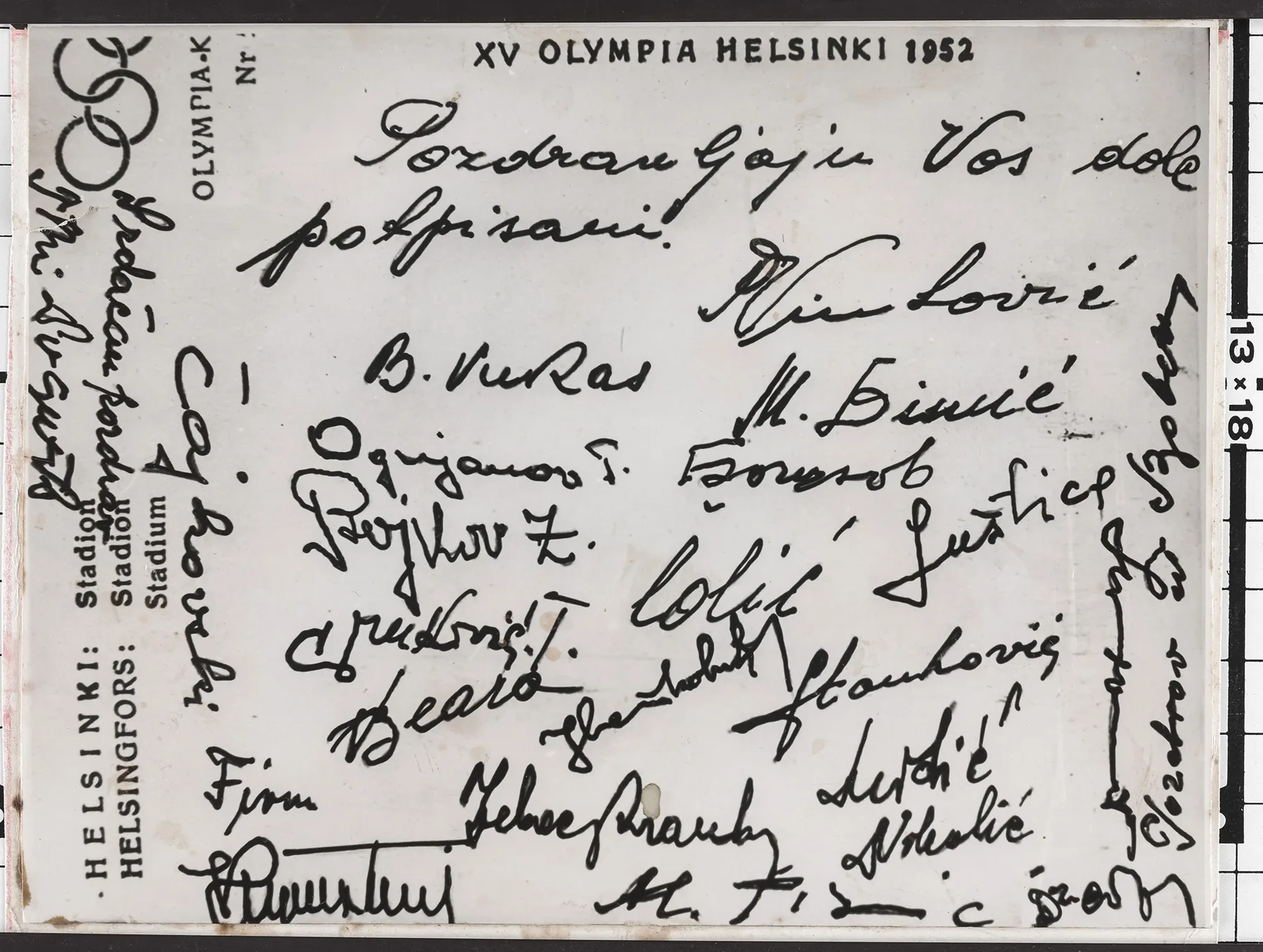
Another double for Baju Vukas. First, Hajduk repeated as national champions, and then the Helsinki '52 Olympics, which will get the blood pumping. In a political power struggle, whether intentional or not, the Soviet Union and Yugoslavia were pitted against each other. A comfortable 5-1 victory, with ten minutes to spare. In the end, 5-5!

The hockey player Bobrov scored three goals, four of them from corner shots! No shoot-out, no penalties – a replay in Tampere. And a magnificent performance from Bajda Vukas. Although Bobrov scored early to make it 0-1, the final score was 3-1!

And then, a tremendous finish, against the Hungarians! Vukas is no longer just a winger; against the wishes of the legendary 'Barba Luka' at Hajduk, he's playing as a centre-forward. The number nine, roaming all over the pitch, gets a round of applause from the crowd, but it's a Puskás and a Czibor goal that find the net. Still – silver. The Hungarians will be unrivalled in the world for the next few years, and the team representing the former state has never played better: Beara, Stanković, Crnković, Zlatko Čajkovski, Ivica Horvat, Boškov, Ognjanov, Mitić, Vukas, Bobek, Zebec.

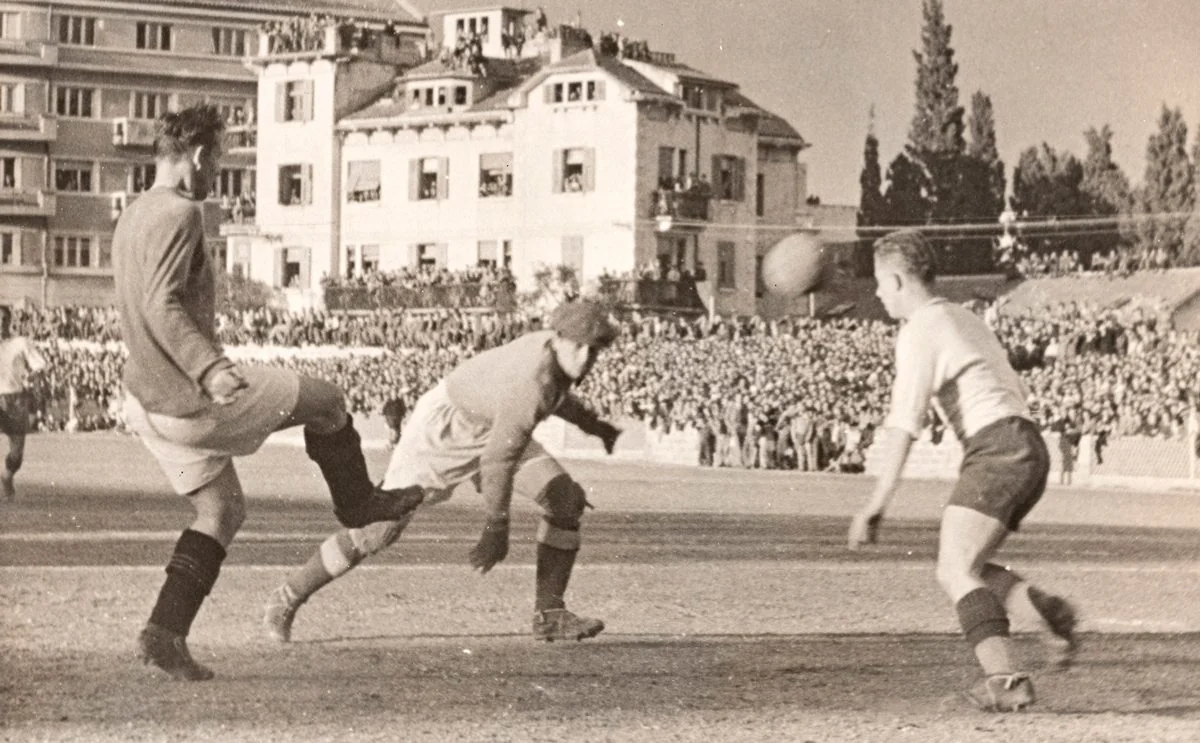
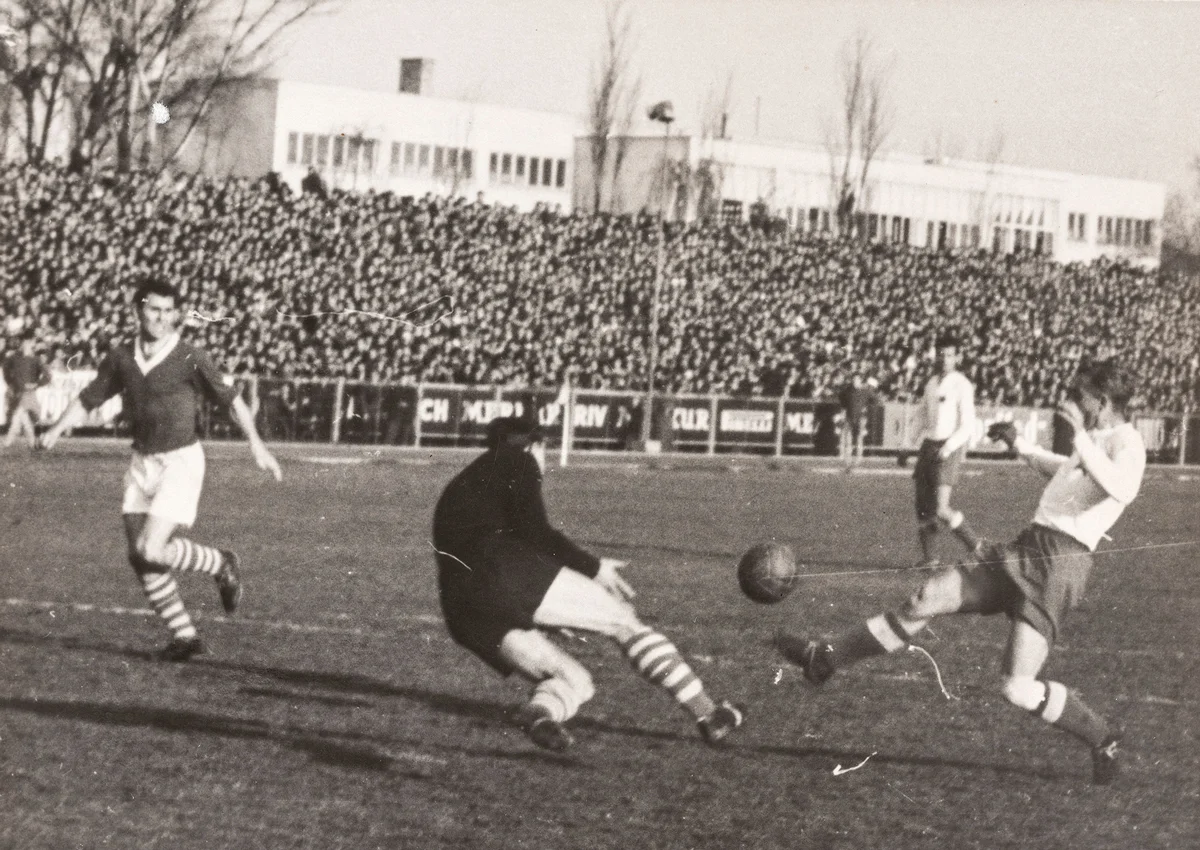
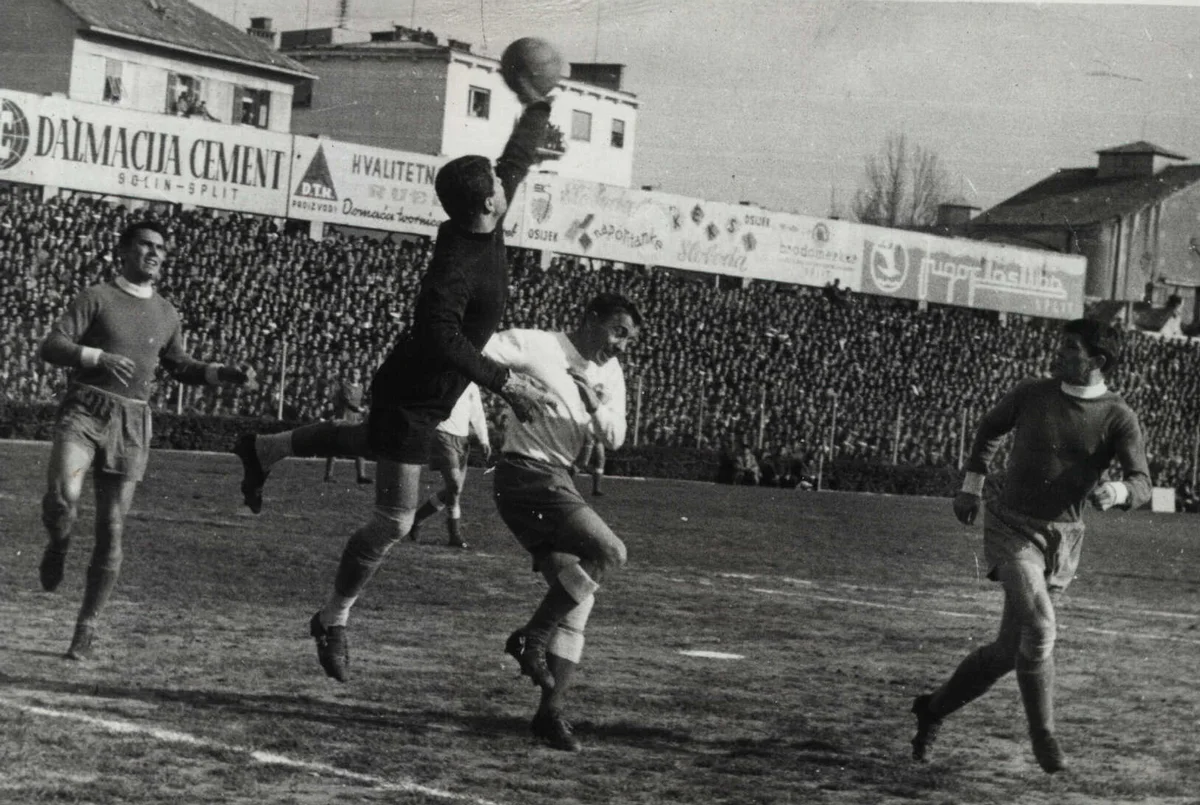
18 May Split Hajduk – Dinamo 1–1. Goalkeeper Majerović and Vukas in a battle for the ball, Horvat II watches from the s…
01.06. Split Hajduk – Lokomotiva 2:0 Bernard Vukas in action in front of Lokomotiva's goal.
08.06. Zagreb Dinamo – Hajduk 0–3. Bernard Vukas, in the centre of the pitch at Maksimir, in front of his Hajduk teamma…
15 June Split: Hajduk – Red Star 2–0. The battle of Red Star's defence against Hajduk's attack in front of the north go…
Hajduk are Yugoslav champions for the second time. Celebration at Maksimir after the 4–2 victory over Lokomotiva (22 Ju…
The Yugoslav Olympic team for the 15th Olympic Games in Helsinki
Bernard Vukas, 1952.
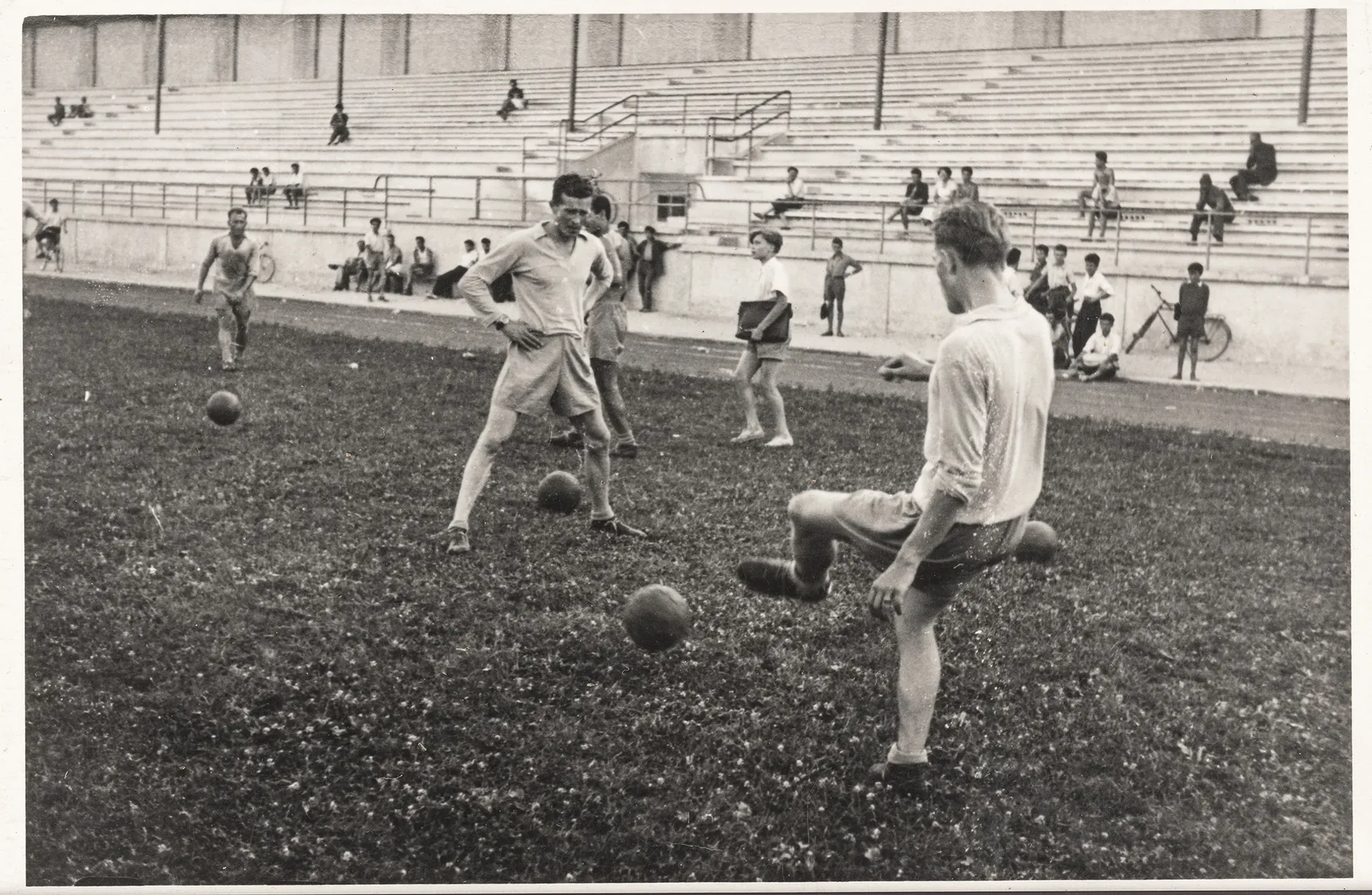
Training matches of the national team at the Helsinki/Tampere Olympic Games. National team coach Toni Pogačnik at train…
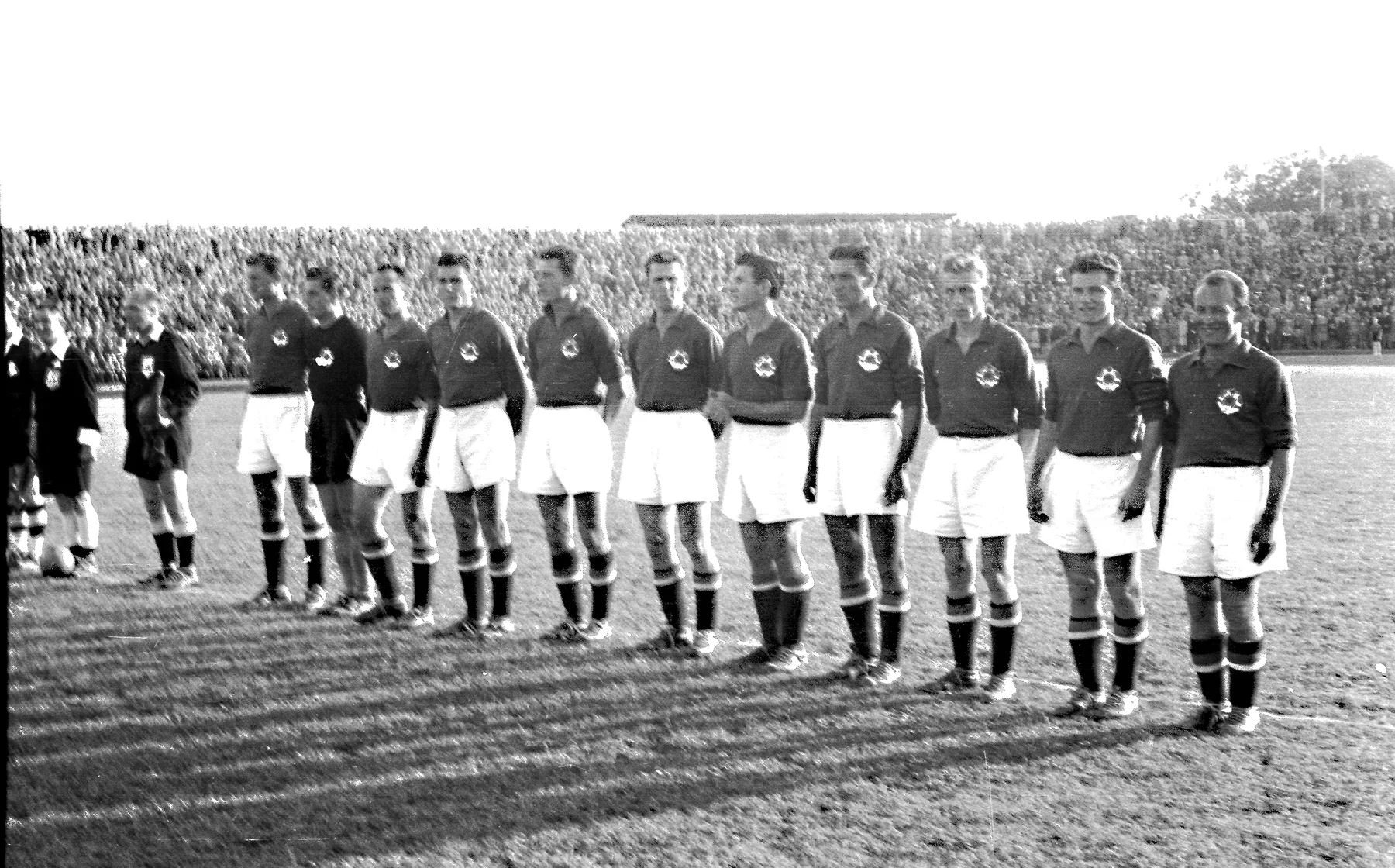
The Yugoslavia national team in Tampere.
9
Bernard Vukas, 1953.
1953.

4: 4

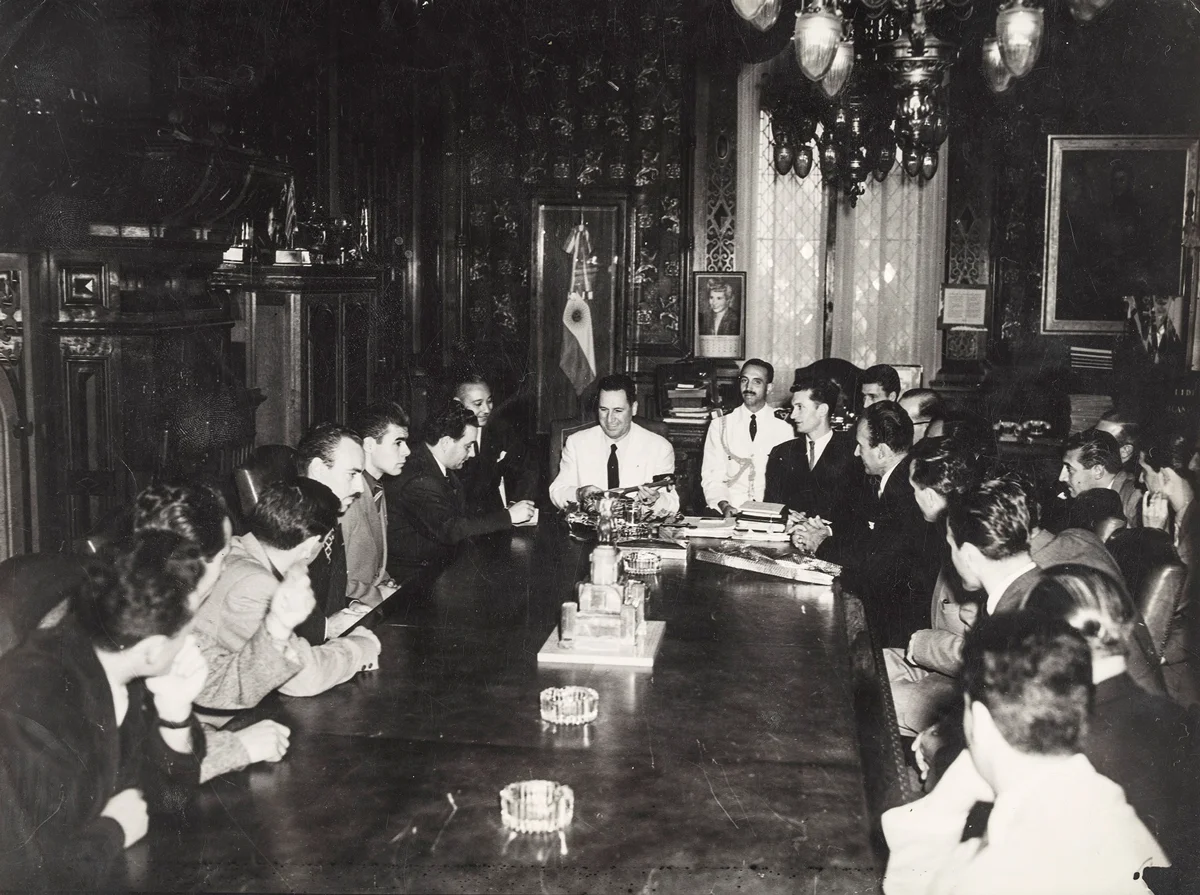
In the first days of January, Vukas is in Argentina with Hajduk. He is even a guest of the President himself, Juan Domingo Perón. A delayed return and a dirty trick by the league, which decrees that 'Bili' must play the first two rounds with their juniors! And Hajduk, that very spring, in two spectacular matches featuring Bajda Vukas, beat Zvezda and Partizan in Belgrade by the same score, 4–1! The points deducted by the 'dice' cannot be recovered.

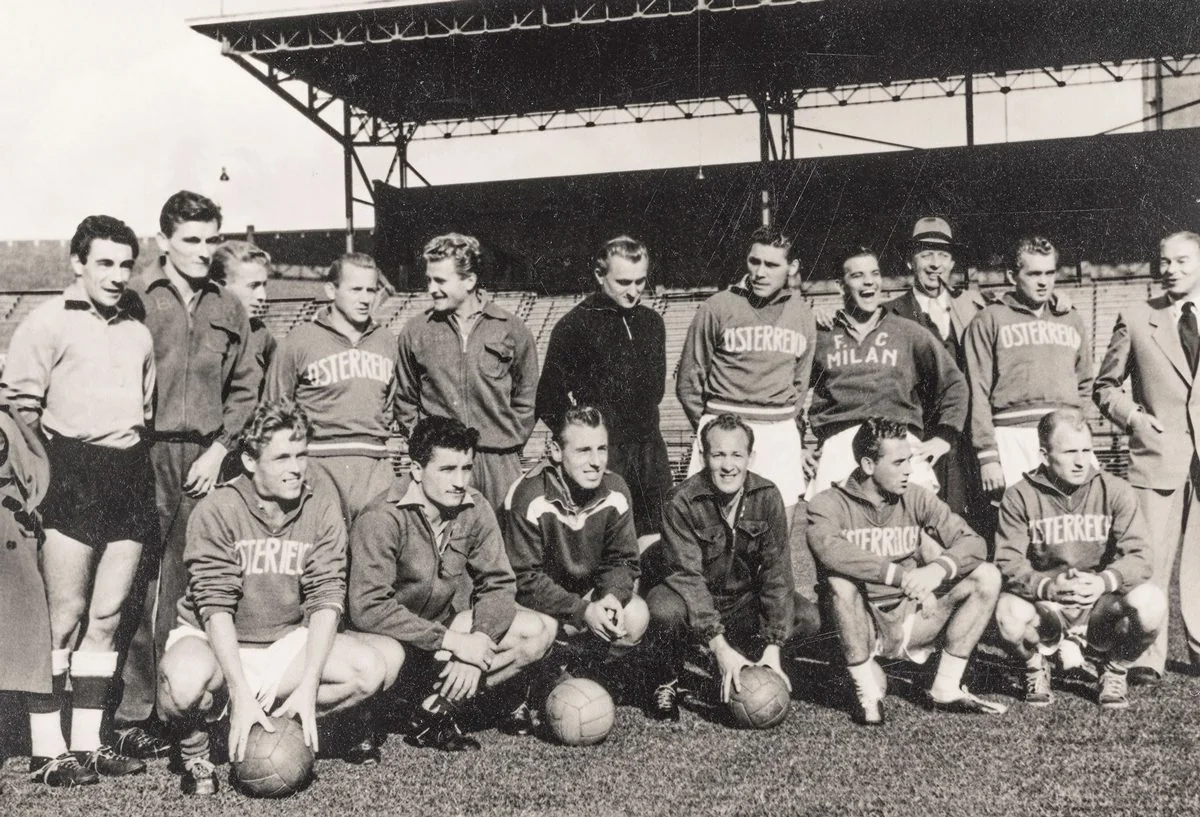
At a training session in Amsterdam. In the top row: Lorenzi, Zebec, Vukas, Brinek, Boniperti, Posipal, Ocwirk, Nordahl, Karel Lotsy, a member of the FIFA executive committee, Happel, Walter Nausch, FIFA technical director. In the bottom row: Hanappi, Beara, Coppens, Čajkovski, Zeman, Stotz.
Vukas, Ocwirk, Čajkovski and Hanappi in Amsterdam at half-time of the friendly match against Barcelona, which ended 5–2 to the Rest of the World, with Vukas scoring.
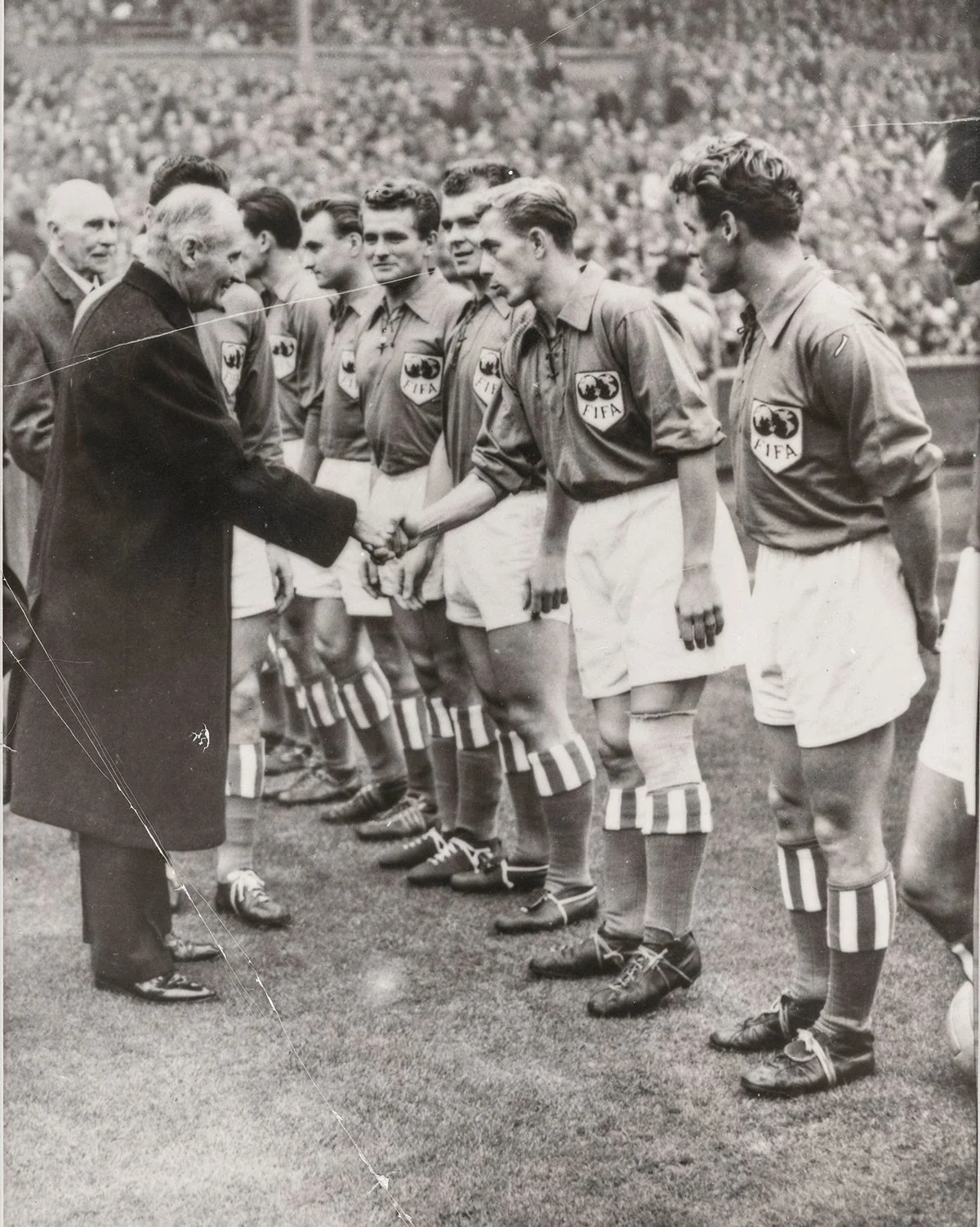
On the eve of the match against the Rest of the World, in fact the FIFA XI against England 4-4 (London, 31 October 1953), a presentation was made to Bernard Law, Field Marshal, Viscount of Alamein. In the picture, Montgomery is shaking hands with Bernard Vukas. To the left of Vukas are Kubala, Boniperti and Posipal; to the right are Hanappi and Ocwirk. The match was played to mark the 90th anniversary of the FA (the Football Association).
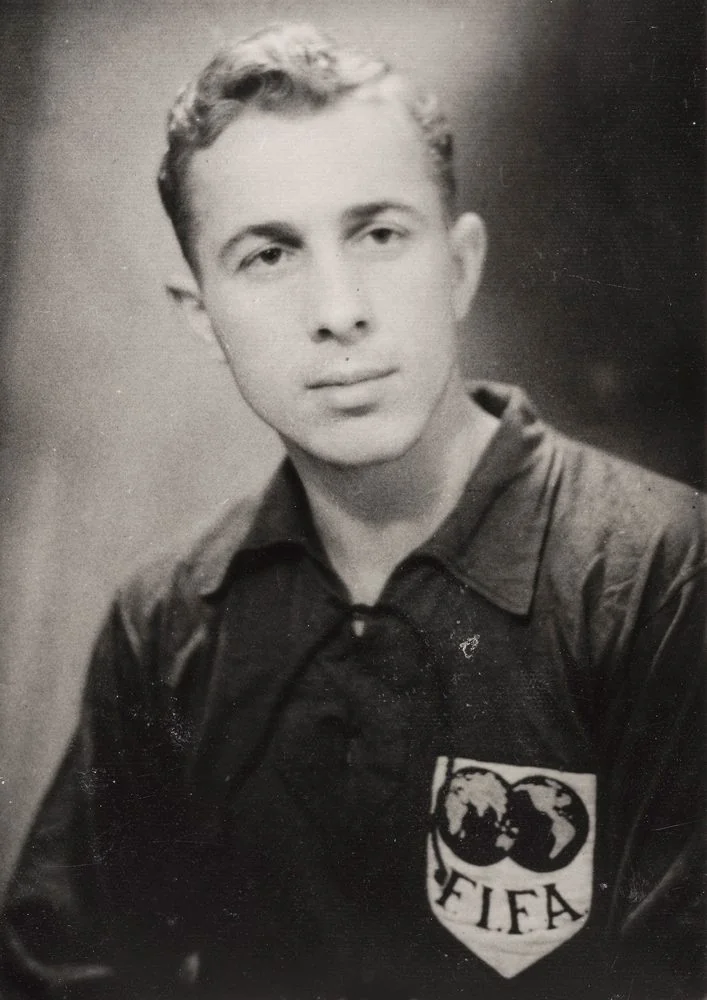
Vukas in a FIFA shirt.
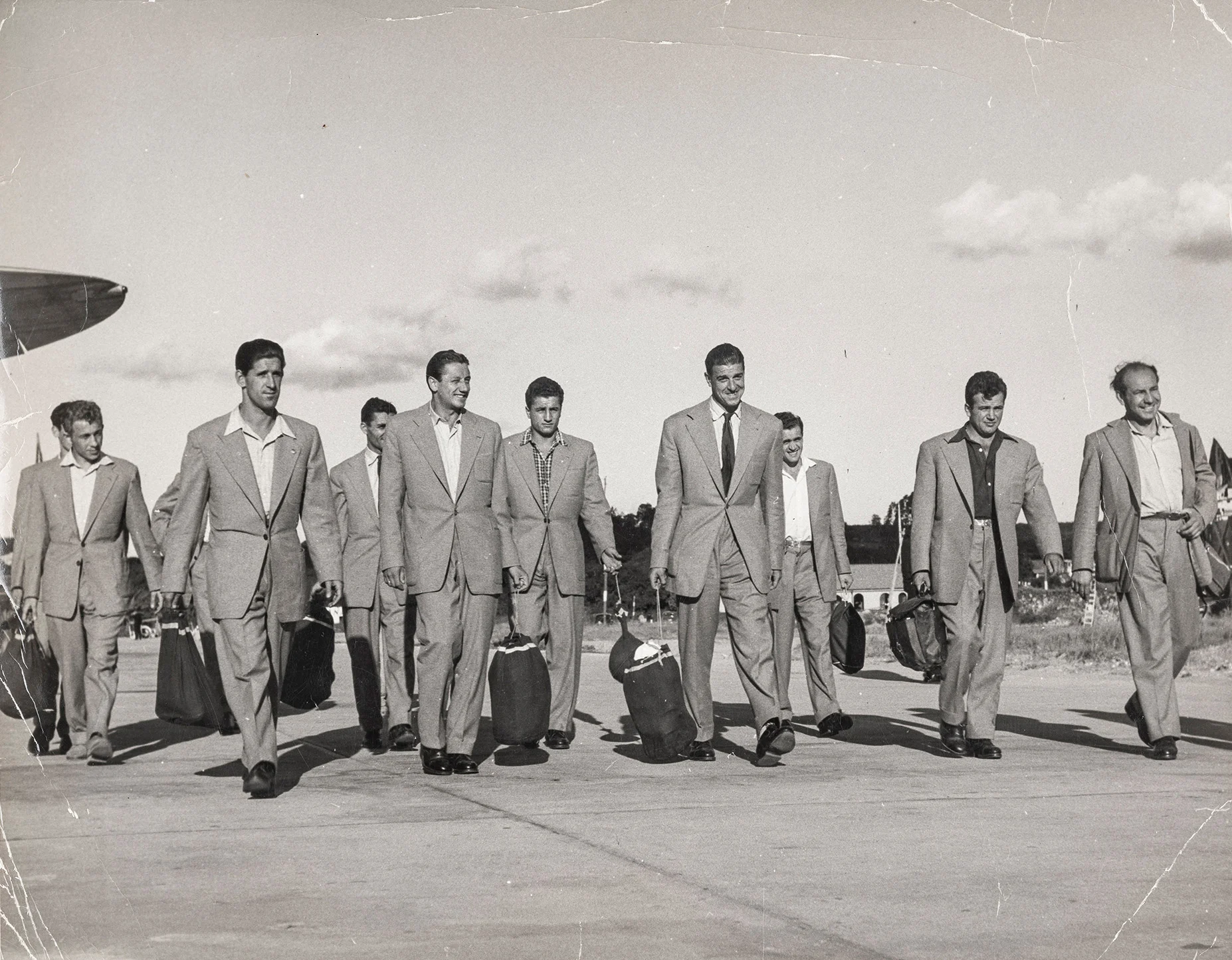
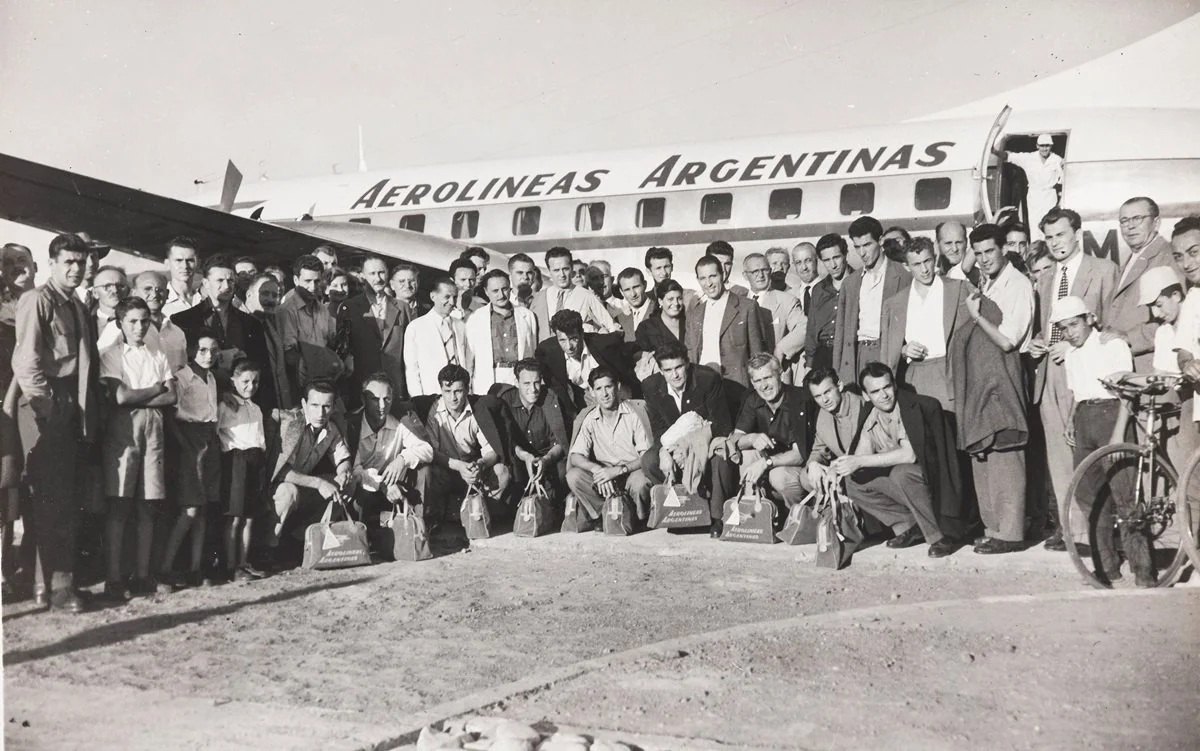
Hajduk set off on a South American tour (Chile and Argentina), flying from Europe to South America from Rome's Ciampino Airport.
On 11 February, the President of the Republic of Argentina, General Perón, received the Hajduk team and its management.
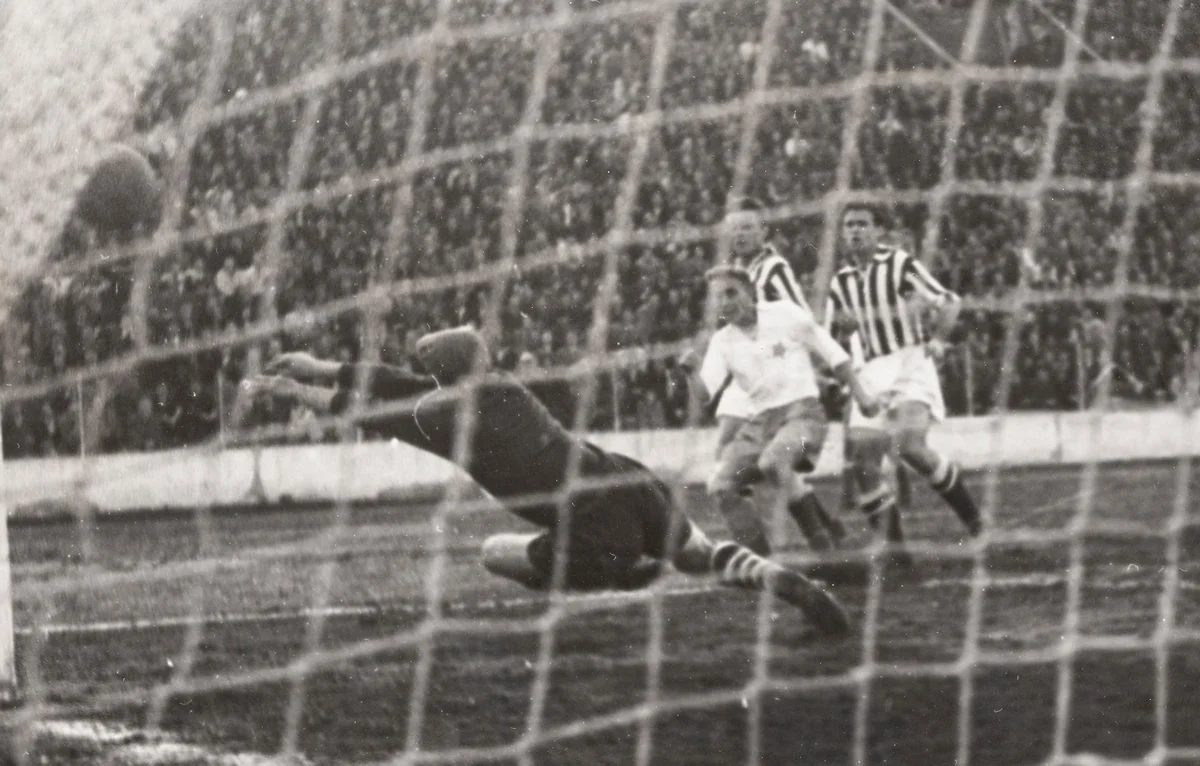
Vukas, ahead of the Red Star defender, shoots at Krivokuca's goal, with Djajic and Disic behind him.
27.09. Split Hajduk – Lokomotiva 2:1, Bajdo, between several Lokomotiva players, tries to threaten the goalkeeper.
29.03, Belgrade. Red Star – Hajduk 1:4. The jubilant Hajduk players after the end of the match. From left: Svemir Delić, Lenko Grčić, Frane Matošić, Vladimir Beara, Vladimir Šenauer, Krešimir Arapović, Bernard Vukas, Davor Grčić, Slavko Luštica, Stane Krstulović, Božo Broketa.

And then came the event of the year for Bajda Vukasa. He played for the Continental representative side, which the English somewhat scornfully called the Rest of the World, in London at Wembley in the autumn of 1953.

Alongside three other Croatian players: Branko Zebec, Zlatko Čajkovski and Vladimir Beara. The English stole the victory from the Continentals Zeman and Beara, Navarre, Hanappi, Zlatko Čajkovski, Posipal, Ocvirk, Boniperti, Kubala, Nordahl, Vukas and Zebec with a last-minute goal after an alleged foul by Čiko Čajkovski on Mortensen, which did not exist. Ramsey scores from the penalty spot, goal. 4-4! It's the end of the year, full of celebrations. The Zagreb weekly, 'Sportska Panorama', gives Bajdi the yellow shirt: with the simple 'autograph' 'The Best'.

1954.

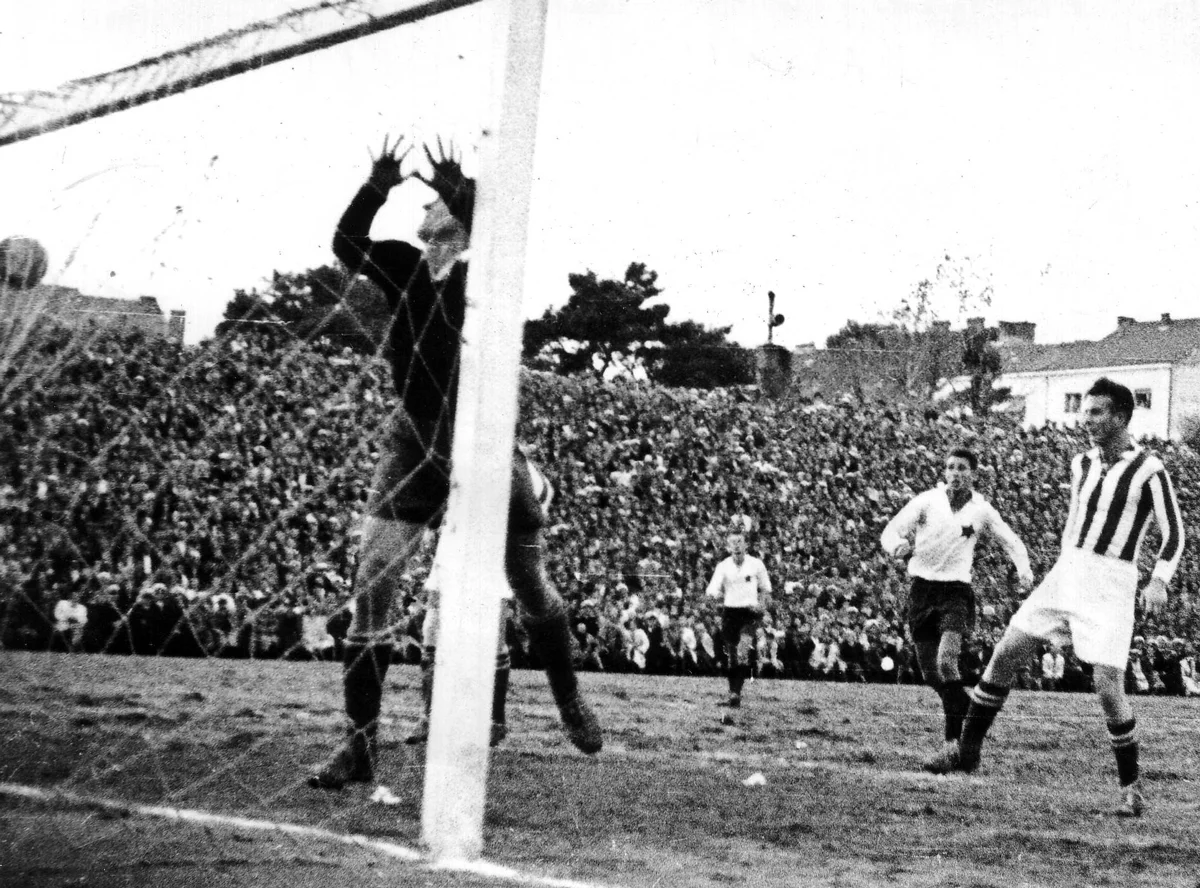
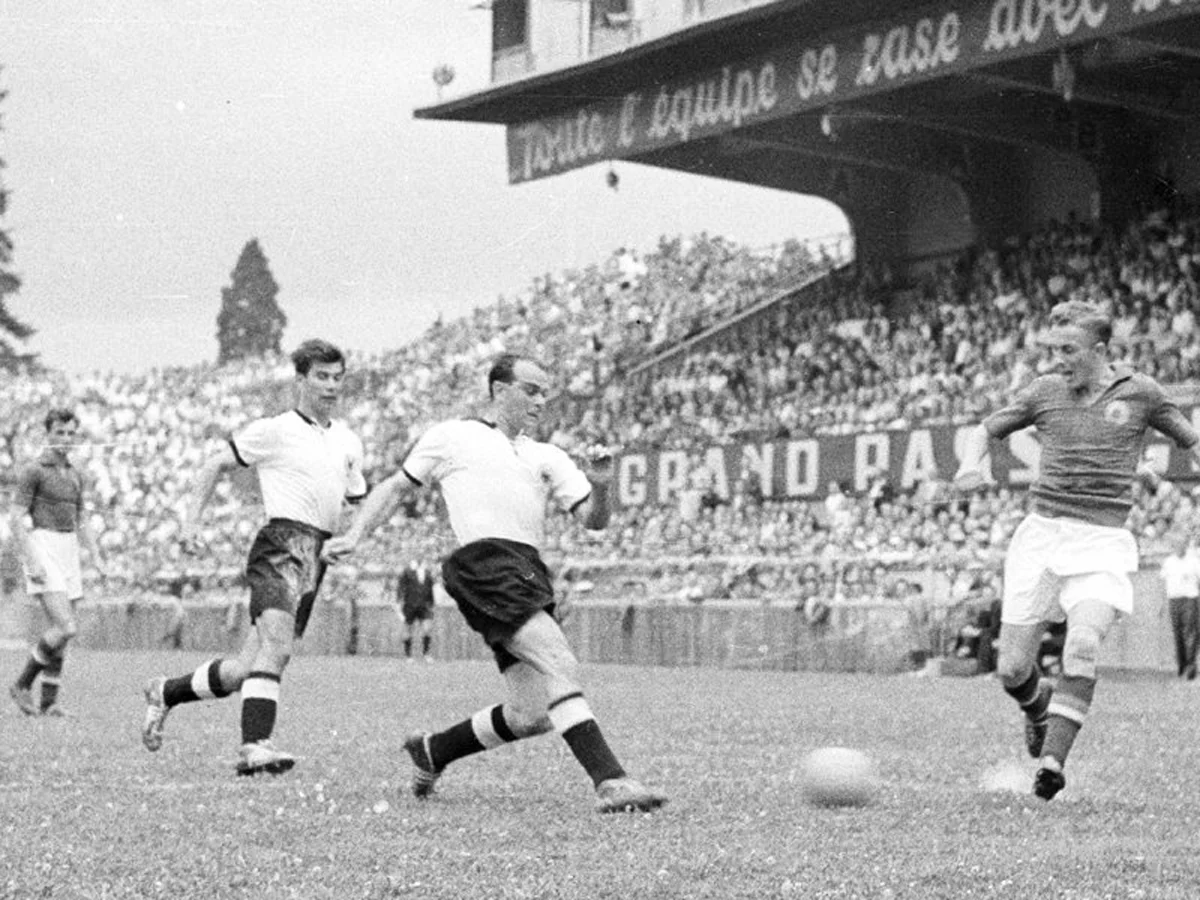
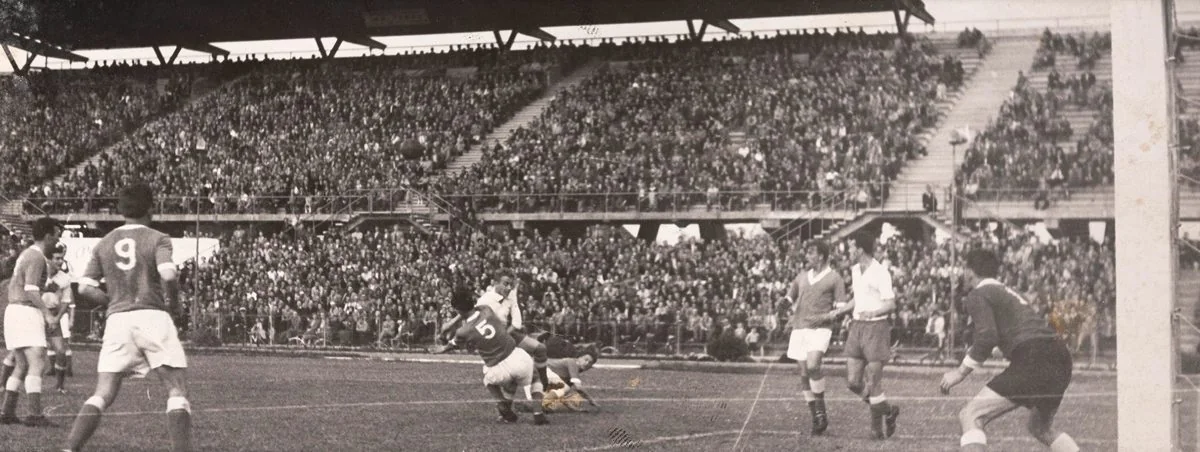
At the World Cup in Switzerland, in the summer of 1954, Bajdo Vukas was brilliant. The Germans in the quarter-final could not hold him, not with their hands nor their feet. He evaded them with ease and created chances. Real big ones. He once dribbled past even the Turk; the goal was empty, but cursed.

The ball didn't go in, because Bajdo went for the grand gesture, waiting for another attack from the terrified Herberger men. And it wasn't a goal. And the Germans – they have two! A misunderstanding between Icek Horvat and Beara and a soft back-pass from our centre-half into his own net, then a solo run from Rahn for 0-2. Und Auf Wiedersehen!

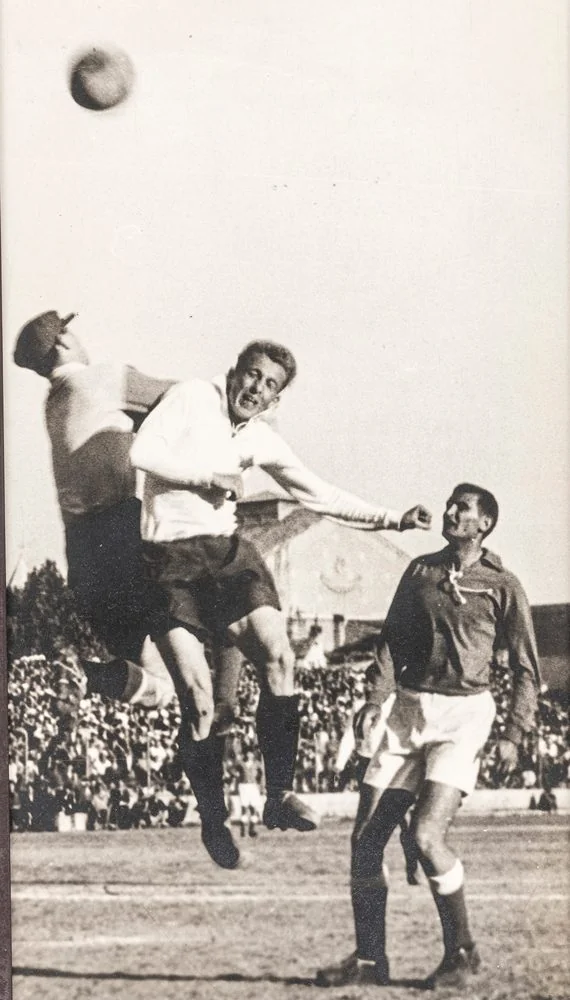
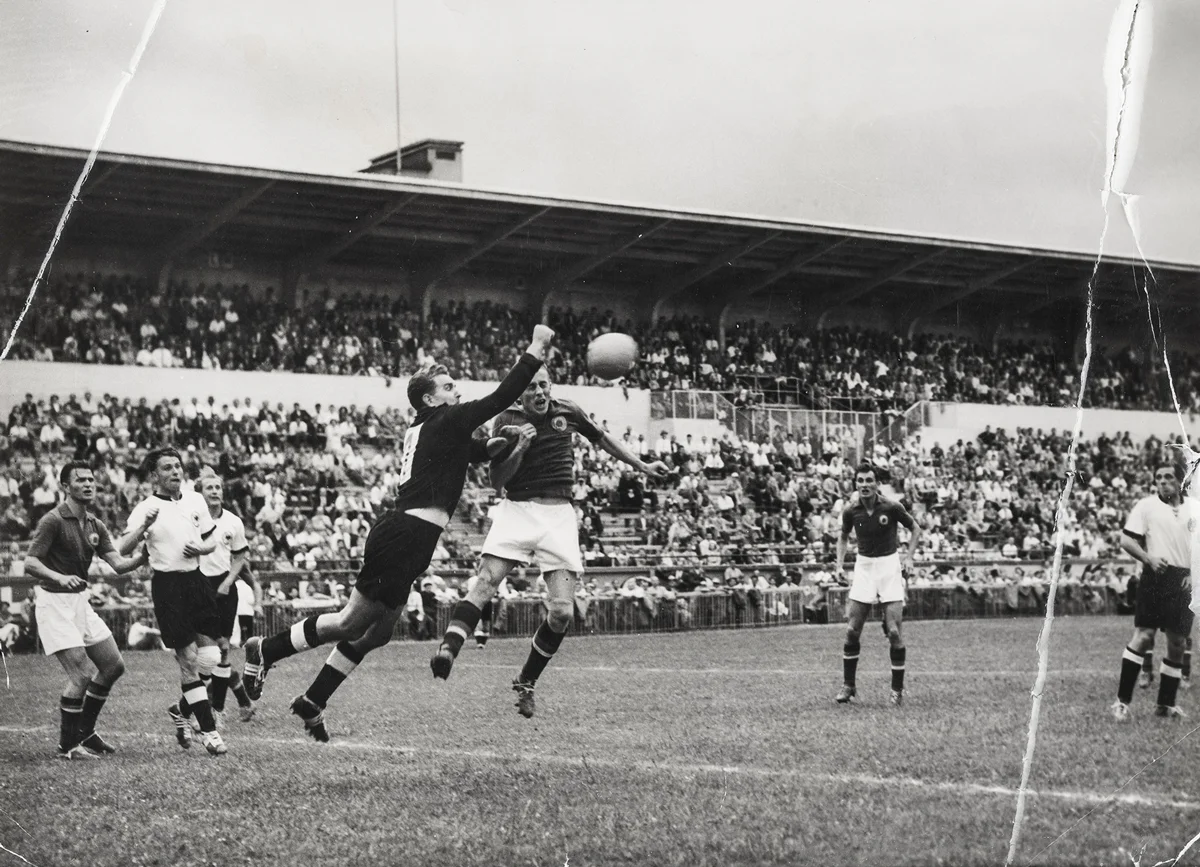
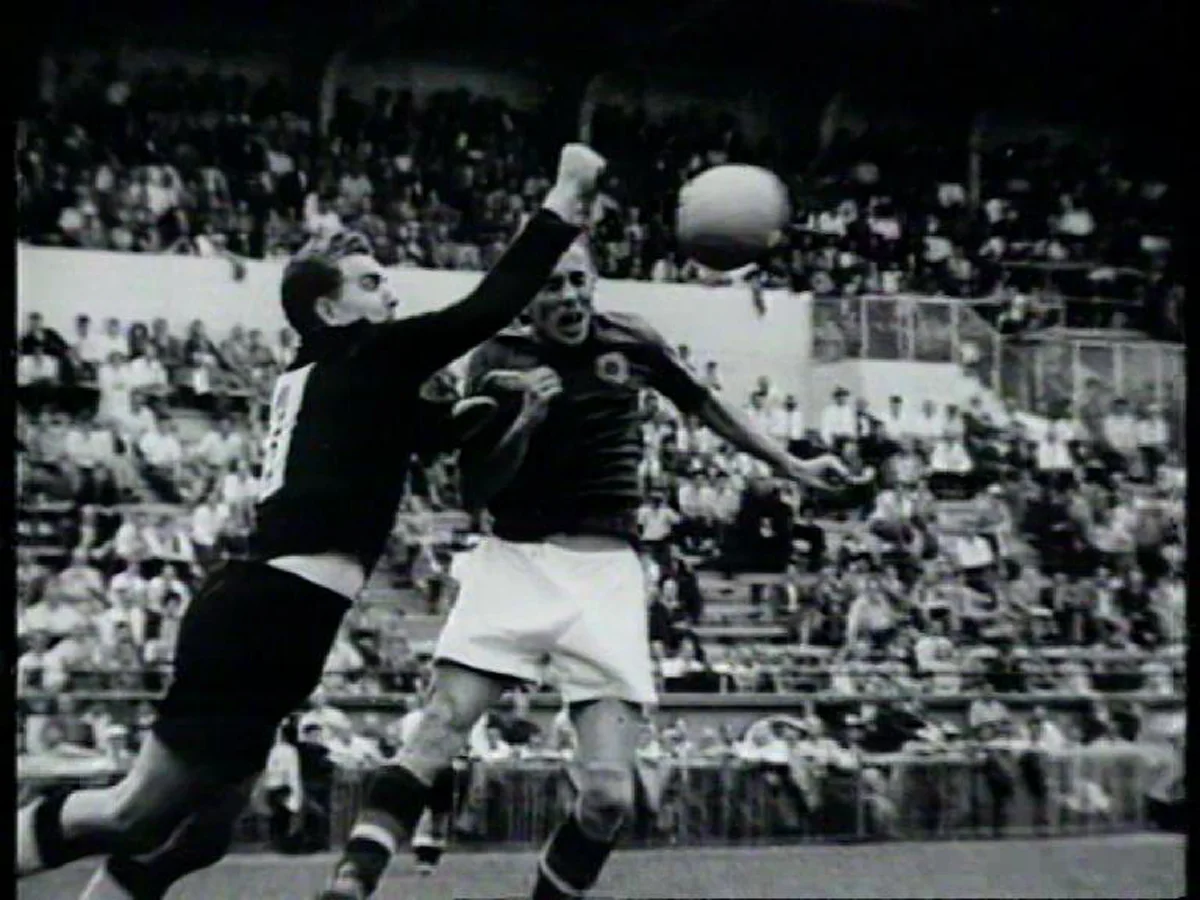
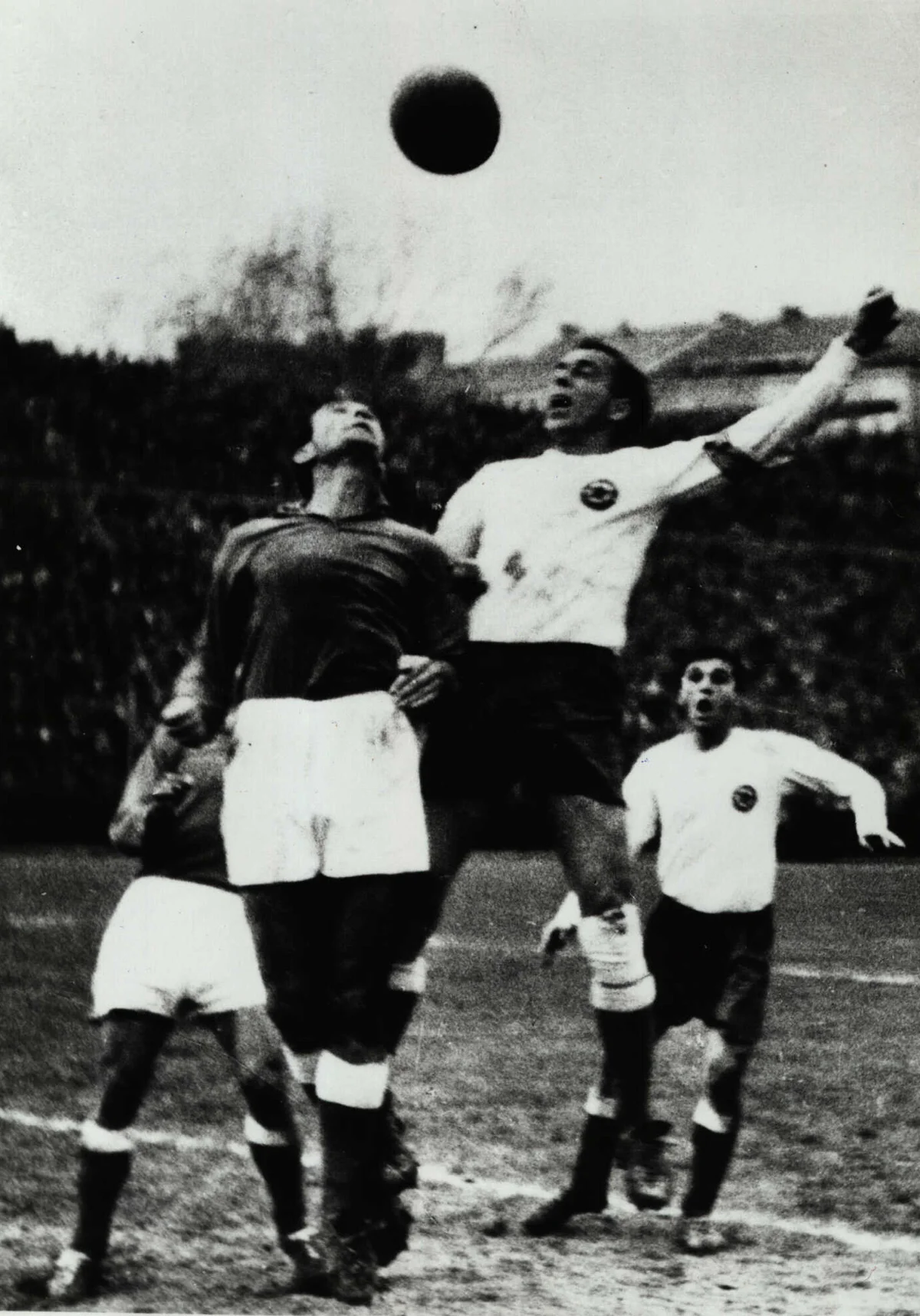
From left: Stjepan Bobek, Horst Heckel, Werner Liebrich, goalkeeper Anton Turek and Bernard Vukas in the air.
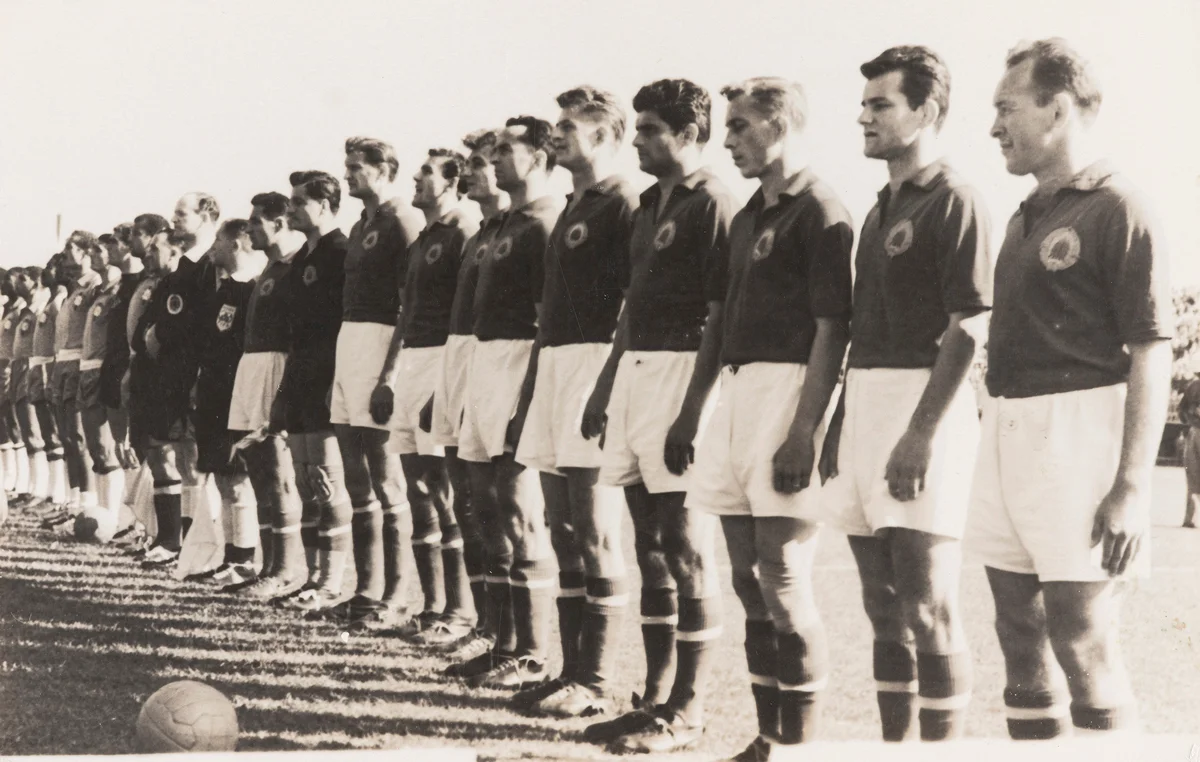
World Cup in Switzerland 1954. The Yugoslavia national team first beat France 1-0, then drew 1-1 with Brazil (1-1; 0-0)…
Bernard Vukas, 1954.
27.06. World Cup quarter-final, Yugoslavia v West Germany 0–2. Turek clears the ball from in front of Vukas, who played…
4
Bernard Vukas, 1955.
1955.

Vukas - fantastic.

The Alps are far away, but they come into view from Turin, the city of Fiat, of Valentino Mazzola and of the club that perished in the 1949 plane crash. Turin was a call for Bajdo Vukas to play – he himself used to say, "My match is Turin." At the Comunale, Bajdo played one of his finest performances. He would always return to Turin: "I've never been so light, I'd say I was floating in the air, everything was going my way and I could do anything." And it was all decided in the other 45 minutes. The first half was Azzurri and Yugoslavia – nothing. And then he took the chalk himself and put his own 'I' at the centre. It was full throttle from Bajdo Vukas. He set up one and scored another himself. Ferrara admitted to reporters that he had never played against such a player. It was a 0-4 victory for the former state.

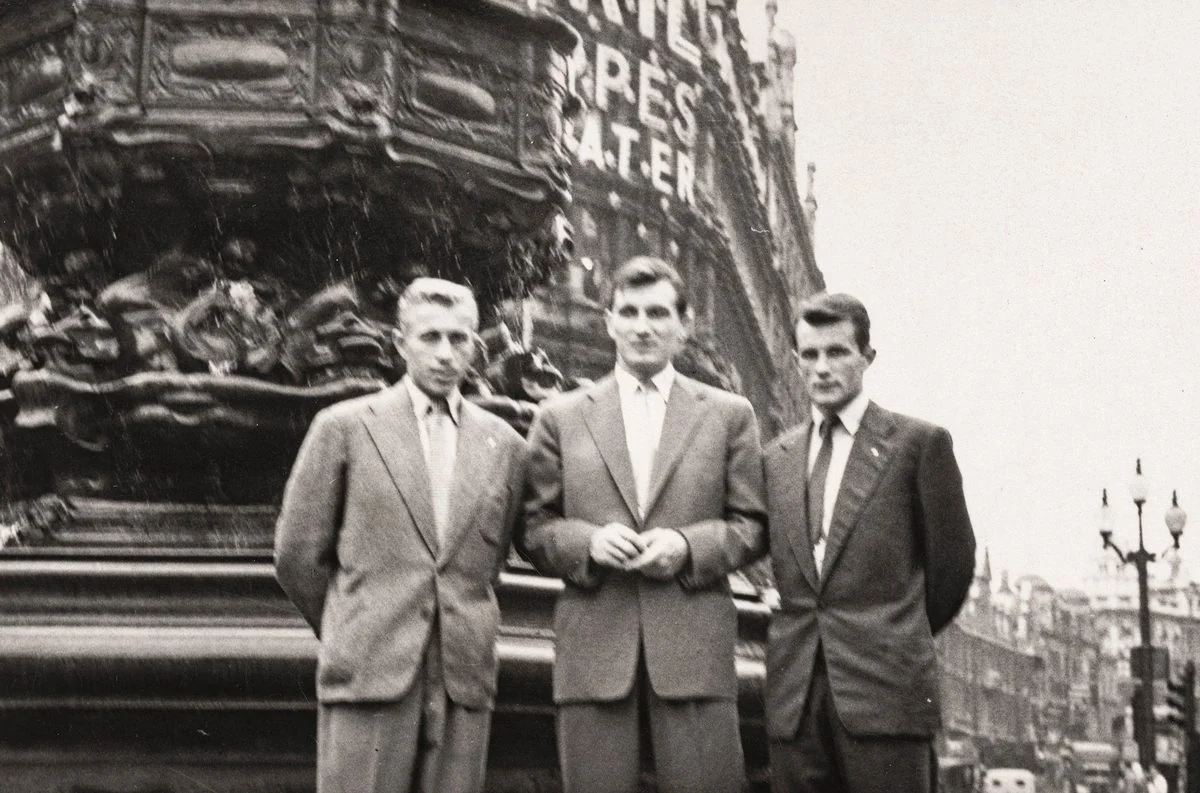
Zebec, Boškov and Vukas at Piccadilly Square in London, waiting for the transfer to Belfast and the match on the Continent.
13 August, Belfast, Windsor Park, celebration of the 75th anniversary of the Irish Football Association. UEFA – United Kingdom. The first official UEFA match. From left: captain Ocwirk, Travasos, Soerentsen, van Brandt, Boškov, Vukas, Vincent, Jonquet, Kopa, Gustavsson, Buffon.
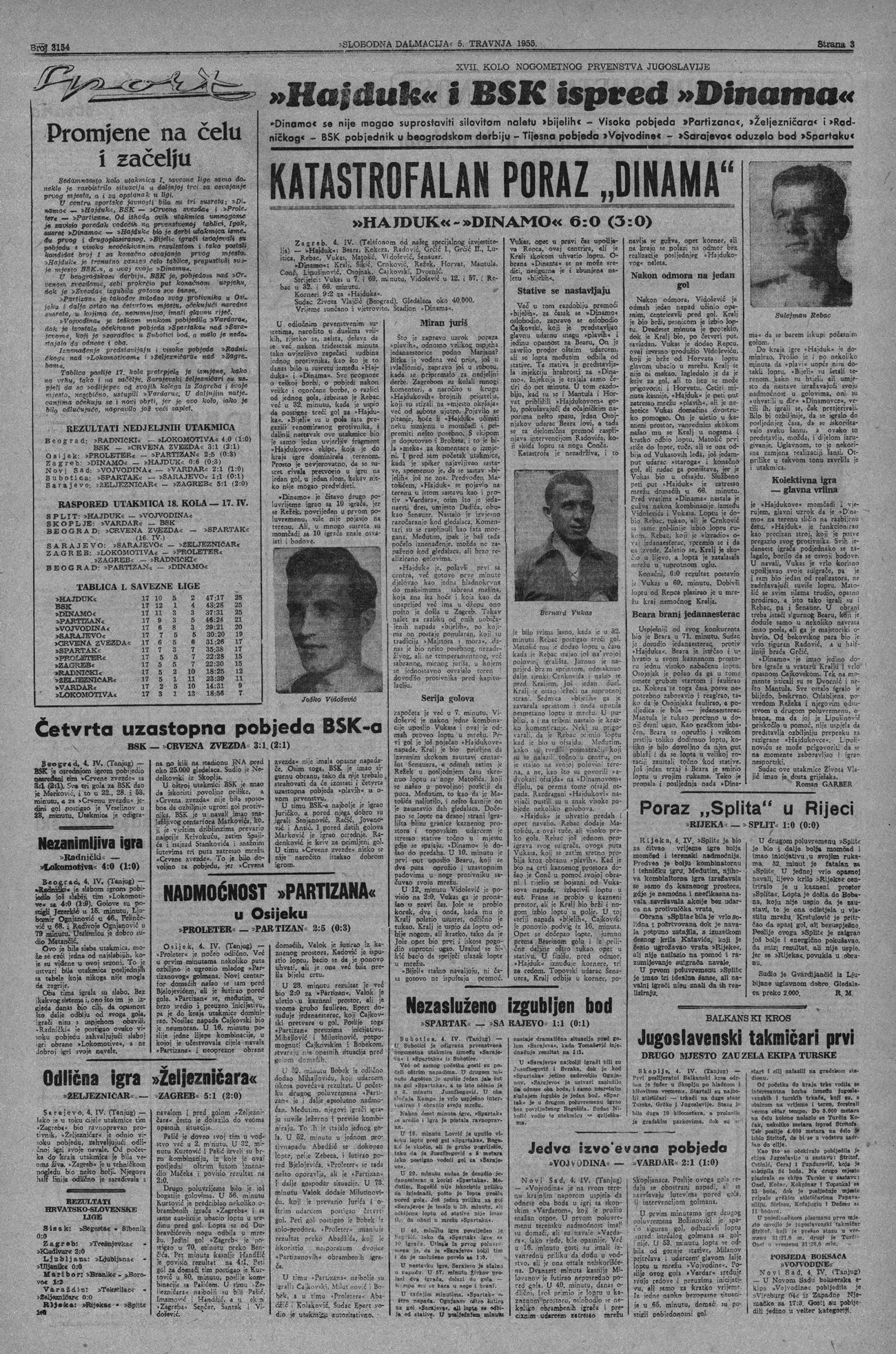
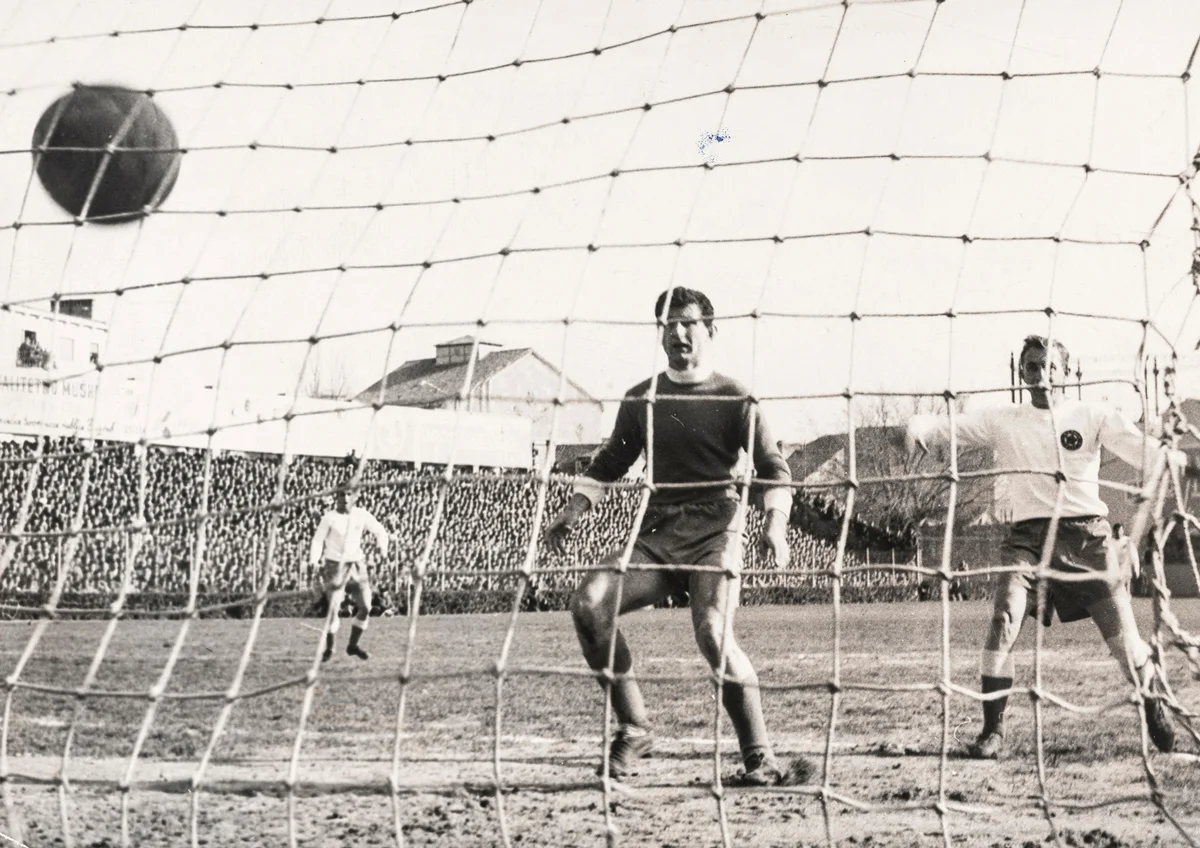
3 April 1955 at Maksimir. Dinamo's heaviest defeat by Hajduk. Vukas, Vidošević and Rebac scored two goals each. Bajdo shot at Kralj's goal. From the right: Crnković, Horvat, Vidošević, Mantula and Šenauer.
3 April 1955 at Maksimir. Dinamo's heaviest defeat by Hajduk. Vukas, Vidošević and Rebac each scored twice. Bajdo once again threatened Dinamo goalkeeper Kralj. On the left, Crnković.
3 April 1955 at Maksimir. Dinamo's heaviest defeat by Hajduk. Vukas, Vidošević and Rebac each scored two goals. At half-time the players of both teams came out. Matošić and Frane moved forward, with Bernard Vukas behind them.
Hajduk functioned like a perfect machine that completely overwhelmed its opponent.
18 May, Zagreb. Lokomotiva – Hajduk 1–3. Vukas, surrounded by Lokomotiva players, attacks Stinčić's goal; 9 Šincek, 5 Jankovski.
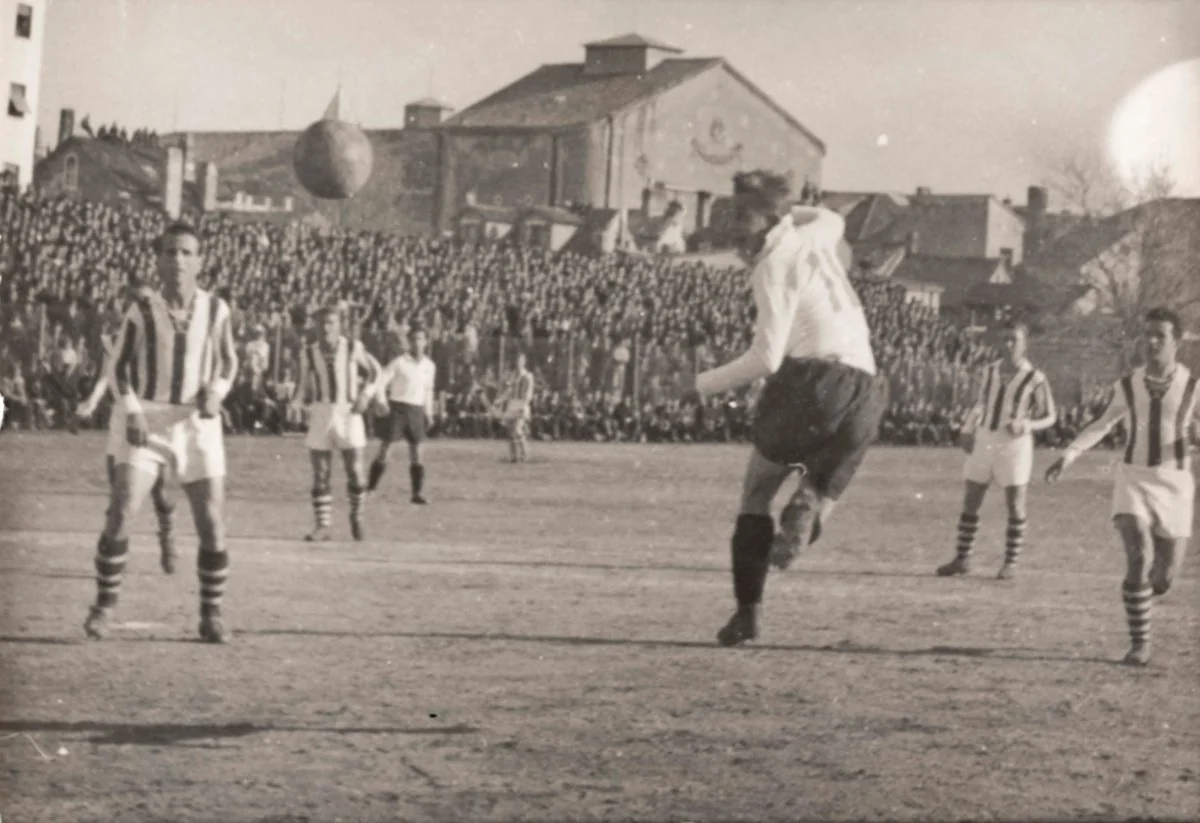
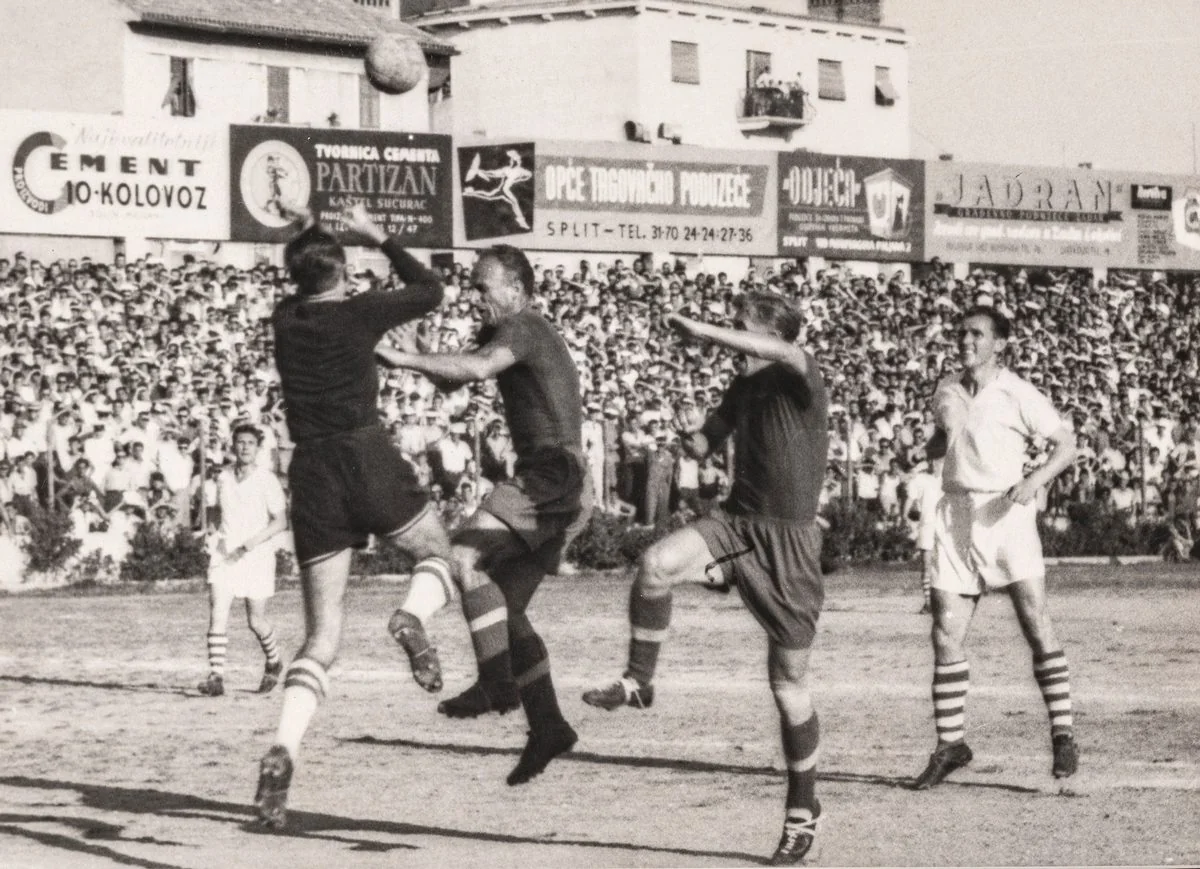
13 July Split – Hajduk vs Voros Lobogo 3–2. Second leg of the SE Cup quarter-final. Goalkeeper Arpad Fazekas with Matošić and Vukas in the air.
21 August Split – Hajduk 6–0. Before the match, Vukasu was presented with a gift for his excellent performance on the continent (Belfast).
Hajduk functioned like a perfect machine that completely overwhelmed its opponent.

The photographs of Vukas's moves are brilliant. Italians all around him on the pitch, and Bajdo goes through them as if they weren't even there. But Bajdo's story wasn't over yet. A great performance against Dinamo and a win for Hajduk at Maksimir. First, Frane Matošić, then Vukas grabbed the 'tiche' firmly, and the Dinamo players were silenced for good: a clean six-nil.

And not yet: The Northern Ireland FA has an anniversary. England are playing (obviously), no, it's not clear, more: Great Britain versus Europe, not versus the Rest of the World. Bajdo is in the team again, which is now being picked by Pibarot. Although the most famous Englishman of all time, Sir Stanley Matthews, is playing, the man of the match is Bajdo Vukas. He scored a hat-trick. Three goals! In the end, the Continent was the better side, winning 4-1.

Vukas – fantastic. 'Sportske novosti' awarded him Sportsman of the Year for that brilliant 1955, mind you, not just Footballer of the Year! When he's on form, he's on form: Bajdo Vukas is also this: the league's top scorer with 20 goals!

1957.

Now the Azzurri are on the return leg, in Zagreb. This is a solid block of Fiorentina players, with room for only the Argentinian Montuori. But there's no defence Vukas couldn't stretch, and in the end it was 6-1 – a ballad, with a volley from the right, his speciality, as Bajdo sent the ball into the top corner. The tall Lovatti was short, more than that: too short! The Italian employers were just waiting for one of Bajda's gala moments. Because they had already got the nine-ten-nine in Turin. And now they have him.

President Dall'Ara, who had Fran Matošić at Bologna in 1942, is almost there; he wants Vukas. The offer is on public tender and the 'party', which laughs proletariantly, redly, gives Vukas his visa. Vukas is paid for three seasons, a fortune: 66 million lira. Thus, Bajdo was the first to break with 'socialist self-management'. He was the first socialist footballer to play for pure cash in the West. The maxim 'a socialist sportsman is not for sale' was shattered. He loved bridge, briškula, football and his Panka, even when the rhythm of life, like a noisy river, separated them but didn't divorce them. He was something special, as was his football: a feisty Spaniard with Zagrebian blood. This wasn't communism full of horrors and delusions.

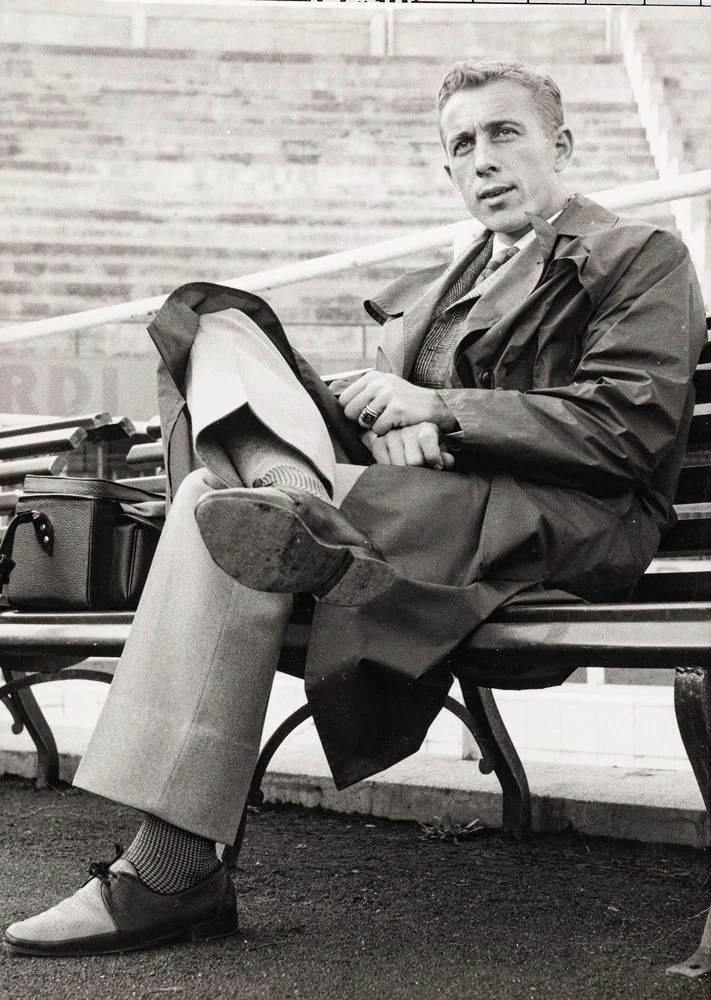
Vukas at the Stadio Comunale, now the Renato Dall'Ara, in Bologna in 1958.
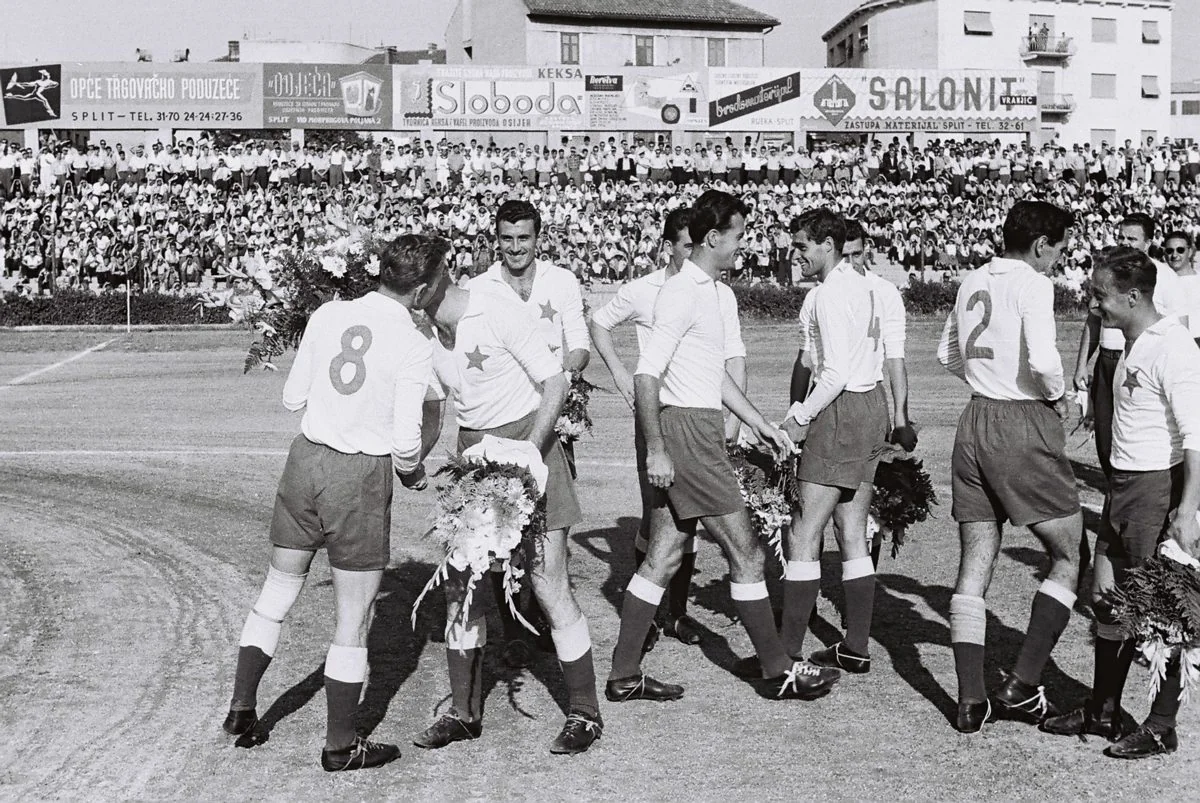
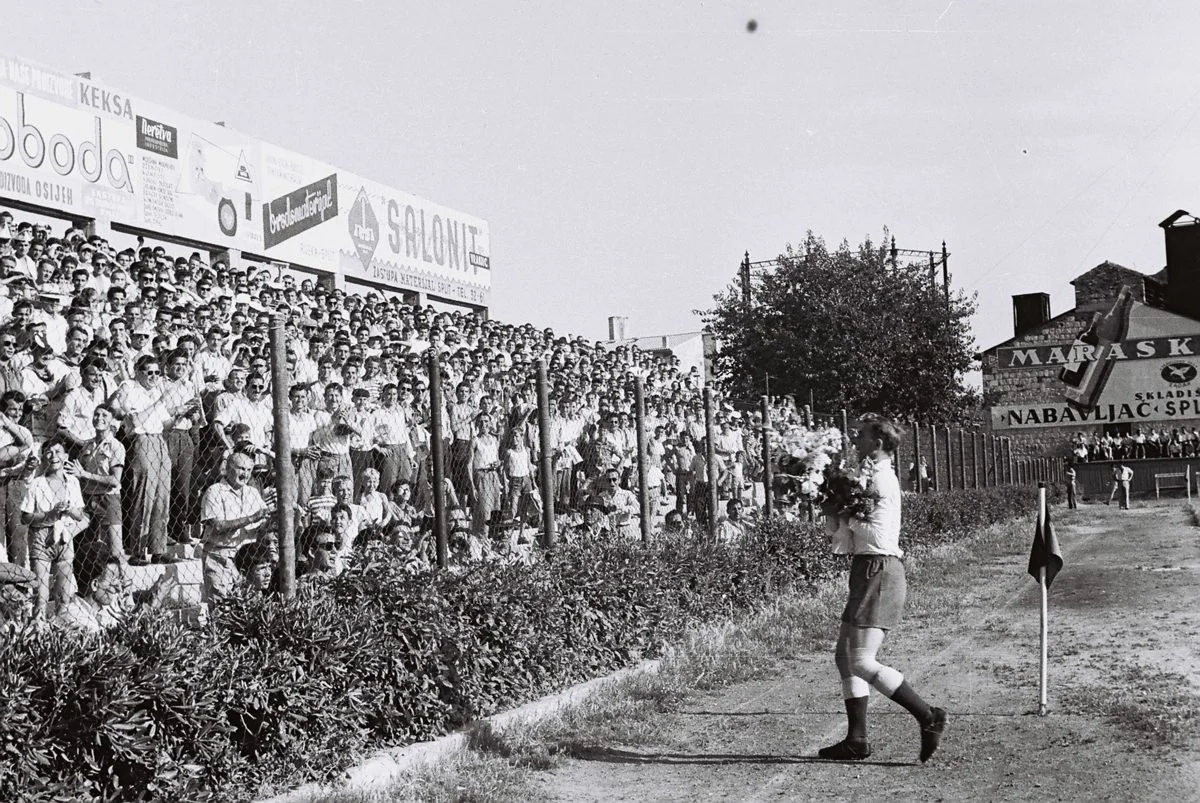
Bernard Vukas's farewell to his team-mates and the crowd before the match against BSK in Split ended 3–1. Bernard Vukas…
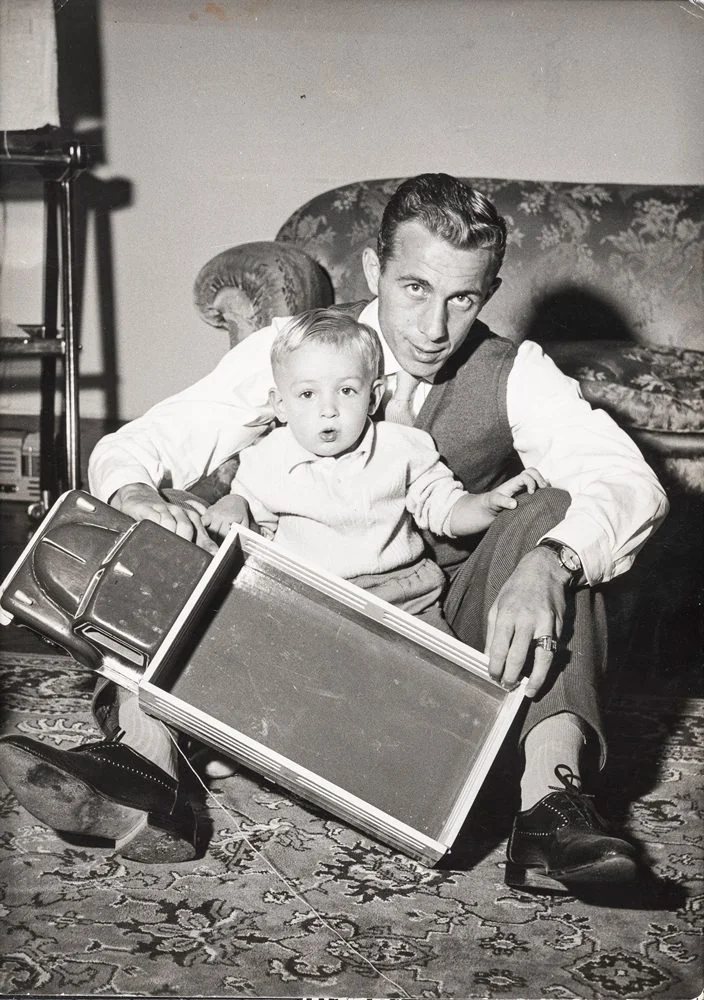
Bajdo with his son Zdeslav in the flat in Bologna on Via Amendola. 1957.
Vukas bids farewell to the audience and the Old Square by tossing flowers.
4

1957. – 1959.

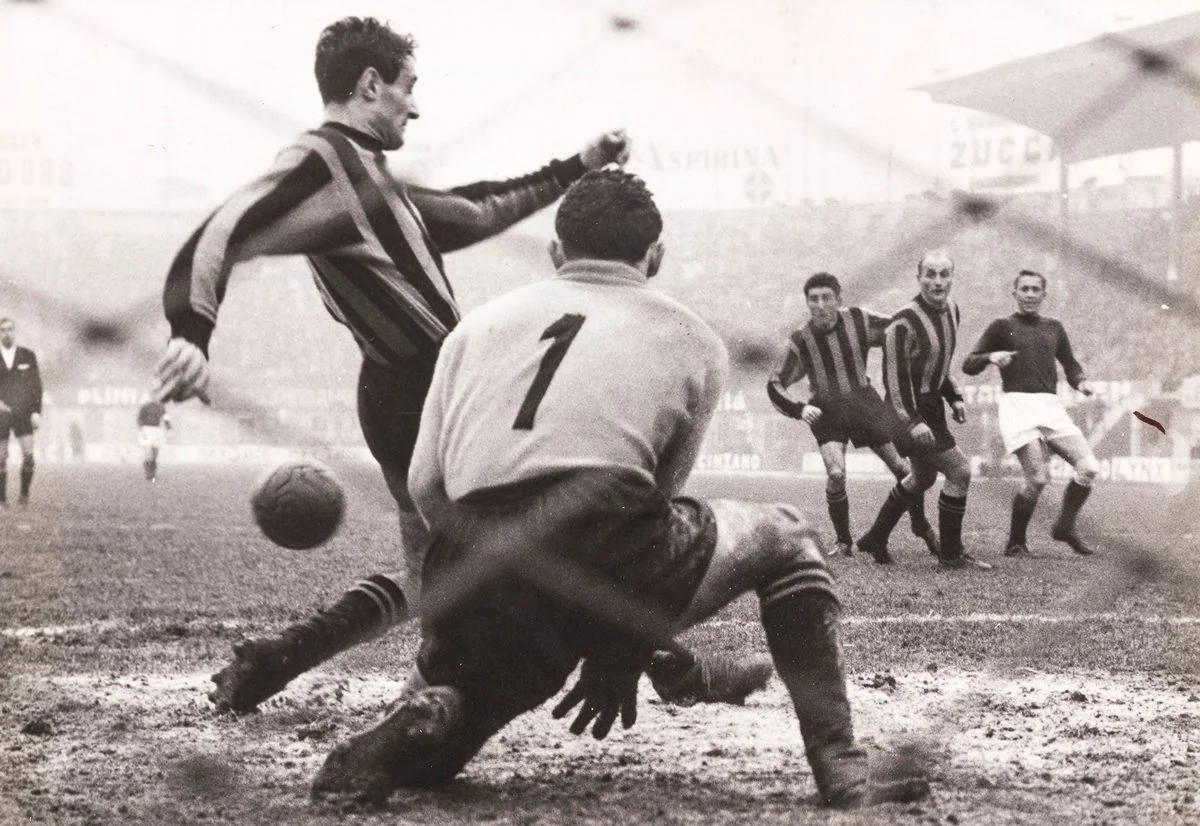
Hard times. The difficult Italian years. As early as the first season, Vukas was struck down by jaundice. Treatment and the loss of the dynamism that had been Bajda's foul weapon. It never allowed him to reach his full potential. At thirty, against the tough Italian game where everything is locked down (il catenaccio) and the after-effects of a serious illness, even Vukas couldn't cope. Only in a few matches, at the start, was he the best playmaker in the entire league. His ratings in 'Sport Illustratu' – straight fives.

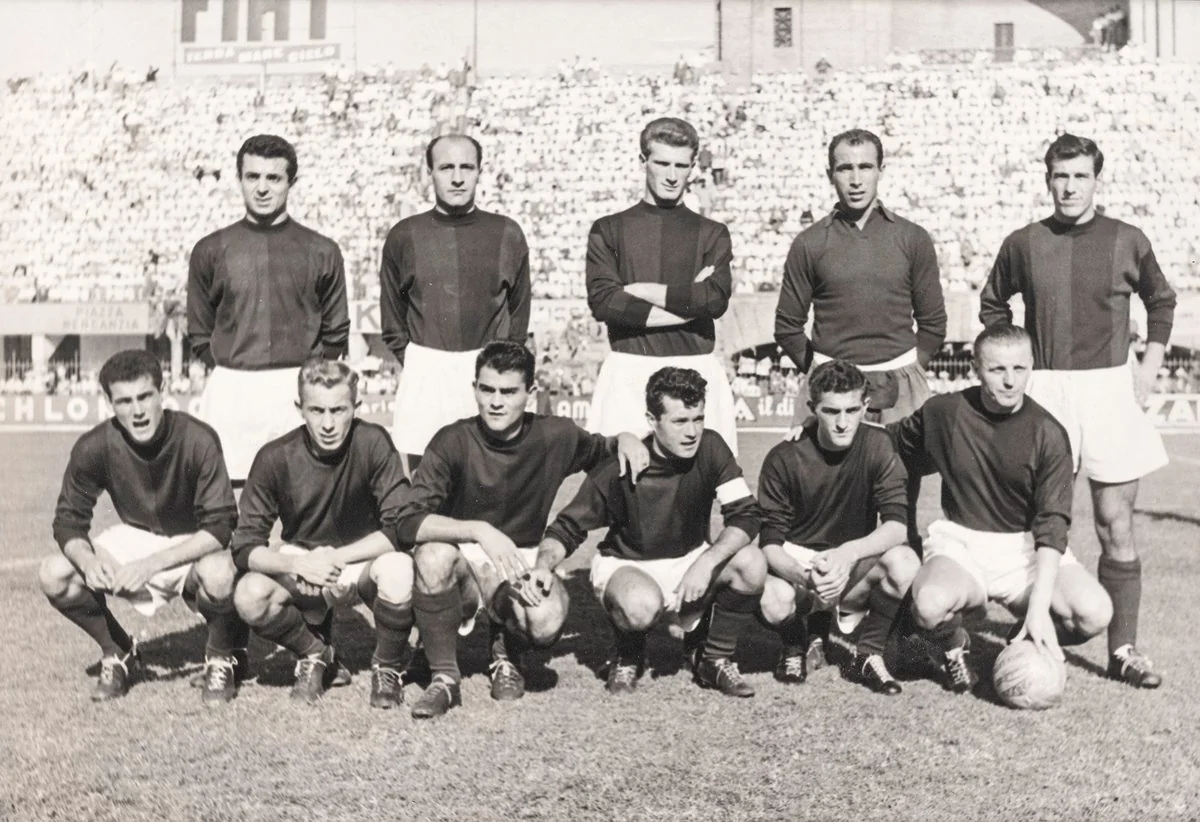
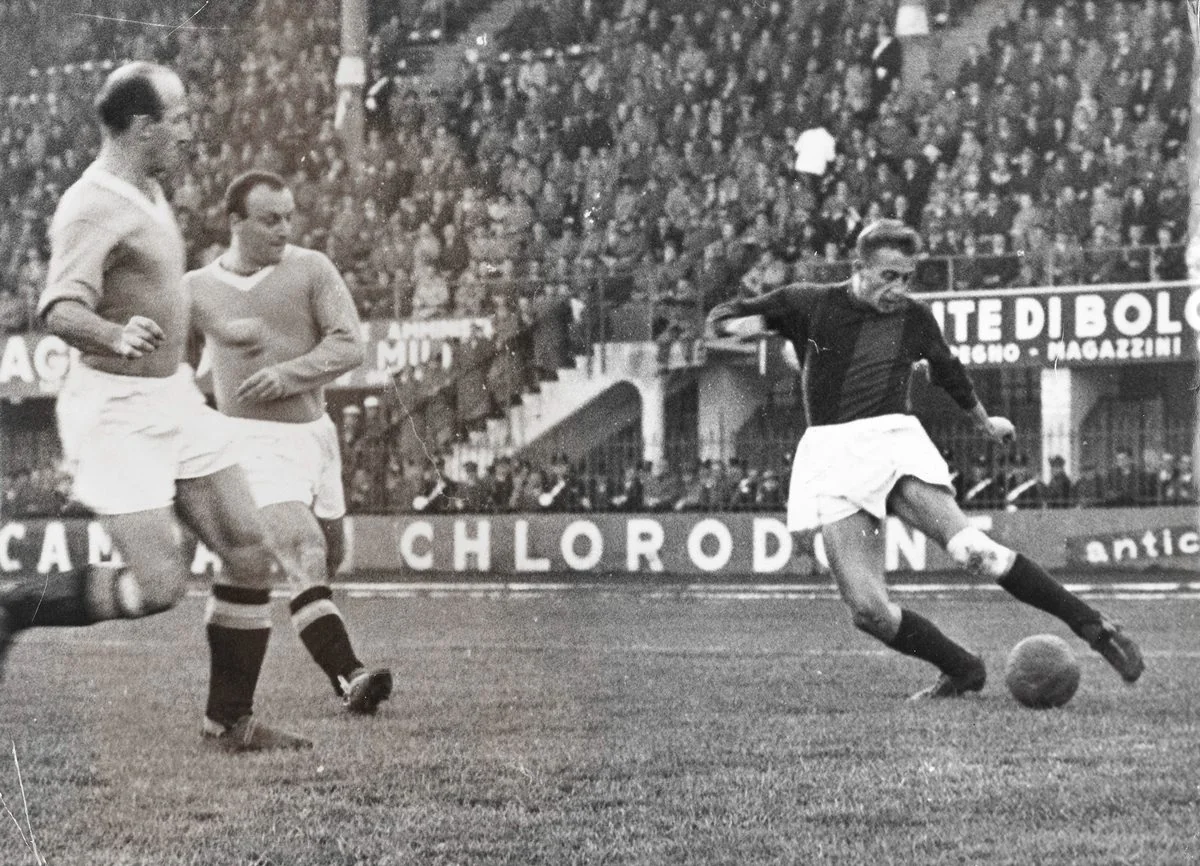
After that devastating bout of hepatitis, he was never the same. One more season, with good and bad games, and – that was it. He loved Bologna. He had his tifosi. With his blue, flowing hair, he was a magnet for the prettier part of the crowd at the Stadio Comunale. And on his day, he was unbeatable, even in a contest with Juventus's Sivori!

The action that leads to Pivatelli's goal.
8 September 1957. Bologna – Udinese 2–2. Goals: Vukas 63′, Capra 79′. FC Bologna team: Pivatelli, Greco, Bonafin, Giorc…
Bernard Vukas in Bologna's shirt during the Serie A match against Genoa (3–3) in the 1957–58 season. His goal put Bolog…
Stadio Comunale, Bologna
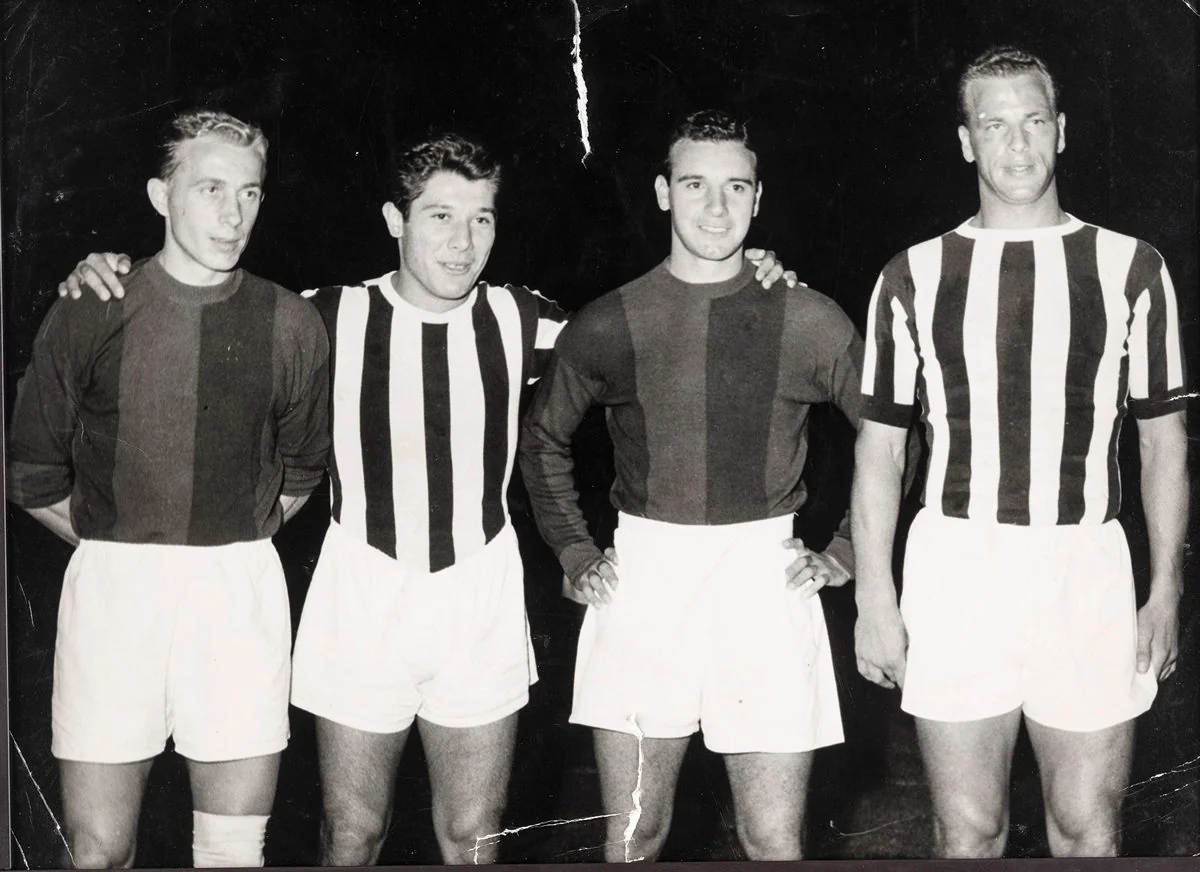
The key players of Bologna and Juventus. From the left: Bernard Vukas (Yugoslavia), Omar Sívori (Argentina), Humberto M…
Bernard Vukas and Luigi Bodi (a Bologna player). Bernard Vukas, godfather at the wedding of the young player born in Pu…
Left: Humberto Maschio and Bernard Vukas on sick leave with hepatitis. Maschio is one of the three Orijunda who won the…
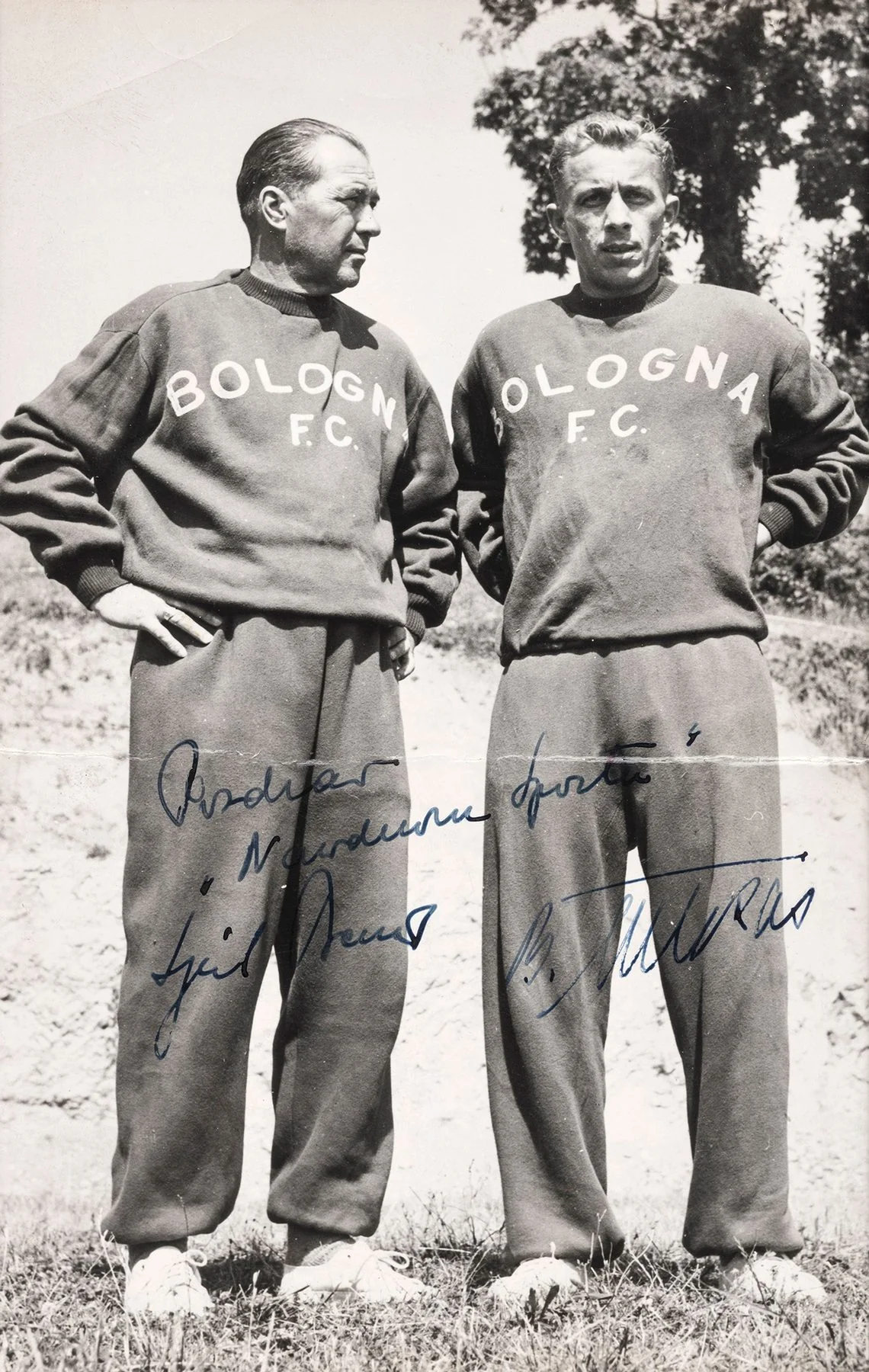
With greetings to Narodni Sport, Ljubo Benčić, coach of FC Bologna (a pre-war player of Hajduk), and Bernard Vukas.
8
Bernard Vukas, 1959. - 1962.
1959. - 1962.

Vukas returns to Hajduk

Vukas is returning to Hajduk. And he's the old Vukas again. Objectively, never better. One match at Maksimir, in Hajduk's 3-2 victory, he was a classic of magnificent play. The greatest. He played without a single mistake.

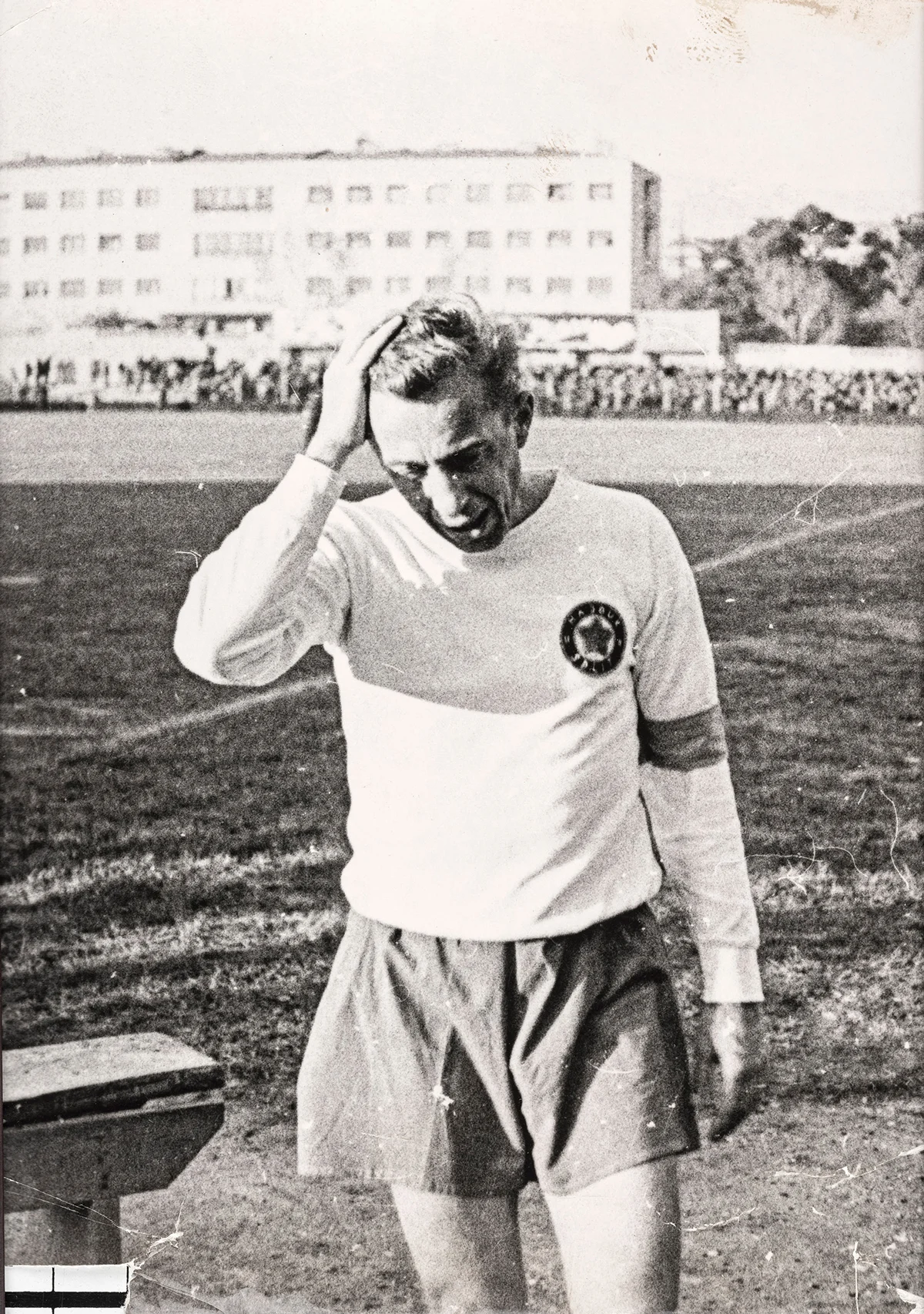
He is no longer that brilliant individualist; he now manages the young Hajduk players. He is the conductor. He is not even a nine anymore; his number is eight or ten. Mature, calm, but always ready, as he once was, to make a move. Bajdo leads Hajduk. And he is the team captain. Fran's armband is on his upper arm. He is the 'boss'. Vukas has now extended a hand to the Bego brothers, Garav, Brkljača, Cuzzi, Colnago, Anković and others. He is still helped by his fellow Zagreb native, Zlatko Papec.

Zagreb, Dinamo Hajduk 1–0. Bego, Žanetić, Kozlina, Anković, I. Bego, Vidošević, Ilić, Pajec, Brkljača, Vulić, Bajdo.
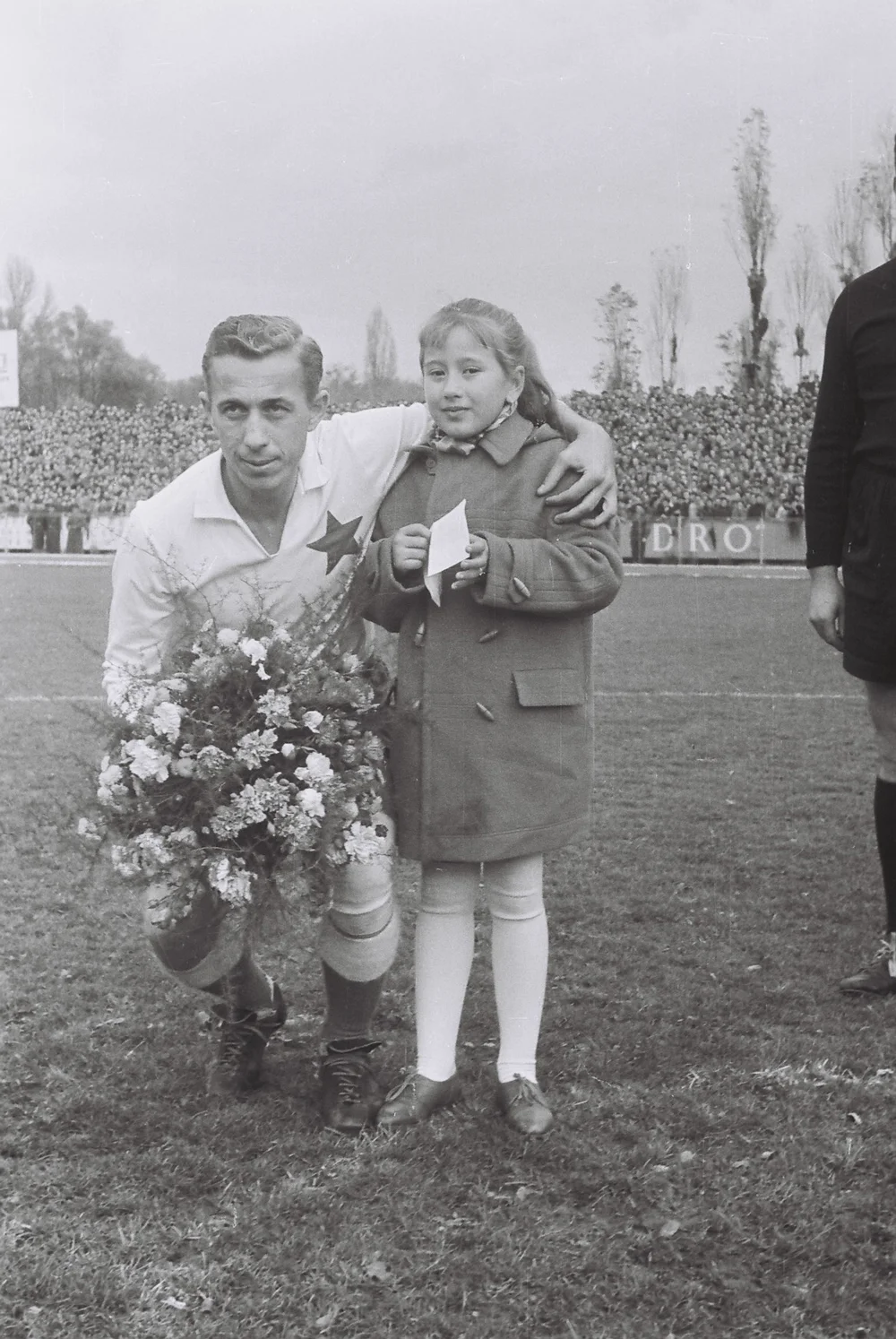
Zagreb, Dinamo vs Hajduk 1–0. Bajdo received flowers from the daughter of T. Crnković.
12 March 1960. Paris Saint-Germain 2–1 Hajduk. Bajdo in a duel with Kaloperović.
3
18.9.1960. Youth Stadium in Karaburma, OFK Belgrade – Hajduk 1-1. Hajduk took a 1-0 lead with a lightning-quick move by…
Vulić, Papec, I. Bego, Brkljača, Ilić, Žanetić, Z. Bego, Bajdo, Anković, Garov
21 May 1961. Hajduk – Dinamo 4–1. On leaving after the match: Geza, Vulić, I. Bego, Brkljača, Bajdo, Anković and Papec,…
3

1962.

And everything comes to an end. Bajdo, who scored 300 goals in 615 matches for Hajduk, played 59 times for the national team and scored twenty-two goals, twice in the Continental Cup against England in 1953. and Great Britain in 1955, with two silver Olympic medals from London and Helsinki around his neck, having scored 20 goals, the top scorer in the First League in the 1954/55 season, with three former-state championship titles in 1950, 1952 and 1955, in Bologna the first 'foreigner' of socialist football, preparing for his farewell.

"You were better, you, the Dinamo players."

It was December 1962. And who else but a tear in his eye. Dinamo are coming. His unrequited love. A love that does not forgive. A 4-1 win for the Dinamo players in Split. Bajdo is dejected; he did not expect such a farewell, but he is a sportsman: 'You were better, you Dinamo players.'

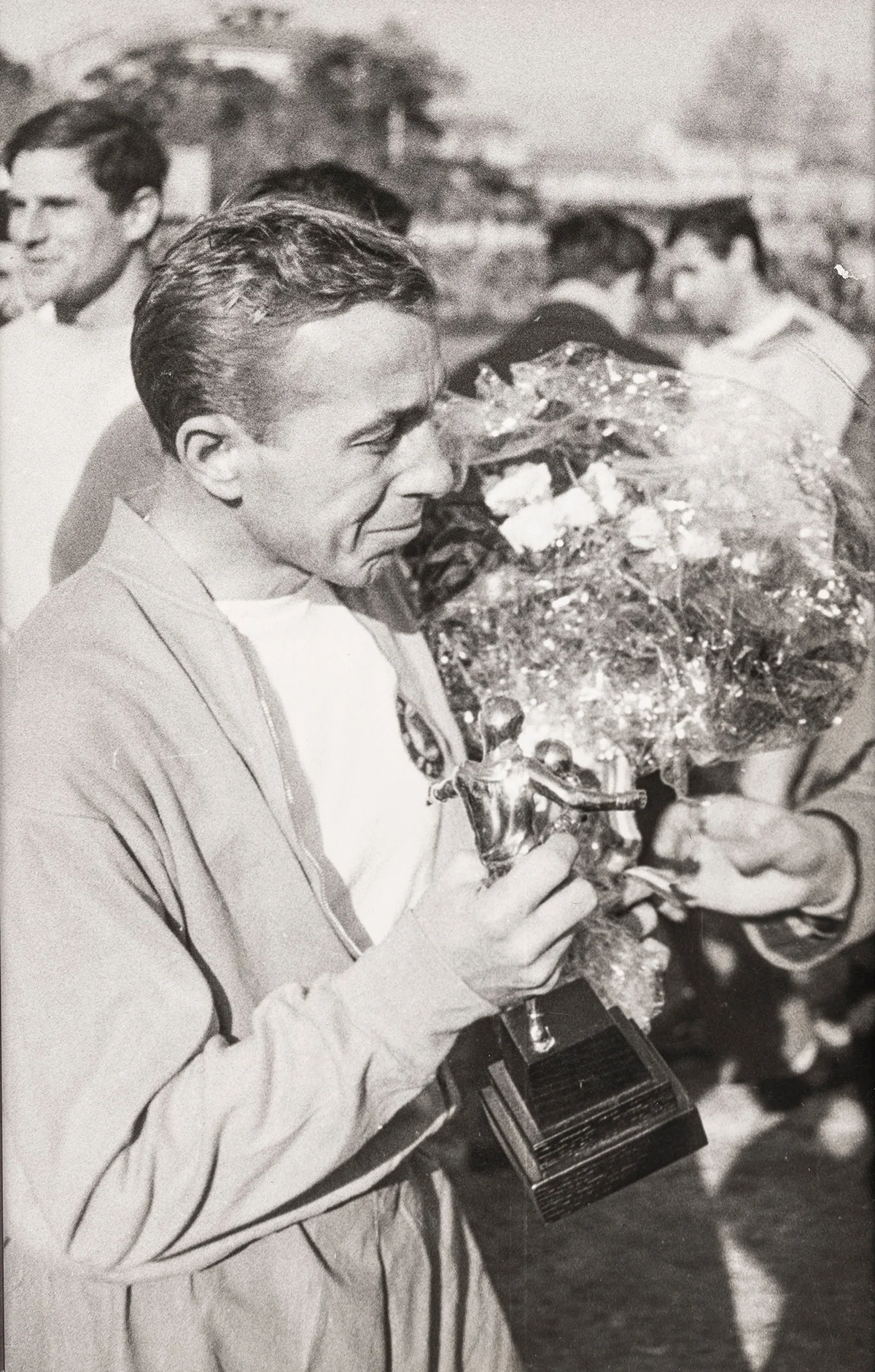
He received the Lifetime Achievement Award at Hajduk in the white salon. His arms are full of flowers. Goodbye, Bajdo. Football gave him everything. Elegant, chic, dressed in Italian clothes, he stands out wherever he goes. The crowd adores him. And he will no longer be at the Black Lamb under Marijan, by the Plinari plant. The hole left by his departure is immense. For the Croatian football club Hajduk.

On 15 April in Split, Hajduk – Partizan 1–0. Vukas on the left wing in a duel with Partizan's star and international pl…
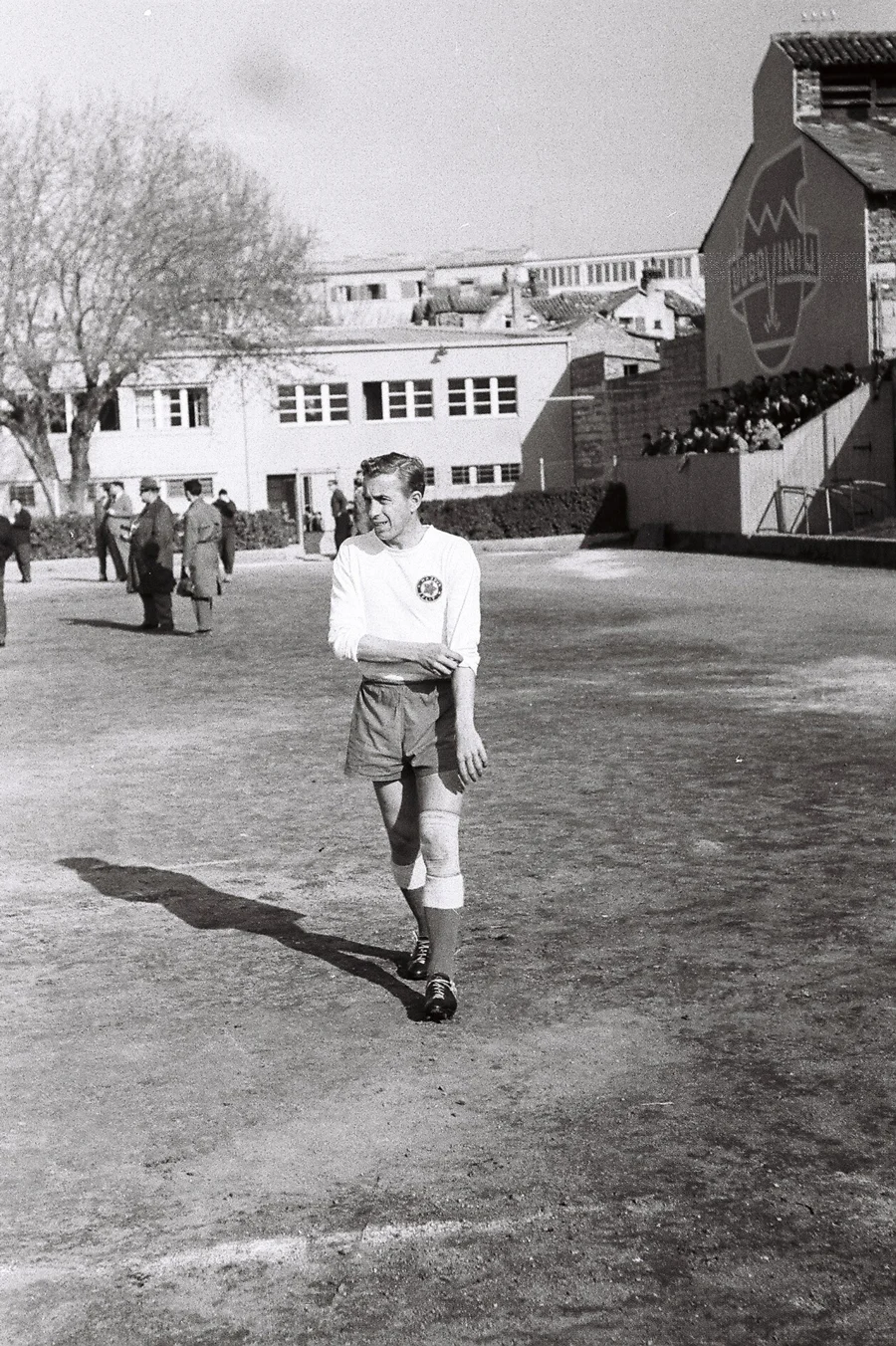
15 April 1962. Hajduk 1–0 Partizan. Bernard Vukas before the start of the match.
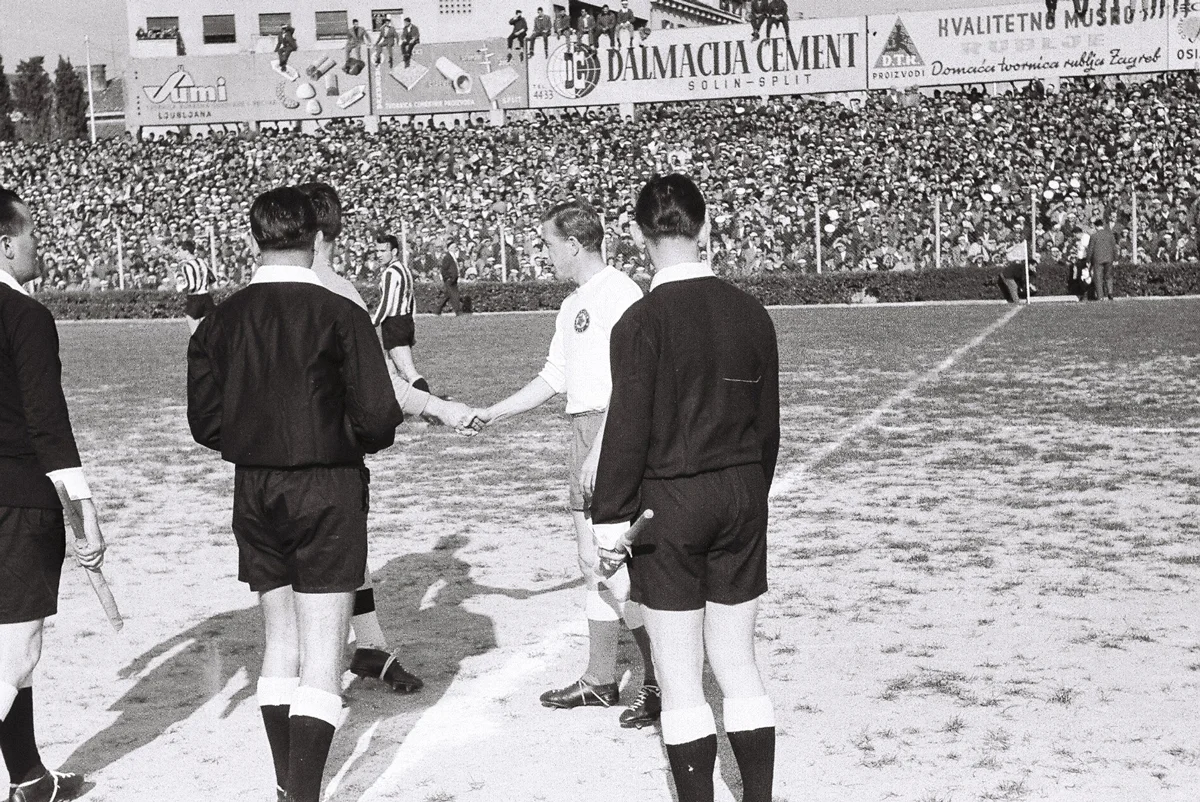
Bajdo shakes hands with Partizan captain and national team player Milutin Šoškić at centre; three referees are in the f…
On 18 March Hajduk hosted Dinamo in front of a packed stadium of 18,000 spectators and, in an entertaining match, won 1…
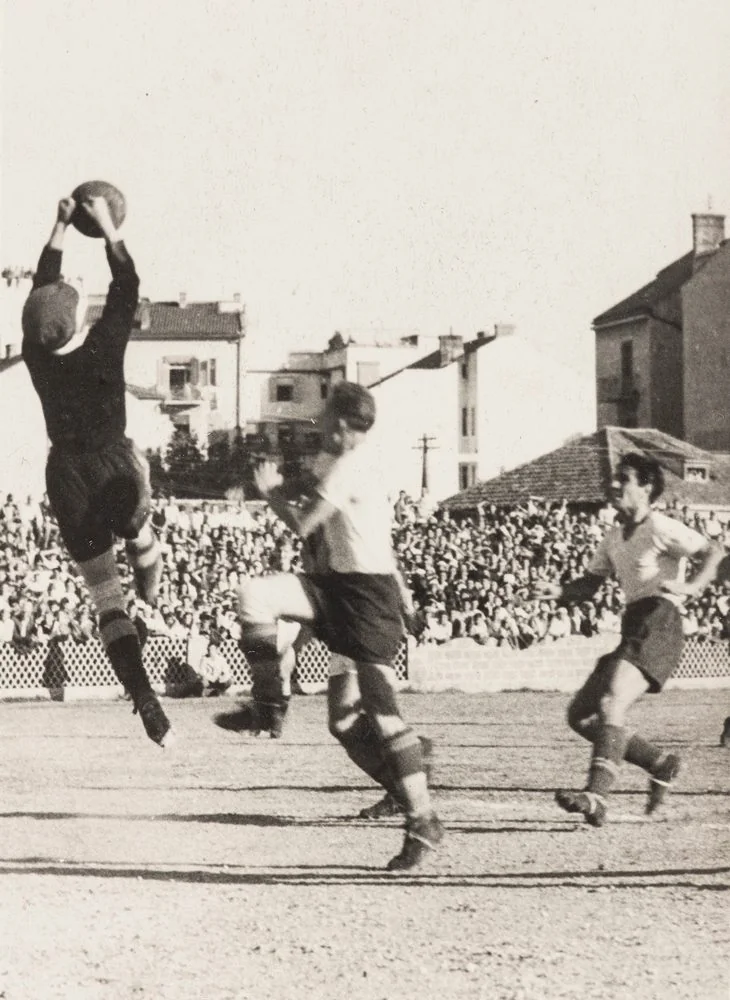
Dinamo goalkeeper Gordan Irović in a jump with Vukas.
5
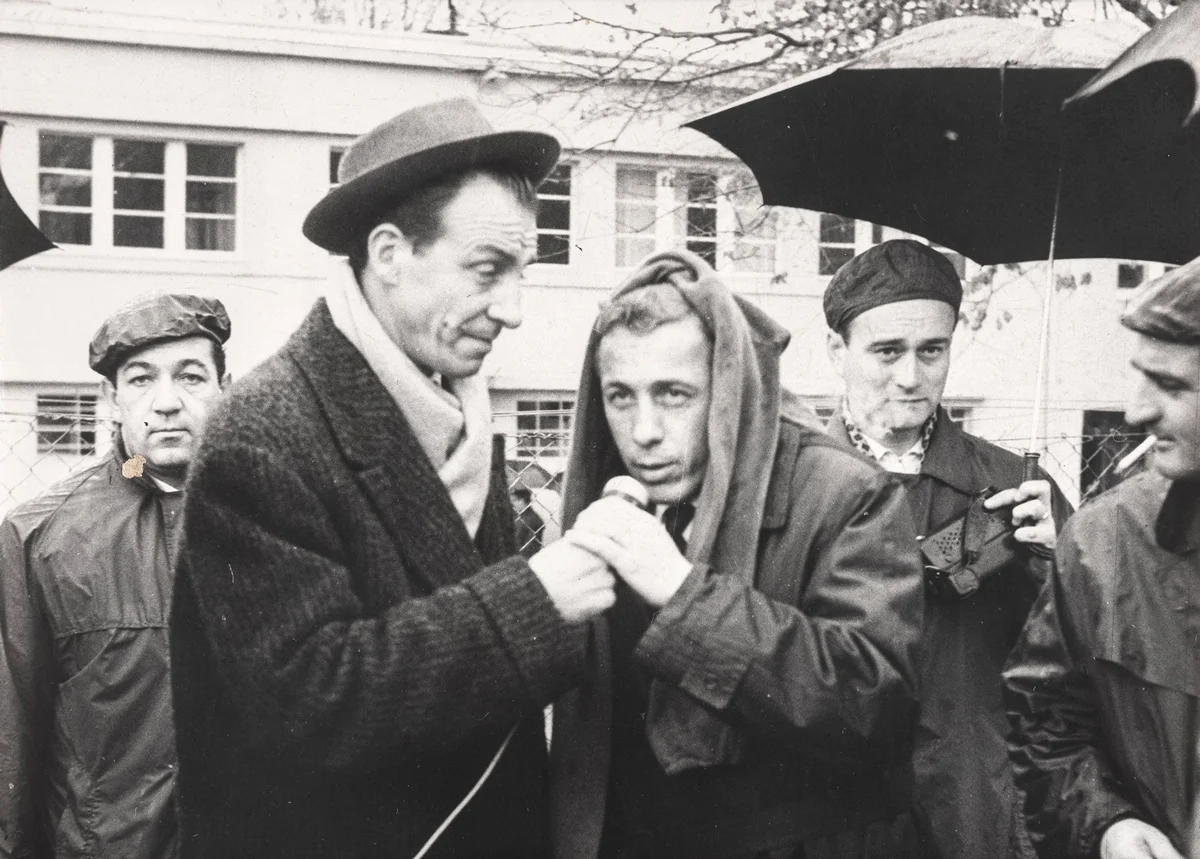
Mladen Delić interviews B.V. in December 1962 at the Old Square.
Before the match, B.V. receives farewell gifts and flowers; in the background is Dražan Jerković and on the right Vlatk…
B.V. leaves the pitch after his final official match for Hajduk. The yellow captain's armband is now in his display cas…
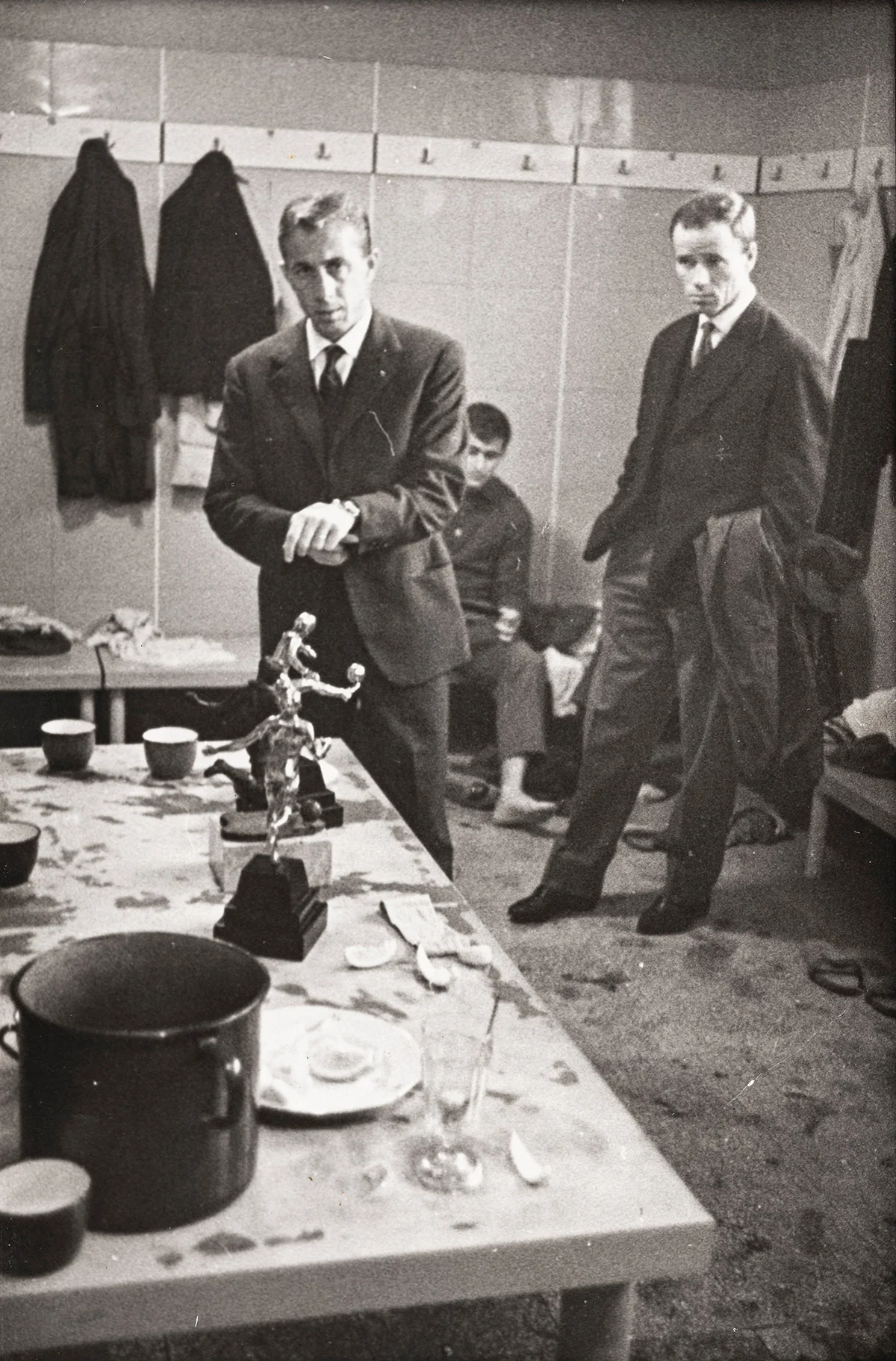
In the dressing room after the match between B.V. and Zlatko Papec, with a sad expression, Zvonko Bego sits on the benc…
4

1962. – 1967.

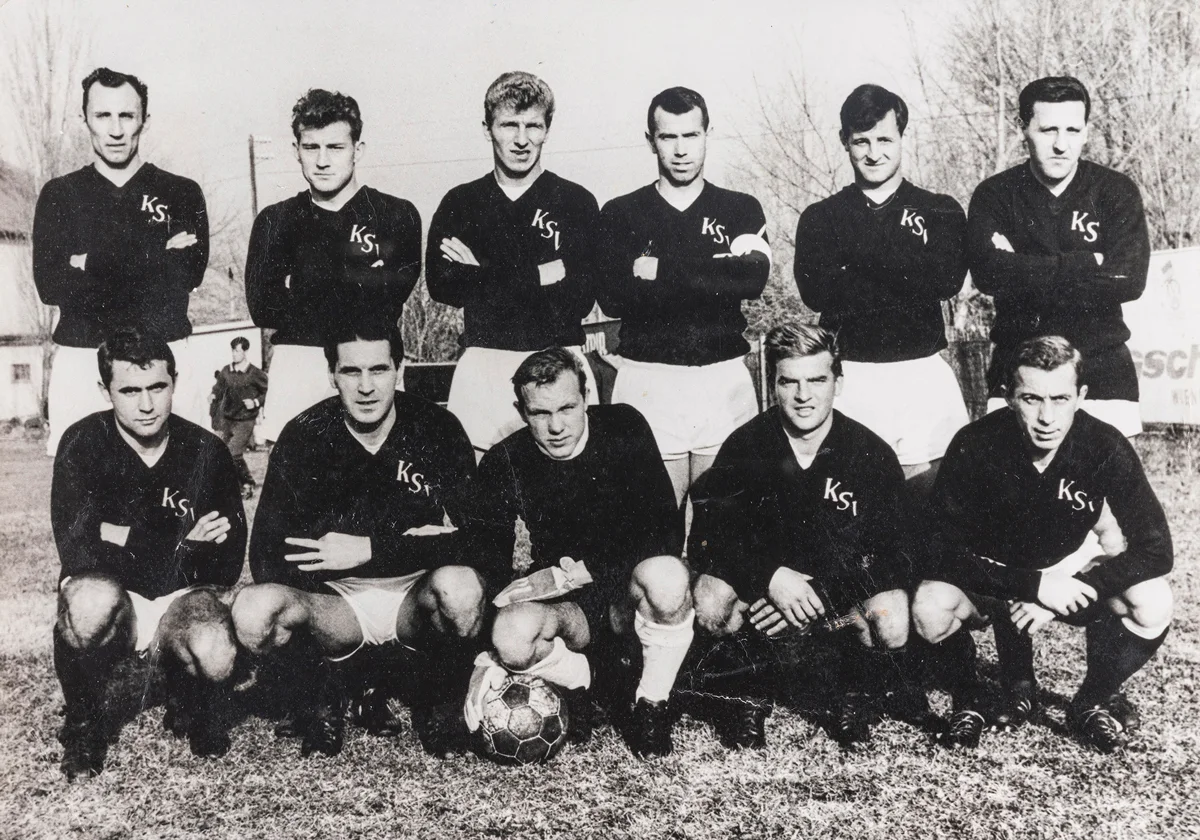
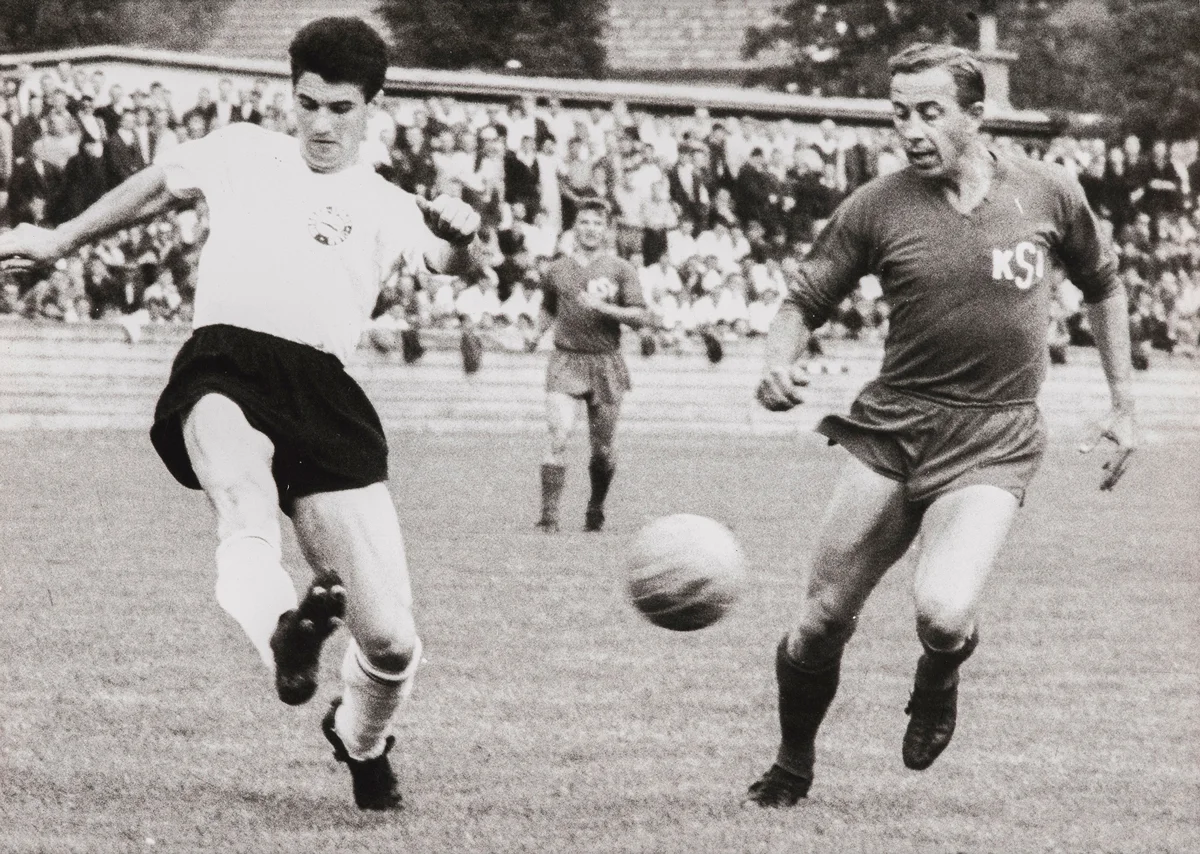
Bajdo plays. The advancing years are no barrier to him entertaining the crowds in Klagenfurt, in Graz for GAK and, finally, with frequent trips to Zagreb—which awakens old feelings of belonging—at the age of thirty-eight, in Kapfenberg.

SK Austria Klagenfurt cites the testimony of his then-teammate, Alfred "Freddy" Hohenberger: "Vukas war ein absoluter Star der damaligen Zeit"

An even stronger testament comes from Friedl Koncilia, who later became one of Austria's greatest goalkeepers. When speaking of the Klagenfurt generation of the early 1960s, he singles out Vukas in particular: "Those were truly exceptional players in Europe".

Bajdo said, "Austria, especially Kapfenberg, was my boyhood joy. They simply loved me. Whatever I did for them was great. With that feeling, I could have carried on right up to the age of forty."

In the photograph: Bernard Vukas in the KSV Kapfenberg shirt in the bottom row on the right; in the centre is goalkeepe…
GAK players (Die Rotten) at training camp. In the front row, third from the left is Bernard Vukas; behind him is Ante J…
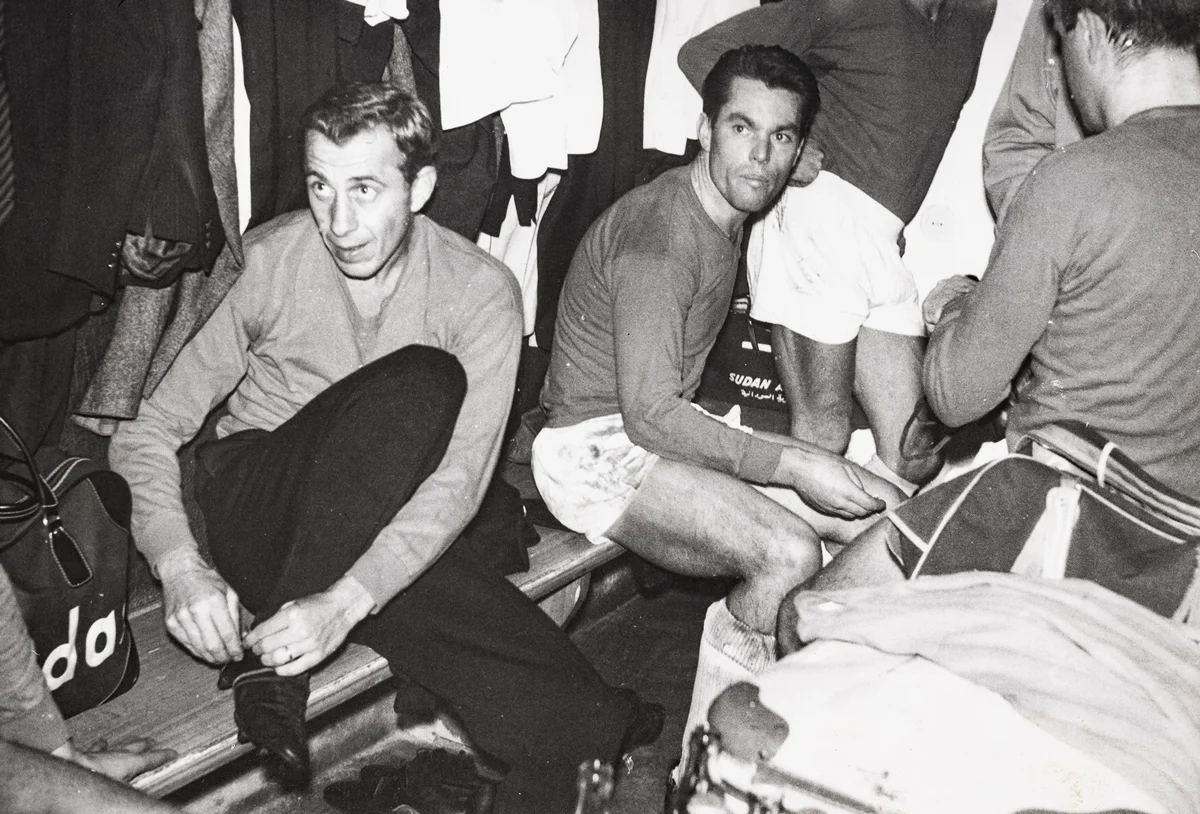
GAK on tour in Sudan in January 1964, where they also played against Crvena Zvezda, and on the return leg against AEK i…
3 July 1965. KSV Kapfenberg vs Wiener Sportklub 2-0 (1-0). The final match of the 1964/65 league season. A victory that…
4

1968. – 1969.

He couldn't turn down Hajduk. The team, with his departure, is in deep crisis. Vukas takes up the post of technical director. But when he's not there, he kicks off his smart shoes at training and whips in the corners! "Hey lads, look...!" When he grew tired of Hajduk and vice versa, he took up the post at NK Zagreb, where he had begun his great career. He is the technical director under coach Franjo Glaser. But it's all too little.

Bajdo hangs around at card games, he's lost his nerve for the pitch, he's at odds with the situation and he leaves. Not from football. Football without Bajdo is an April Fool's joke, and that doesn't cut it.

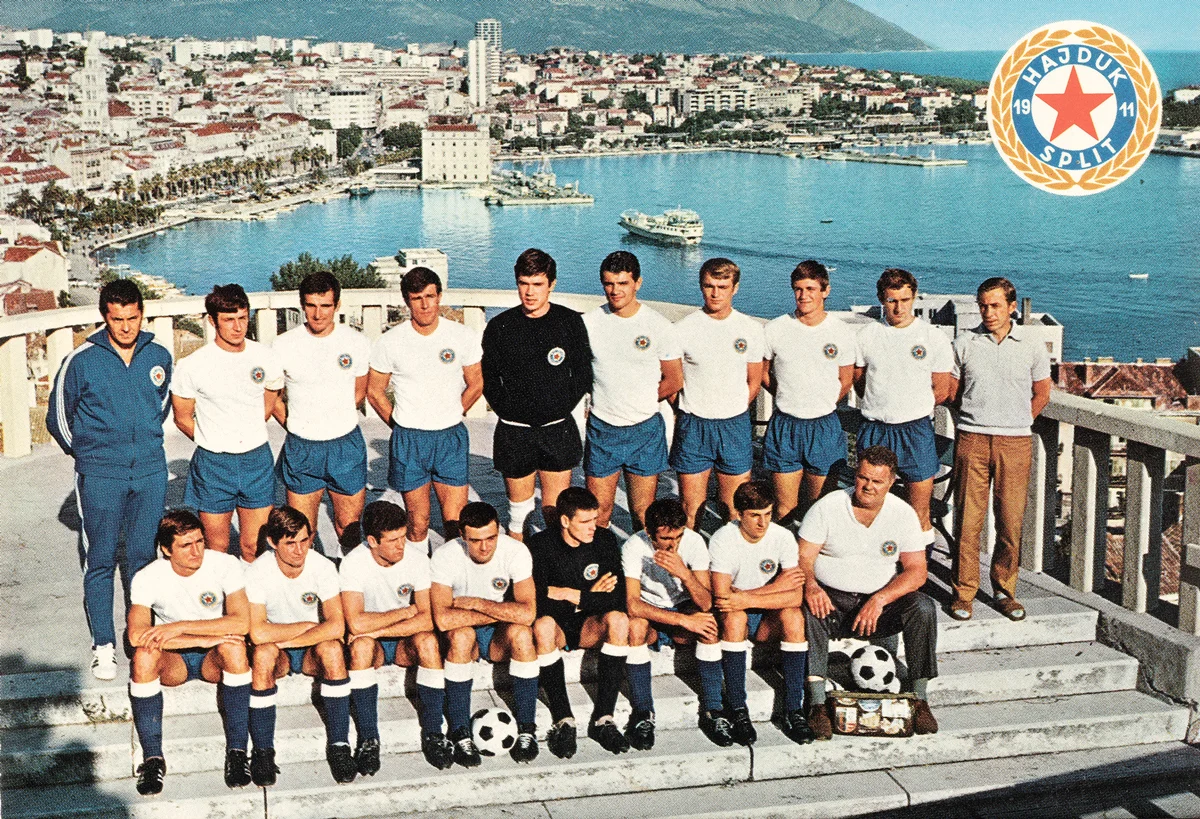
Official photograph of Hajduk. Top row, from left: coach Nenković, Hlevnjak, Mušović, Ferić, Vukčević, Pavlica, Matijan…
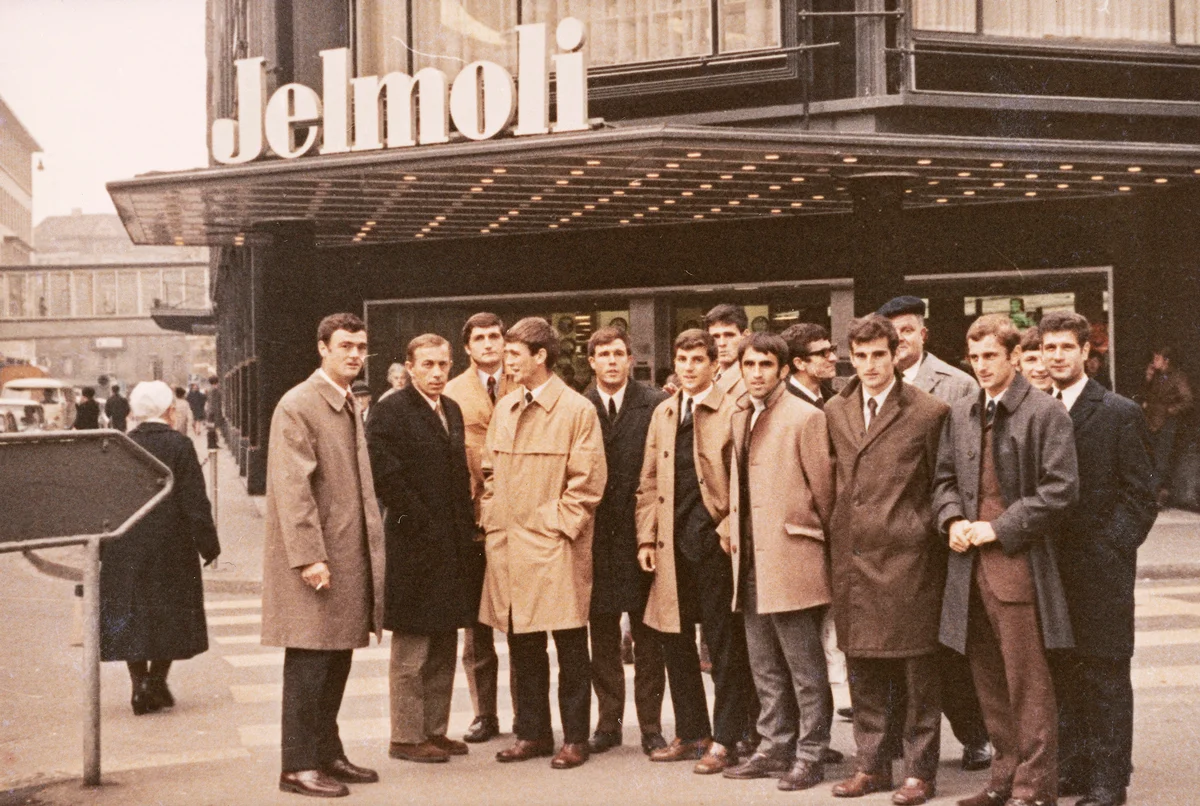
The Hajduk team on a walk through Zurich before the match against the Swiss national team, played on 6 November 1968 in…
Bernard Vukas, Hajduk's coach, and Ivan Pavlica (Ito) at half-time of the training match against Zmaj in Makarska. Pavl…
Hvar, preparations, January 1969. From left: physiotherapist Bernard Vukas, Zdeslav Vukas, Ante Ivković Zonzi, masseur …
At the old Hajduk ground, Bernard Vukas, Petar Nadoveza and Ivica Hlevnjak are pouring beer.
Autumn 1969, Bajdo this time as a technician for NK Zagreb with coach Franjo Glazer (third from the left) and the team …
6

1983.

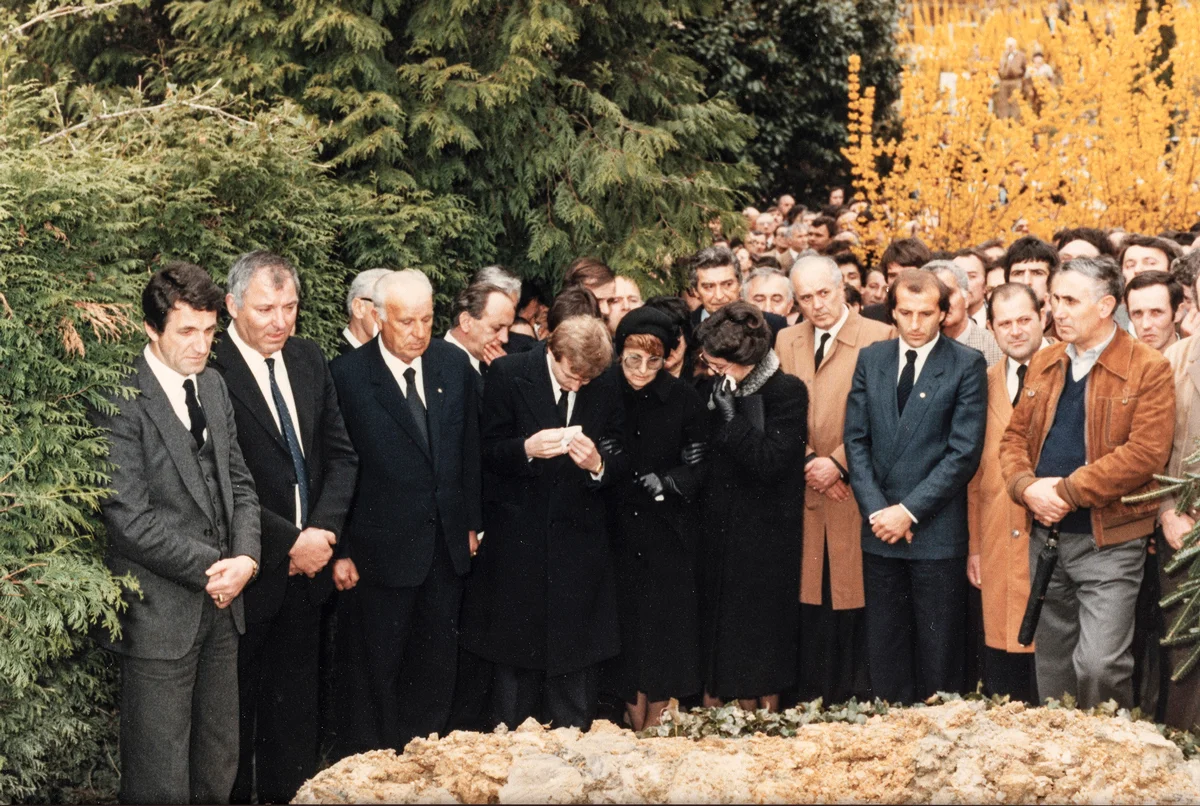
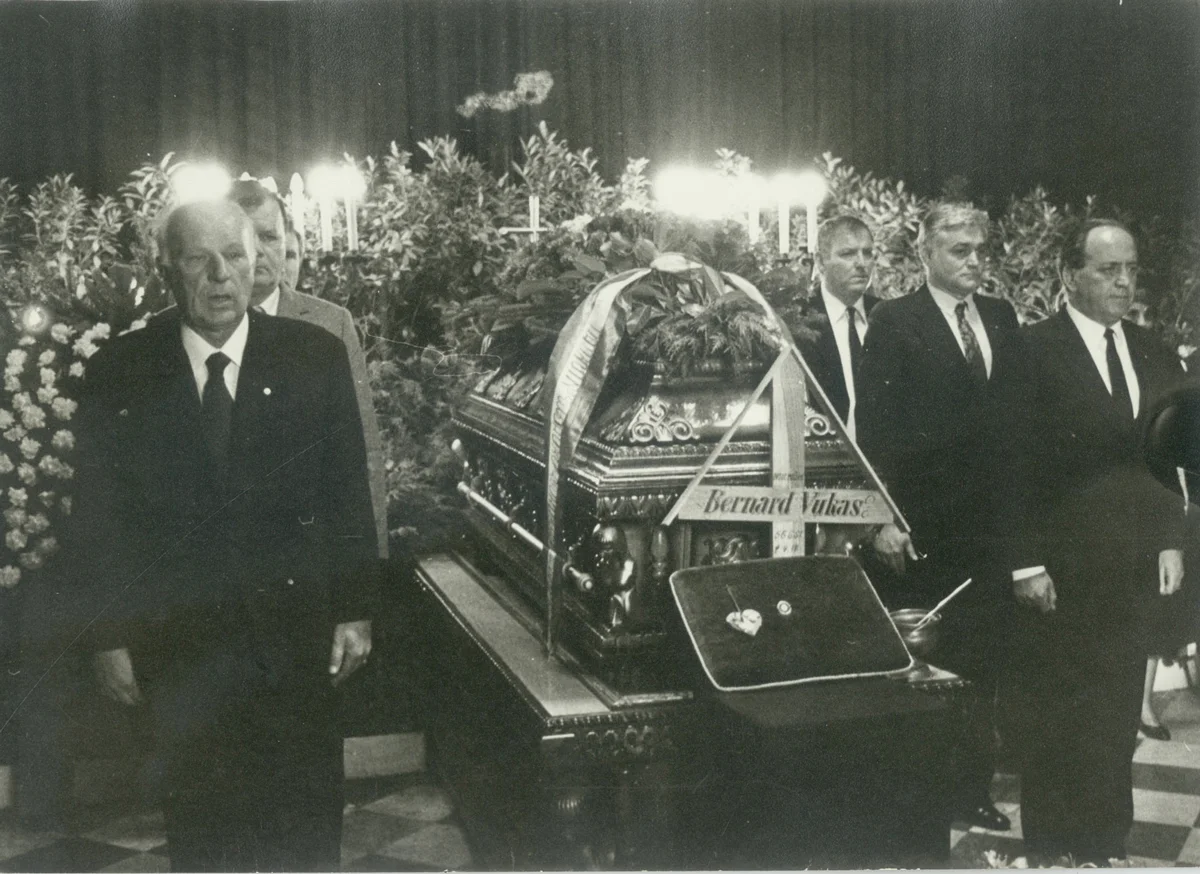
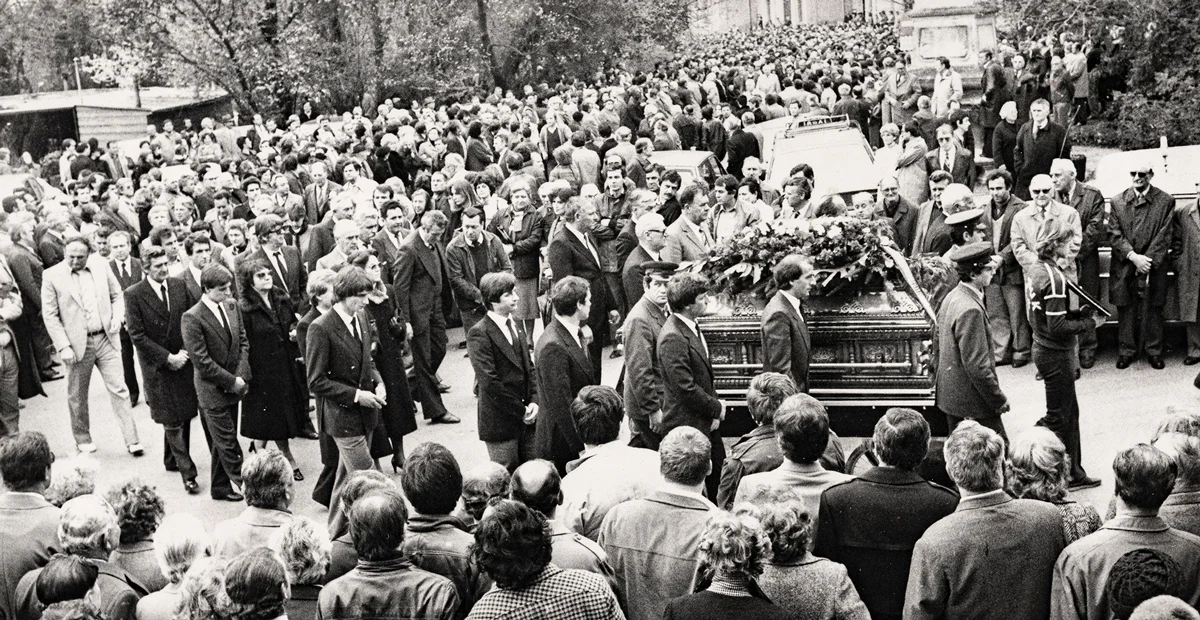
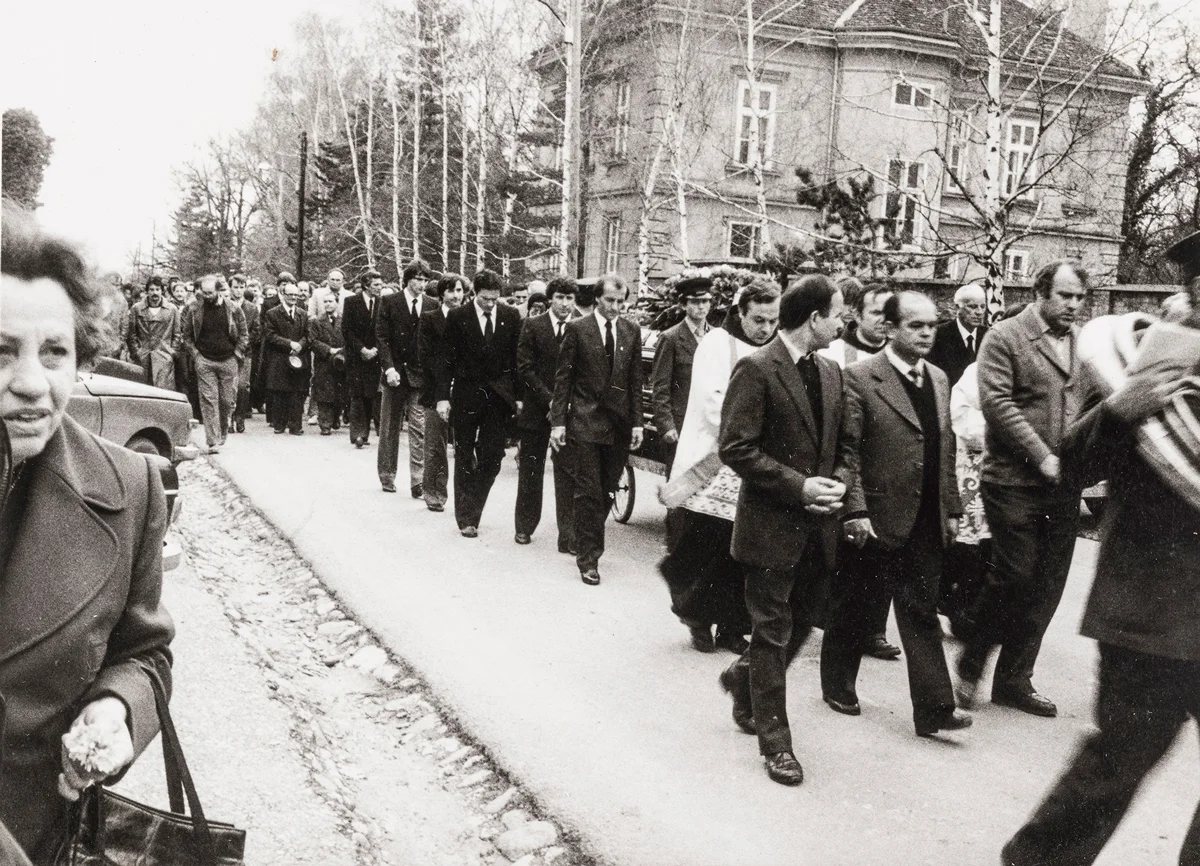
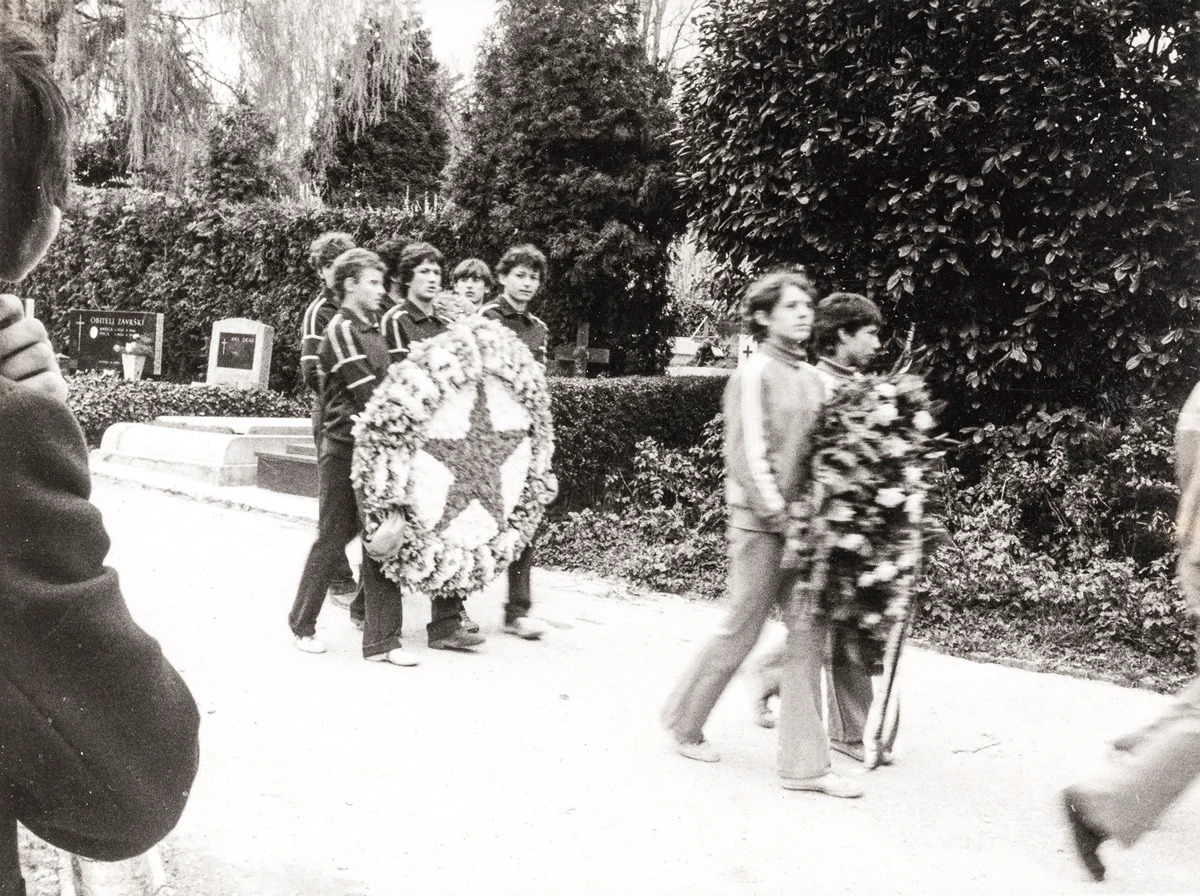
And on one night, on Easter Monday 1983, in his flat on the Avenue of the Seafarers, on the far side of the Sava as it glided silently, the heart's spasm was filled with an explosion. Bajdo is dead. With a grand funeral at Mirogoj.

From the left: Kragić, Grčić Jr., Frane Matošić, Mladinić, Zdeslav Vukas, Stjepanka Vukas, Ante Dorić, Diana Vukas, Voj…
At Mirogoj, beside Bajd's coffin, his team-mates and friends. On the left: Frane Matošić. On the right: Ante Biće Mladi…
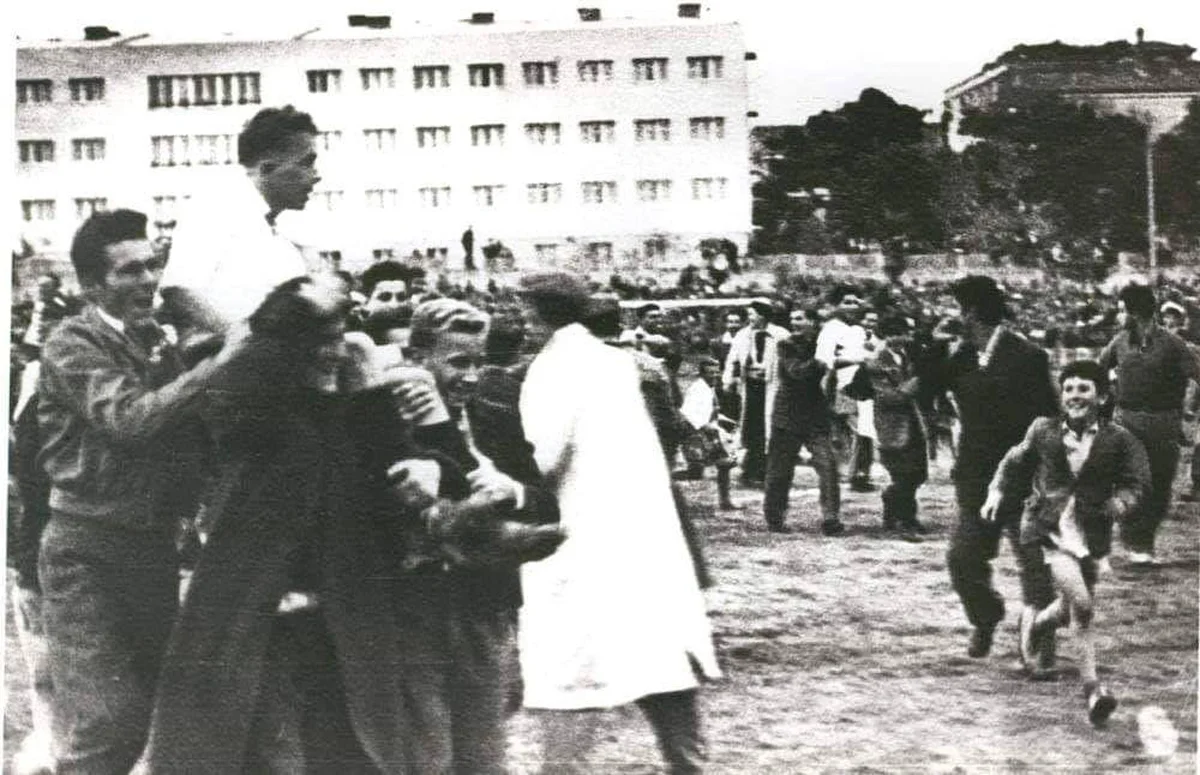
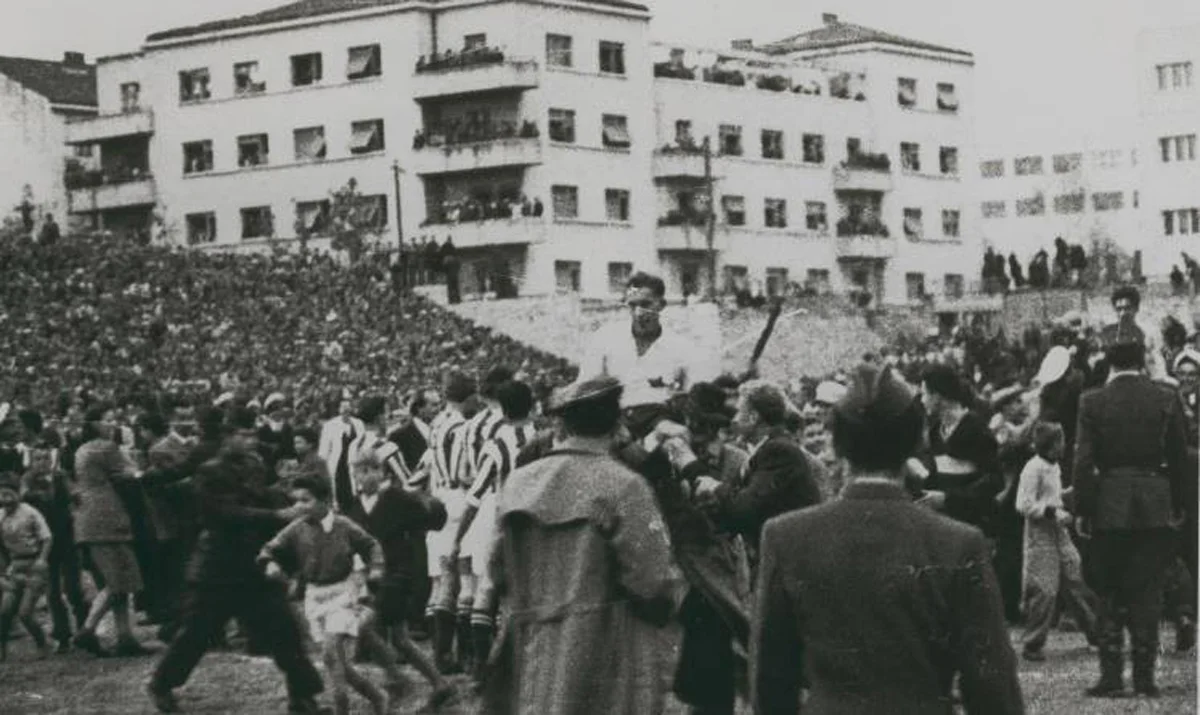
A sad 6th April at Mirogoj for hundreds of admirers, teammates and friends, the younger generations of NK Hajduk and NK…
In front of the coffin are the priests, led by the chaplain of the Parish of St Cross in Sigeć, Fra Emanuel Hoška. On t…
The juniors of NK Zagreb and NK Hajduk, wearing wreaths and flowers, are bidding farewell to Bernard Vukas.
5

That recurring popularity, stopped by neither black marble nor epitaph, which sends a fan's blood pressure up and his heart pounding like Clay's, which draws out every last tear: the game, the inspiration, the meaning.